(978) 774-4330

Most commercial floor failures are not accidents. They are the result of specifying a system for the space as it looks on paper rather than the space as it actually operates. Flooring for high traffic areas demands a different approach than standard commercial installation because the variables at play, load frequency, chemical exposure, moisture, and cleaning protocols, all compound over time in ways that overwhelm systems not built to handle them. For manufacturing facilities, distribution centers, and commercial properties in Taunton, MA and surrounding areas, the cost of getting this wrong shows up fast. Knowing what concrete and industrial floor systems actually need to perform under real conditions is where smart facility decisions start.
Here is what you will learn in this guide:
- How to identify what your specific high-traffic environment actually demands from a floor system
- 7 actionable tips that separate lasting installations from premature failures
- Which warning signs indicate your current durable flooring is already underperforming
- How to compare commercial flooring options for busy facilities and commercial kitchens
- Why Taunton, MA and surrounding areas facility managers should approach recoating and replacement differently
Durable Flooring Is the Foundation of Every High-Traffic Commercial Space

Choosing the wrong flooring system for a high-traffic environment does not just result in a floor that looks bad. It creates a chain of operational and financial problems that often cost far more than a properly specified installation would have in the first place. Delaminated coatings create trip hazards and OSHA exposure. Worn-through surfaces leave bare concrete that absorbs oil, harbors bacteria, and becomes impossible to clean effectively. Facilities that replace or recoat a floor every two years on a system that should last eight to ten are paying installation costs four times over.
The underlying issue is that high-traffic flooring decisions are almost always made using the same logic as low-traffic ones: find a product, get a price, pick the lowest bid. That process does not account for the environment-specific factors that determine whether a system survives or fails. Here is what correctly specified durable flooring actually protects against in any commercial space:
- Premature Wear: Systems chosen for traffic intensity rather than budget absorb the daily punishment of foot traffic, equipment wheels, and abrasive contamination without eroding through to the substrate.
- Safety Liability: Delaminated, cracked, or slick floor surfaces in busy commercial environments create slip, trip, and fall exposure that carries real legal and financial consequence.
- Contamination Risk: Bare or compromised concrete in food handling, pharmaceutical, or chemical environments cannot be adequately cleaned and creates compliance problems that go beyond the floor itself.
- Unplanned Downtime: Emergency floor repairs in active facilities cost significantly more than planned maintenance because of the schedule disruption they force on operations.
- Compounding Repair Costs: Partial repairs to failing systems rarely last because the surrounding system continues to degrade. Planned, complete installations are almost always more economical over a five to ten year window.
7 Tips for Flooring for High Traffic Areas
The tips below reflect what experienced crews and informed facility managers consistently do differently when specifying and installing floors in demanding commercial and industrial environments. Each one addresses a decision point where the outcome of the project is either protected or put at risk.
1. Define the Traffic Type Before Anything Else
Foot traffic and forklift traffic are not the same problem, and neither are daily pedestrian flow in a retail corridor and rubber-wheeled pallet jack movement across a distribution floor. Before selecting any system, define exactly what the floor will face: the types of equipment, wheel materials, load weights, frequency of passes, and whether traffic is consistent or concentrated in specific lanes or zones.
That definition drives every downstream decision, from system chemistry to build thickness to whether anti-slip aggregate is needed and what type. Facilities that skip this step default to a generic specification that may be adequate in some zones and completely inadequate in the ones that actually matter.
- Hard steel wheels cause significantly more surface abrasion than rubber or polyurethane wheels
- Point loads from racking legs and heavy equipment require a different structural consideration than rolling traffic
- Mixed-use floors with both pedestrian and vehicular traffic need zoned specifications, not a single blanket system
2. Test the Substrate Before Committing to a System
Concrete substrate condition is the single most consequential variable in commercial floor system performance, and it cannot be assessed visually. Moisture vapor emission, surface pH, compressive strength, and existing contamination all affect whether a given system will bond correctly and last as long as it should.
For facilities in Taunton, MA and surrounding areas with older concrete slabs, this step is especially important. Decades of equipment operation, chemical exposure, and temperature cycling leave substrates with contamination profiles that only testing reveals. Proceeding without substrate testing is how facilities end up with beautiful new floors that delaminate in six months.
- Moisture vapor emission tests should be conducted per ASTM F1869 or F2170 before any coating selection is finalized
- Surface pH testing identifies carbonation or contamination that will interfere with epoxy or urethane adhesion
- Compressive strength below 3,000 PSI may require substrate repair or a different system chemistry before coating
3. Match Epoxy Flooring or Coating Chemistry to the Environment

Every commercial and industrial floor operates in a chemical environment, even if that environment is just cleaning products and incidental water. The coating system specified needs to be chemically compatible with whatever contacts the floor on a regular basis, including cleaning agents, process fluids, lubricants, solvents, and food acids in applicable facilities.
Epoxy flooring offers good general chemical resistance but has meaningful limitations with strong acids, solvents, and thermal cycling from steam cleaning. Urethane cement handles those conditions significantly better. Polyurea and polyaspartic systems offer strong solvent resistance and faster return to service. Matching chemistry to the actual exposure profile is what determines whether a system lasts three years or twelve.
- Request a chemical resistance table from the manufacturer for every product under consideration
- Identify the most aggressive chemical the floor will regularly contact and use that as the baseline compatibility requirement
- Do not assume that a product that works in one facility type will perform equally in a different chemical environment
4. Specify Minimum Dry Film Thickness in Writing
One of the most common ways high-traffic flooring projects underperform is through insufficient film build. A coating applied at half the specified thickness does not deliver half the performance. It delivers a fraction of the service life because wear consumes the entire film thickness before the underlying protection layers have a chance to do their job.
Dry film thickness should be written into the project specification and verified during and after installation with calibrated measurement equipment. For facilities in Taunton, MA and surrounding areas specifying coating projects, asking the contractor how they will verify and document film thickness during application is a reasonable and important question.
- Standard commercial epoxy applications: 10 to 15 mils dry film thickness minimum for moderate traffic
- Heavy-duty industrial systems: 20 to 40 mils dry film thickness for consistent equipment traffic
- Broadcast aggregate systems: total system build of 60 to 125 mils for the highest-demand environments
5. Address Joint and Crack Treatment as Part of the Scope
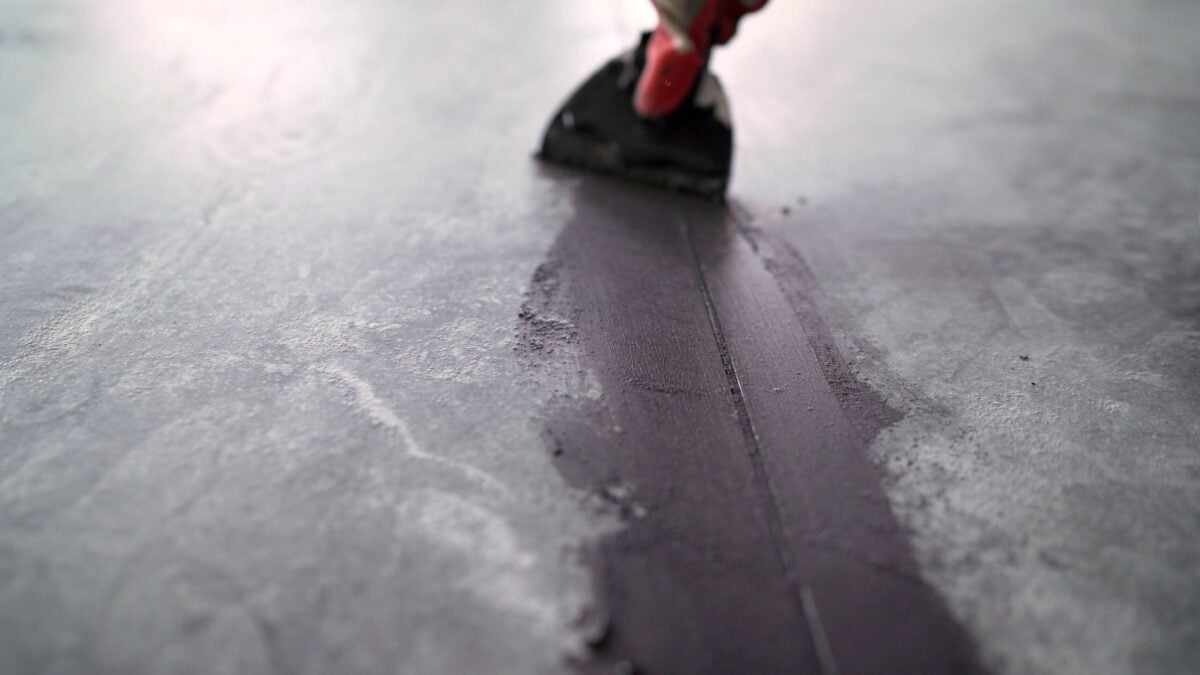
Control joints, saw cuts, cold joints, and existing cracks in the concrete are movement points that a rigid coating system cannot bridge indefinitely. When these are not properly treated before coating, the coating cracks at those locations almost immediately as the substrate continues its normal movement cycle. That crack becomes a water and contamination entry point that undermines the surrounding coating and accelerates broader failure.
Joint and crack treatment should be written into the installation scope explicitly, not left as an assumption. Different joint types require different treatment approaches, and the materials used must be compatible with the topical coating system being applied.
- Actively moving control joints should be treated with backer rod and flexible polyurea or polyurethane joint filler, not rigid epoxy
- Dormant shrinkage cracks can be routed, cleaned, and filled with semi-rigid filler before coating
- Joints in food-grade environments require specific filler chemistry that meets applicable sanitation standards
6. Choose the Best Flooring for High-Traffic Conditions by Zone
High-traffic commercial facilities rarely have the option of shutting down completely for floor installation. A phased installation plan that sections the floor into zones, installs and cures one zone at a time, and maintains operational access throughout the project is the standard approach for occupied facilities. But that plan needs to be developed before the project starts, not improvised on-site.
Choosing the best flooring for high-traffic zones within a single facility often means specifying different systems in different areas. A distribution center may need broadcast epoxy in forklift lanes, a standard epoxy topcoat in pedestrian corridors, and a urethane cement system in wash-down areas. Treating the whole floor as a single specification zone means either overpaying in low-demand areas or underspecifying in the ones that matter most.
- Each zone should have a clearly defined system specification tied to its actual traffic and exposure conditions
- Temporary traffic barriers and cure time management are part of a professional phased installation
- Ventilation planning matters in enclosed facilities where coating fumes during installation affect adjacent occupied spaces
7. Plan the Maintenance Cycle Before Installation Is Complete
The day a new floor system is completed is the right time to establish the maintenance protocol, not two years later when the surface starts showing wear. High-traffic floor systems require routine cleaning with compatible products, periodic inspection for early wear indicators, and a planned maintenance recoat schedule that keeps the protective system intact before it wears through.
Facilities in Taunton, MA and surrounding areas that build a maintenance recoat into their capital planning cycle on a five to seven year basis consistently get more total life from their floor systems than those that wait for visible failure before acting. A maintenance recoat on an intact but worn system costs a fraction of a full removal and reinstallation.
- Identify compatible cleaning products before the floor opens to traffic and communicate them to the cleaning crew
- Annual visual inspections in high-wear zones catch early erosion before it reaches the substrate
- Document the installed system by product name, manufacturer, number of coats, and dry film thickness for future maintenance reference
Warning Signs Your Durable Laminate Flooring or Coating Is Already Failing
Before specifying a new system, it is worth understanding whether the existing floor has already reached a point where maintenance recoating is no longer viable and full replacement is the correct path. This distinction matters whether your current surface is a topical coating, a durable laminate flooring product, or any other commercial system. Catching the difference early prevents the costly mistake of applying a maintenance coat over a system that is too far gone to hold it.
- Widespread Delamination: Sections of coating or flooring lifting away from the substrate in sheets indicate a bond failure that cannot be repaired by recoating. The existing system needs full removal before a new one goes down.
- Substrate Exposure in Traffic Lanes: Once the surface has worn through to bare concrete in active traffic areas, that concrete is already contaminated and will require mechanical preparation before any new system can adhere correctly.
- Visible Cracking Network: A map-cracked surface indicates either substrate movement that was never properly addressed or a coating that has reached the end of its flexibility. Recoating over a cracked system transfers those cracks to the new surface within weeks.
- Persistent Standing Water: Water that pools and does not drain in areas where it did not previously indicates that surface wear has disrupted the slope or that the substrate has shifted. This needs professional evaluation before any coating work begins.
- Failed Anti-Slip Texture: If aggregate has polished out of the surface in wet or oily zones, the floor presents a safety hazard regardless of how intact the surrounding coating appears to be.
How to Compare Commercial Flooring Options for Busy Facilities and Commercial Kitchens

Getting multiple proposals for a high-traffic flooring project is standard practice, but evaluating those proposals meaningfully requires knowing what to look for beyond the total price. The lowest bid on a commercial flooring project almost always reflects scope exclusions rather than genuine efficiency. This is especially true for demanding environments like commercial kitchens, food processing facilities, and manufacturing floors where the performance gap between system types is significant.
What a Complete Proposal Includes
A complete proposal for any high-traffic or commercial kitchen flooring project specifies the system by manufacturer and product name, the number of coats, the target dry film thickness per coat and in total, the surface preparation method and ICRI profile target, joint and crack treatment scope, the phasing plan for occupied facilities, and return-to-service timelines by zone. Proposals that describe the work in general terms without these specifics are not genuinely comparable to ones that do.
Comparing System Types for Demanding Environments
Commercial kitchens, food processing facilities, and other busy facilities with wet, thermally variable, or chemically aggressive environments require systems that standard commercial flooring comparisons do not capture well. The table below provides a practical reference for matching system type to environment when evaluating options.
| Environment | Recommended System | Why It Fits |
| Commercial kitchens | Urethane cement with cove base | Handles thermal shock, steam cleaning, and food acids |
| Food processing | Urethane cement, high-build | Chemical resistance, moisture tolerance, hygienic surface |
| Distribution and warehouse | High-build epoxy, 2 to 3 coat | Abrasion and forklift impact resistance |
| Retail and showroom | Polyaspartic or polished concrete | Aesthetics, UV stability, moderate foot traffic |
| Manufacturing | Broadcast epoxy or urethane cement | Chemical and mechanical wear resistance |
| Pharmaceutical or healthcare | Seamless epoxy or urethane | Cleanability and contamination control |
What Missing Scope Looks Like
Missing scope in commercial flooring proposals shows up most commonly as vague surface preparation language, no mention of moisture testing, no crack or joint treatment included, or a lower-cost product substituted for the specified system without disclosure. These gaps reduce the upfront price without reducing the risk of failure. They shift the cost forward in time rather than eliminating it, and they are most damaging in the highest-demand environments where system performance margins are the tightest.
Get Your High-Traffic Floor Done Right
High-traffic flooring is not a place to optimize for the lowest upfront number. The facilities that consistently get the best long-term value from their floor systems are the ones that specify correctly, prepare thoroughly, install completely, and maintain proactively.
McLean Company has been specifying and installing commercial and industrial floor systems across New England for decades. We assess the substrate, match the system to the environment, document the installation, and stand behind the work. If your facility has a floor that is underperforming or a project coming up that needs to be done right the first time, we are ready to take a look.
Contact us today to schedule a site visit and get a straightforward assessment of what your floor actually needs.