(978) 774-4330

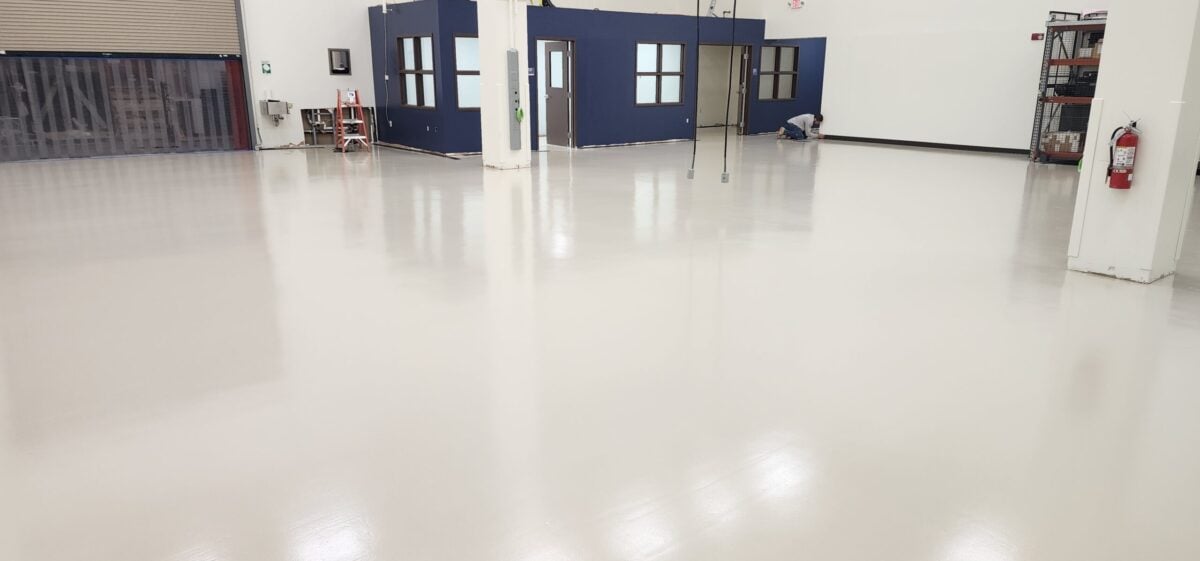
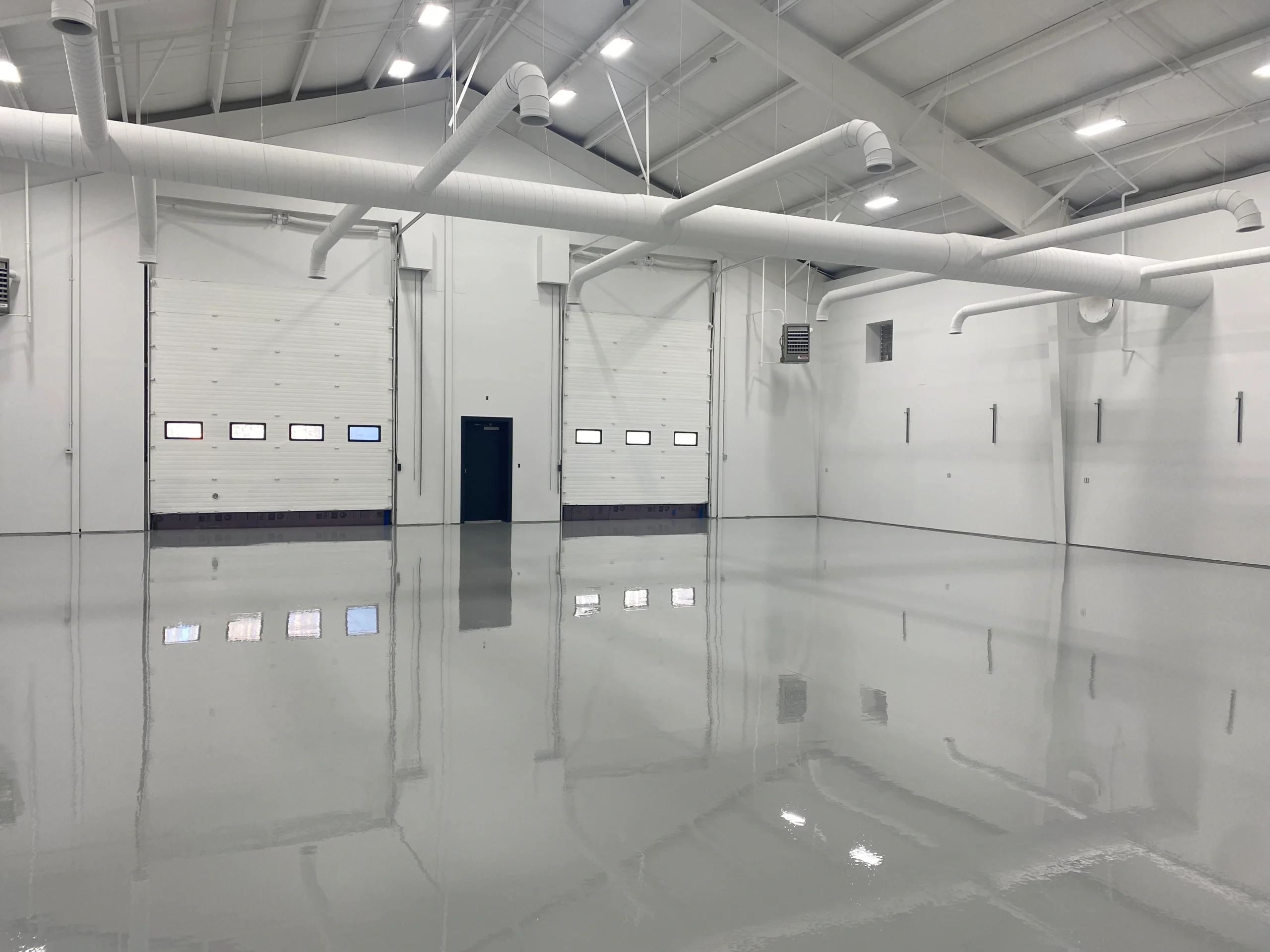
Concrete floors in commercial and industrial facilities are built to last, but they require consistent, method-appropriate cleaning to stay that way. Dirt, oil, chemical residue, and biological contamination that builds up on an uncoated or coated concrete surface does not just create a poor visual impression. It accelerates surface wear, creates slip hazards, and in coated environments, it degrades the bond between the coating and the substrate over time. Knowing how to clean concrete floors correctly for the specific surface type and contamination in your facility is the difference between a maintenance program that extends floor life and one that slowly destroys it. The same attention to surface care that defines well-specified concrete floor systems built for commercial use applies directly to how those surfaces are maintained after installation.
Here is what you will learn in this guide:
- Why cleaning method selection matters as much as cleaning frequency for concrete floors
- 7 effective methods for cleaning concrete floors in commercial and industrial settings
- Which cleaning products are safe for coated versus uncoated concrete surfaces
- How to address specific contamination types including oil, grease, chemical spills, and biological growth
- What facility managers in Nashua, NH and surrounding areas should build into their concrete floor maintenance programs
Why Cleaning Concrete the Right Way Matters

Not all concrete floor cleaning is created equal, and the wrong method on the wrong surface can cause more damage than the contamination it was meant to remove. High-pressure water on a freshly coated epoxy floor can force water under the coating edges if the perimeter seal is compromised. Acidic cleaners on polished concrete destroy the densifier that gives the surface its hardness. Harsh alkaline degreasers used repeatedly on colored or decorative concrete can bleach pigment and break down the sealer that protects it.
The cleaning approach has to match the floor system. An uncoated concrete slab in a warehouse loading area has different needs than a urethane cement floor in a food processing plant or a polyaspartic-coated garage floor in a commercial service facility. Understanding that distinction before building a cleaning program prevents both the surface damage that comes from using the wrong method and the compliance or operational problems that come from not cleaning thoroughly enough. Here is what a correct concrete floor cleaning program protects:
- Coating System Integrity: Compatible cleaning products preserve the bond between the coating and the substrate and prevent premature delamination, chalking, and surface breakdown.
- Slip Resistance: Regular removal of oil, grease, and organic contamination maintains the anti-slip performance that coated and uncoated concrete floors provide, which is especially critical in wet or high-traffic zones.
- Substrate Preservation: Contamination that penetrates into uncoated concrete pores degrades the concrete matrix over time and makes future coating applications significantly more difficult and expensive.
- Compliance Support: Food processing, pharmaceutical, and healthcare facilities in Nashua, NH and surrounding areas have specific cleanliness standards that require documented, consistent cleaning protocols aligned to the floor surface type.
- Extended Floor Life: A correctly maintained floor system reaches the end of its intended service life before requiring replacement. One maintained incorrectly fails years ahead of schedule at significantly higher cost.
6 Easy and Effective Methods for Cleaning Concrete Floors
The methods below cover the range of concrete floor cleaning scenarios encountered in commercial and industrial facilities. Each is suited to specific surface types and contamination levels, and selecting the right one for your floor is the starting point for an effective maintenance program.
1. Dry Dust Mopping for Daily Maintenance
Dry dust mopping is the baseline daily maintenance method for coated concrete floors in commercial environments. It removes loose surface debris, grit, and dust before they can be ground into the surface by foot traffic or equipment wheels. On epoxy, polyaspartic, and polished concrete floors, abrasive particles left on the surface accelerate surface wear significantly faster than the floor chemistry alone would allow.
Microfiber dust mops are preferred over traditional cotton or string mops for coated surfaces because they capture and hold fine particles rather than redistributing them. For large commercial floor areas, industrial auto-scrubbers with dry pad attachments perform the same function more efficiently.
- Dust mop daily in high-traffic areas and at least three times per week in moderate-traffic zones
- Replace or launder dust mop pads frequently to prevent redepositing contamination onto the clean surface
- Microfiber flat mop systems outperform traditional string mops on smooth coated floors for particle capture
2. Wet Mopping with pH-Neutral Cleaner
Wet mopping with a pH-neutral cleaner is the standard wet cleaning method for coated concrete floors. It removes surface soiling that dry mopping cannot address without introducing chemical aggressors that degrade the coating system over time. pH-neutral products are safe for virtually all commercial floor coatings including epoxy, urethane, polyaspartic, and polished concrete with penetrating sealer.
For facilities in Nashua, NH and surrounding areas operating coated floors in moderate-traffic commercial environments, a pH-neutral wet mop after each operational shift is typically sufficient to maintain the surface between deeper cleaning cycles. Dilution ratios matter. Using a stronger concentration than the manufacturer specifies does not clean better. It leaves residue that attracts more contamination and over time can affect the coating surface.
- Use a two-bucket system: one bucket for the cleaning solution and one for rinse water to avoid redepositing soiled water onto the floor
- Change mop water frequently on large floor areas rather than working with progressively dirtier solution
- Allow the floor to dry completely before returning it to foot traffic to prevent slip hazards from wet surfaces
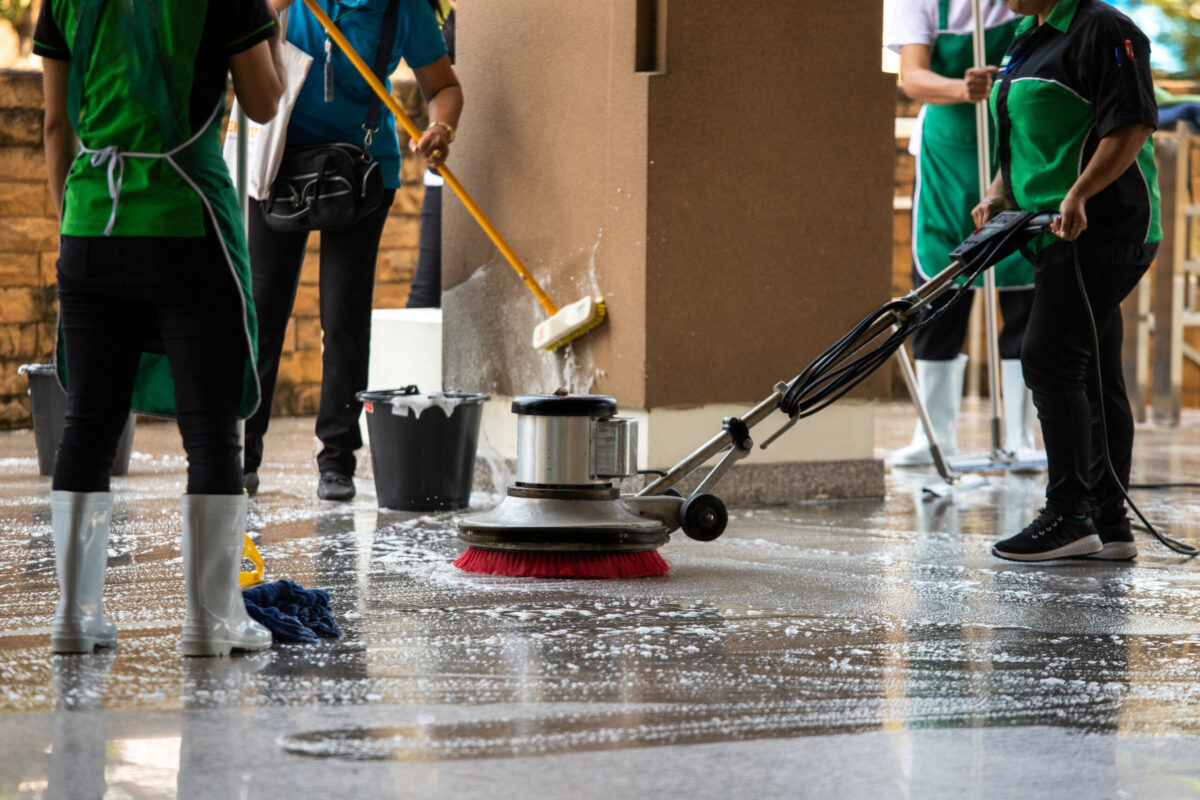
3. Auto-Scrubber Cleaning for Large Commercial Areas
For commercial and industrial floors larger than a few thousand square feet, auto-scrubbers are the practical and cost-effective standard for routine wet cleaning. They apply cleaning solution, agitate the surface with rotating brushes or pads, and vacuum the dirty solution in a single pass, which is both faster and more effective than manual mopping on large floor areas.
Pad and brush selection for auto-scrubbers on coated concrete should match the floor system. Soft pads are appropriate for polished concrete and decorative coatings where aggressive agitation would scratch the surface. Harder brushes are appropriate for broadcast aggregate epoxy systems where the textured surface requires more mechanical action to fully clean the aggregate recesses.
- Select auto-scrubber pads by floor surface type, not just by the contamination level being addressed
- Maintain auto-scrubber tanks, squeegees, and recovery systems regularly to prevent bacterial growth and odor from building up in the equipment
- For coated floors with anti-slip aggregate, scrubbing in multiple directions ensures cleaning solution reaches into the texture profile
4. Hot Water Extraction for Stubborn Soiling
Hot water extraction uses heated water at controlled pressure to penetrate surface soiling that cold water and standard cleaners cannot dislodge. It is particularly effective for removing embedded organic contamination, food residue, and soiling that has worked into the surface texture of broadcast aggregate floor systems.
For food processing facilities, commercial kitchens, and any regulated environment in Nashua, NH and surrounding areas where sanitation standards require documented surface cleanliness, hot water extraction provides a deeper clean than auto-scrubbing alone. The floor system must be confirmed compatible with the water temperature before using this method, as some coating systems have temperature limitations.
- Verify the coating system’s thermal resistance before using hot water extraction. Urethane cement is compatible at temperatures epoxy systems may not tolerate
- Allow adequate dry time after hot water extraction before returning the floor to production or vehicle traffic
- Combine hot water extraction with an appropriate detergent pre-treatment for maximum effectiveness on heavily soiled surfaces
5. Alkaline Degreaser Treatment for Oil and Grease Contamination
Oil and grease contamination on concrete floors, whether from vehicle leaks, equipment lubrication, or food production, requires a more aggressive chemical approach than pH-neutral routine cleaning can provide. Alkaline degreasers are formulated to break down petroleum-based and organic grease at the molecular level, making it possible to remove contamination that would otherwise bond permanently to the concrete surface.
Application method matters as much as product selection. The degreaser should be applied to the contaminated area, allowed to dwell for the manufacturer-specified contact time, agitated with a stiff brush or auto-scrubber, and then fully rinsed from the surface. Residual degreaser left on a coated floor surface attracts new contamination and can degrade certain coating chemistries with repeated use.
- Use the lowest effective concentration of alkaline degreaser for the contamination type. Stronger is not always better and can damage some coating finishes
- For heavy oil saturation on uncoated concrete, multiple treatment cycles may be required before full removal is achieved
- Always rinse thoroughly with clean water after degreaser application and confirm the pH of the rinse water before declaring the surface clean
6. Acid Cleaning for Efflorescence and Mineral Deposits

Efflorescence, the white mineral deposit that migrates to the surface of concrete and masonry as moisture moves through the slab, requires acid-based treatment to dissolve and remove. Alkaline and neutral cleaners do not chemically break down mineral salt deposits. Dilute muriatic acid or phosphoric acid solutions are the standard treatment for efflorescence removal on uncoated concrete surfaces.
This method is not appropriate for coated concrete floors. Acid treatment on epoxy, urethane, or polyaspartic coated surfaces will attack the coating chemistry and cause surface damage that cannot be repaired without recoating. On uncoated concrete where efflorescence is a maintenance issue, acid cleaning should be followed by thorough water rinsing and pH neutralization before the surface is resealed or recoated.
- Always neutralize acid-cleaned surfaces with a dilute alkaline rinse followed by a clean water rinse before any subsequent coating application
- Personal protective equipment including chemical-resistant gloves, eye protection, and appropriate respiratory protection is required for acid cleaning operations
- Address the moisture source causing efflorescence before treating the surface. Recurring efflorescence indicates an ongoing moisture infiltration problem that cleaning alone will not resolve
Cleaning Products That Are Safe for Coated vs. Uncoated Concrete
Product compatibility is one of the most important and most overlooked aspects of commercial concrete floor maintenance. The wrong cleaner on the wrong surface causes damage that accumulates invisibly until the coating system begins to fail or the concrete surface degrades to the point where remediation is necessary.
Safe for Coated Concrete Floors
- pH-neutral floor cleaners specifically formulated for coated or sealed surfaces
- Dilute solutions of mild dish soap or commercial neutral detergent for light soiling
- Enzymatic cleaners for organic contamination on food-grade coated surfaces
- Manufacturer-recommended cleaning products specified for the installed coating system
Products to Avoid on Coated Floors
- Bleach and chlorine-based cleaners, which attack epoxy and urethane binder chemistry over time
- Citrus-based degreasers, which contain solvents that can soften and cloud certain epoxy topcoats
- Highly concentrated alkaline degreasers used repeatedly, which degrade coating adhesion at the surface level
- Any acid-based cleaner, which chemically attacks epoxy and polyaspartic coating systems on contact
Safe for Uncoated Concrete
Uncoated concrete is more tolerant of aggressive cleaning chemistry because there is no coating system to protect, but it is also more vulnerable to contamination penetration that permanently stains or weakens the slab surface.
- Alkaline degreasers for oil and grease removal
- Dilute muriatic or phosphoric acid for efflorescence and mineral deposit removal
- Enzymatic cleaners for organic and biological contamination
- Commercial concrete cleaners with surfactant systems designed for porous substrates
Building a Maintenance Schedule That Matches Your Facility

A concrete floor cleaning schedule that is appropriate for a high-volume food processing facility is going to look completely different from the right schedule for a commercial office building with polished concrete in the lobby. The frequency, method, and product selection all need to be calibrated to the actual contamination load the floor sees each day.
High-Traffic Industrial and Food Processing Environments
Facilities in Nashua, NH and surrounding areas with continuous production operations, food handling, or significant vehicle traffic need daily wet cleaning as a minimum baseline. Auto-scrubbing after each production shift, hot water extraction weekly, and a documented deep clean on a monthly or quarterly cycle is the standard framework for these environments. Cleaning logs that record method, product, concentration, and results are often required for regulatory compliance in food and pharmaceutical facilities.
Moderate-Traffic Commercial Environments
Commercial office buildings, retail facilities, and light manufacturing operations with coated or polished concrete floors typically require dust mopping daily, wet mopping two to three times per week, and a deeper auto-scrubber clean on a weekly or biweekly basis. Spot treatment of spills and contamination as they occur prevents soiling from bonding to the surface before scheduled cleaning cycles address it.
Seasonal and Event-Based Cleaning
New England winters bring road salt and sand into commercial facilities on footwear and vehicle tires, which creates accelerated abrasive wear on floor surfaces and leaves mineral deposits that require periodic treatment. Building a heavy-cleaning cycle at the end of winter into the annual maintenance schedule removes accumulated salt and grit before it causes permanent damage to the floor surface or underlying coating system.
Start Cleaning Your Concrete Floors the Right Way
Knowing how to clean concrete floors correctly is not just about keeping a facility looking professional. It is about protecting the investment in the floor system, maintaining the safety standards the surface was designed to provide, and avoiding the premature coating failure and concrete degradation that incorrect cleaning practices cause over time.
McLean Company works with commercial and industrial facilities across New England to specify, install, and maintain concrete floor systems that perform for years. If your facility’s floor maintenance program needs a review, or you are dealing with a floor that has been cleaned incorrectly and is showing signs of early wear or coating breakdown, we can assess the situation and recommend a path forward.
Contact us today to talk through your concrete floor cleaning needs and get guidance from a team that understands floor systems from the substrate up.