(978) 774-4330

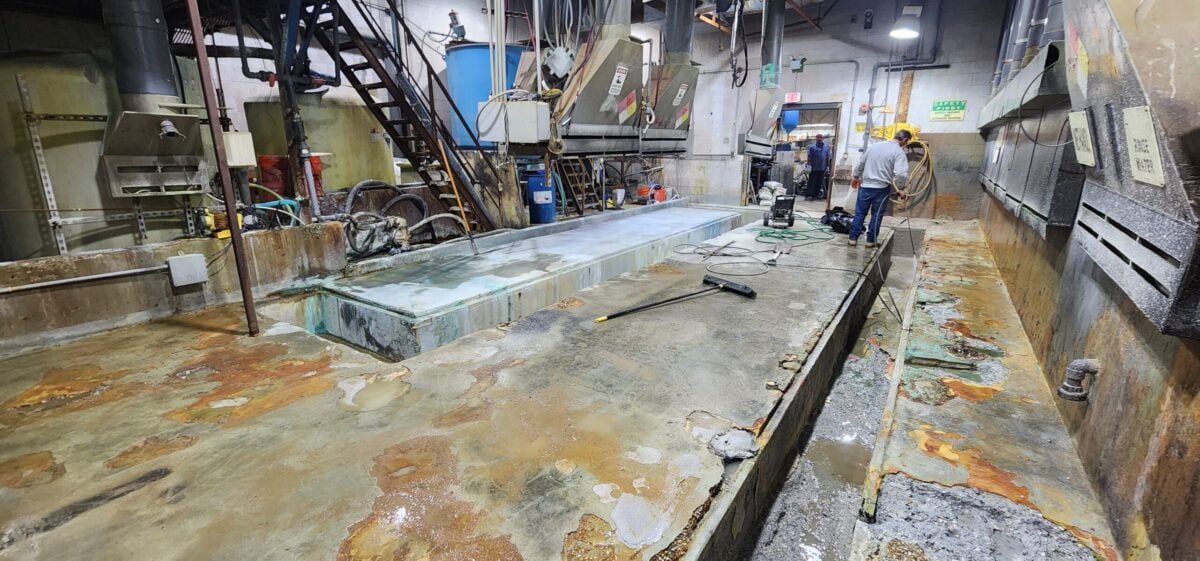
Dirt, grease, biological growth, and surface contamination do not just make a facility look neglected. They accelerate surface degradation, create safety hazards, and in regulated environments, they create compliance exposure that is difficult to defend. Commercial pressure washing is one of the most effective and cost-efficient maintenance tools available to commercial and industrial property owners, yet it is routinely deferred until the problem is visible rather than scheduled as a proactive part of facility care. For businesses and facility managers in Lowell, MA and surrounding areas, maintaining clean exterior and interior surfaces protects the underlying investment. The same discipline that goes into preparing concrete surfaces before a coating system goes down applies directly to how pressure washing fits into a comprehensive facility maintenance program.
Here is what you will learn in this guide:
- Why commercial pressure washing is a maintenance necessity, not just a cosmetic service
- 7 specific reasons facilities need professional pressure washing services in 2026
- Which surfaces and facility types benefit most from regular pressure washing programs
- How to evaluate frequency, method, and contractor selection for your property
- What Lowell, MA and surrounding areas facility owners should know before scheduling a commercial wash
A Comprehensive Guide to Why Commercial Pressure Matters for Facility Maintenance

Facility maintenance budgets are always under pressure, and surface cleaning is one of the first line items that gets deferred when costs need to be cut. The logic seems reasonable until you account for what that deferral actually costs over time. Biological growth on concrete and masonry retains moisture and accelerates freeze-thaw damage. Grease buildup on loading docks and parking surfaces creates slip hazards that generate liability exposure. Oil and chemical contamination left on exterior concrete works into the pore structure and eventually requires mechanical removal that costs significantly more than routine washing would have.
Surface contamination also attacks coating systems from beneath. A floor or exterior wall coating applied over a substrate that was not properly cleaned before application will fail prematurely, requiring costly removal and reinstallation that dwarfs the cost of the cleaning that was skipped. For commercial and industrial properties in Lowell, MA and surrounding areas, the math on deferred surface cleaning consistently favors a scheduled program over reactive remediation. Here is what regular commercial pressure washing actively protects:
- Surface Longevity: Removing biological growth, chemical deposits, and abrasive contamination before they work into the substrate prevents the accelerated surface degradation that shortens the life of concrete, masonry, and coated surfaces.
- Slip and Fall Prevention: Grease, algae, mold, and wet debris on exterior walkways, loading docks, and parking areas create conditions that significantly increase slip-and-fall incident risk and the liability that comes with it.
- Coating Adhesion: Surfaces that are regularly cleaned maintain the profile and cleanliness needed for coating maintenance applications to bond correctly, extending coating system life and reducing recoat costs.
- Regulatory Compliance: Food service facilities, healthcare properties, and industrial operations with discharge permits have specific surface cleanliness requirements that routine pressure washing supports.
- Property Value and Presentation: Clean exterior surfaces signal active property management to tenants, customers, and potential buyers. Stained, growth-covered facades communicate deferred maintenance regardless of how well the interior is maintained.
7 Reasons Facilities Need Professional Pressure Washing Services in 2026
The seven reasons below reflect the most common and consequential drivers of commercial pressure washing need across the facility types McLean Company works with across New England. Each addresses a real operational, safety, or financial problem that regular cleaning prevents.
1. Biological Growth Removal: Different Types of Contamination That Damage Surfaces
Algae, mold, mildew, and lichen growth on exterior masonry, concrete, and painted surfaces are not just cosmetic problems. These organisms retain moisture against the substrate surface, creating conditions that accelerate freeze-thaw damage in New England winters. Lichen, in particular, produces acids that etch into concrete and stone over time. By the time biological growth is visually significant, it has often already begun contributing to surface degradation.
Professional pressure washing with appropriate chemical pre-treatment removes biological growth at the root level rather than just removing the visible surface layer. Soft-wash methods using low pressure and detergent dwell time are appropriate for painted surfaces and older masonry where high-pressure impact could cause damage.
- Biological growth on north-facing and shaded surfaces is often more aggressive than it appears from a distance
- Chemical pre-treatment kills growth at the root and reduces regrowth rate after washing
- High-pressure washing without chemical pre-treatment on biological growth often scours the surface without eliminating the organism’s root structure
2. Grease and Oil Removal from Loading Docks and Service Areas
Commercial loading docks and vehicle service areas accumulate grease and oil contamination that becomes both a slip hazard and a surface damage issue over time. Oil that is not removed penetrates into concrete pores, making future coating applications impossible without aggressive mechanical preparation. Grease on dock surfaces and ramps creates the conditions for serious slip-and-fall incidents, especially when wet from rain or wash-down water.
For commercial and industrial facilities in Lowell, MA and surrounding areas with active loading operations, quarterly grease removal from dock surfaces is a practical minimum. High-volume food distribution, restaurant supply, and manufacturing facilities with significant vehicle servicing may require more frequent service.
- Hot water pressure washing is significantly more effective than cold water for grease and oil removal on concrete surfaces
- Alkaline degreaser pre-treatment applied before hot water washing breaks down oil at the molecular level for more complete removal
- Repeat treatment may be needed on surfaces with years of accumulated contamination before a single wash cycle achieves full removal
3. Pre-Coating Surface Preparation
One of the most important and frequently overlooked applications of commercial pressure washing is as a preparation step before any exterior coating, painting, or sealant application. Paint and coating systems applied over contaminated surfaces fail prematurely regardless of product quality. Biological growth, efflorescence, chalking paint, and surface debris all prevent proper adhesion, and a pressure wash is the most efficient method for removing them from large exterior surface areas before coating work begins.
Professional pressure washing crews working in coordination with a painting or coating contractor understand the pressure settings, detergent types, and drying time requirements that leave a surface properly prepared rather than just visually clean. A surface that looks clean but still has residual chemical contamination is not ready for coating.
- Pressure and nozzle selection must be appropriate for the substrate. High pressure on aged masonry or lap siding can cause damage that creates more prep work than it eliminates
- Surfaces must be allowed to fully dry before coating application. In humid New England conditions, that drying window may be longer than expected
- Efflorescence on masonry requires specific chemical treatment during the wash, not just physical removal of the white deposits
4. Parking Lot Maintenance Using Commercial Pressure Washers
Parking lots and parking structures accumulate oil, tire rubber, road salt, and biological growth that degrade the surface, reduce marking visibility, and create slip conditions at pedestrian crossings and stairwells. Regular use of commercial pressure washers on parking surfaces removes these contaminants before they work into the pavement or concrete structure and before reduced line marking visibility creates safety and compliance issues.
In parking structures specifically, pressure washing supports the inspection of concrete surfaces for crack formation, delamination, and reinforcement corrosion that is otherwise obscured by surface contamination. Clean surfaces allow maintenance crews and inspectors to identify structural issues early, when remediation is least expensive.
- Parking structure pressure washing should include deck surfaces, columns, walls, and stairwells for complete contamination removal
- Road salt accumulation on parking structure concrete should be removed before winter ends to limit the duration of chloride contact with reinforcing steel
- Freshly washed parking surfaces reveal the true condition of line markings and make restriping needs easier to assess accurately
5. Exterior Facade Restoration and Maintenance
Commercial building facades accumulate decades of pollution deposits, biological growth, and weathering that darken masonry, stain concrete panels, and create a visual presentation that no amount of landscaping can offset. Professional pressure washing restores facade appearance without the cost of painting or cladding replacement and, when done correctly, does not damage the underlying substrate.
For older commercial buildings in Lowell, MA and surrounding areas, facade washing is frequently the single most cost-effective exterior improvement available. A clean facade makes a building look maintained, occupied, and professionally managed, which matters for tenant attraction, lease renewal, and property valuation.
- Different facade materials require different pressure settings and chemical treatments. Brick, precast concrete, EIFS, and painted surfaces all have different tolerances
- Pressure washing should start at the lowest effective pressure and increase only as needed to avoid surface damage
- Historical or architecturally significant masonry requires specialized soft-wash methods and chemical selection to avoid surface damage
6. Dumpster Pad and Waste Containment Area Cleaning
Dumpster pads and waste containment areas in commercial and industrial facilities develop some of the most aggressive contamination on the property. Organic waste, leachate, grease, and biological growth combine on a surface that is in close proximity to the building and frequently visible to employees, customers, and delivery personnel. Many municipalities also have specific requirements for the cleanliness of waste containment areas as a condition of commercial operation.
Regular pressure washing of dumpster pads and waste areas removes the contamination source before it spreads to adjacent surfaces, controls odor, and demonstrates compliance with local sanitation requirements. Hot water washing with a strong sanitizing detergent is the appropriate method for these areas.
- Monthly washing of high-volume food service and restaurant waste pads is a practical minimum
- Containment and disposal of wash water from dumpster pad cleaning may be required under local discharge permits
- Biological enzyme treatments applied between wash cycles reduce organic contamination buildup and odor
7. Preparation for Facility Inspections and Tenant Turnover
Commercial facilities undergoing regulatory inspection, insurance assessment, or tenant turnover benefit significantly from comprehensive pressure washing as part of the preparation process. Clean surfaces allow inspectors to assess actual surface conditions accurately rather than flagging contamination as potential structural issues. For tenant turnover, a professionally washed facility presents as well-maintained and move-in ready, which affects both the speed of occupancy and the lease rate achievable.
For facility managers in Lowell, MA and surrounding areas handling multi-tenant commercial properties, scheduling pressure washing as a standard component of every tenant transition reduces the remediation work needed between occupancies and keeps the property in consistently good condition.
- Comprehensive pressure washing for inspection preparation should cover all exterior surfaces, loading areas, parking, and any interior concrete or masonry surfaces that are part of the inspection scope
- Timing matters. Washing too far in advance of an inspection allows biological growth to begin returning. Scheduling one to two weeks before inspection is typically appropriate
- Document the washing with photos and contractor records as part of the maintenance file the inspector reviews
What Surfaces Power Washing and Pressure Washing Cover on Commercial Properties
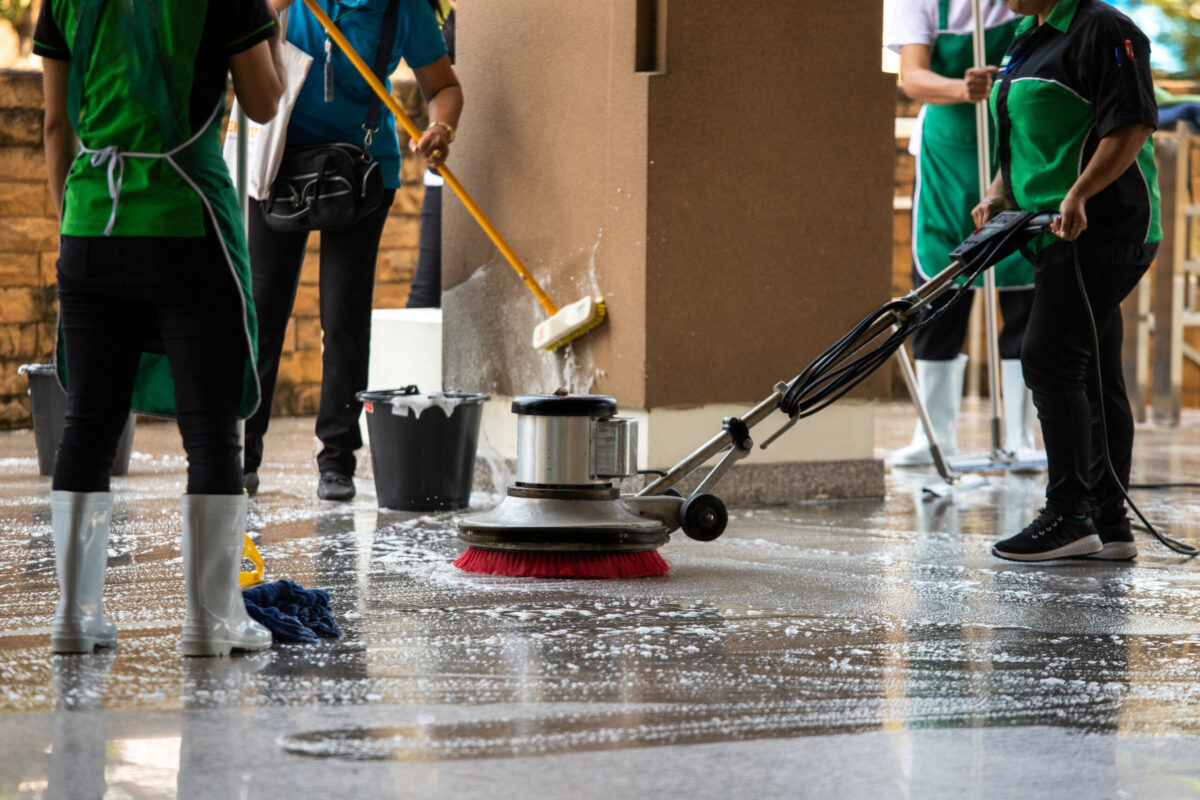
Commercial pressure washing is not a single service applied the same way to every surface. Professional crews adapt pressure, temperature, nozzle configuration, and chemical selection to the specific substrate and contamination type. Power washing and pressure washing each have distinct applications depending on the surface condition and contamination level, and understanding which approach fits which surface helps facility managers scope projects accurately and evaluate proposals with confidence.
- Exterior Concrete and Masonry: Building facades, retaining walls, foundation walls, and exterior stairwells. Pressure and chemical selection depends on the masonry type and age.
- Parking Surfaces and Structures: Asphalt lots, concrete decks, parking structure levels, ramps, and stairwells. Road salt, oil, and biological growth are the primary contamination types.
- Loading Docks and Service Areas: Dock surfaces, dock levelers, service aprons, and vehicle service bay floors. Hot water and degreaser are standard for these applications.
- Dumpster Pads and Waste Areas: Concrete containment pads and surrounding surfaces. Hot water with sanitizing detergent and enzyme treatment.
- Sidewalks and Pedestrian Areas: Entry plazas, walkways, and accessible routes. Slip resistance restoration is a primary outcome alongside appearance improvement.
- Rooftop Mechanical Areas: Equipment pads, mechanical room floors, and accessible rooftop surfaces where contamination from equipment operation accumulates.
How to Choose a Pressure Washer or Contractor for Your Commercial Property

Not all pressure washing services operate at the same standard, and the differences matter more on commercial and industrial properties than on residential ones. A contractor who applies incorrect pressure to aged brick or EIFS cladding can cause damage that costs significantly more to repair than the wash would have cost. Evaluating proposals on price alone is a reliable path to either a substandard result or a damaged surface.
Equipment Capability
Whether you are evaluating a commercial pressure washer for in-house use or vetting an outside contractor, equipment capability determines what is achievable on a given surface and contamination type. Commercial property washing requires equipment with sufficient flow rate and pressure range to address large surface areas efficiently and the flexibility to reduce pressure for sensitive surfaces. Hot water capability is essential for grease and oil contamination. Surface cleaners and rotary nozzle attachments are standard tools for parking deck and sidewalk washing that produce more consistent results than wand washing across large flat areas.
Chemical Knowledge and Handling
The detergents and treatments used in commercial pressure washing are not consumer products. Proper application rates, dwell times, and neutralization steps require product knowledge and experience. A contractor who uses the same soap on a biological growth problem that they use on a dumpster pad is not operating at a professional standard. Ask any prospective contractor how they select and apply chemical treatments for the specific contamination types on your property before signing a contract.
Water Recovery and Discharge Compliance
Many commercial washing projects generate wash water that contains contaminants regulated under local stormwater discharge permits. A professional contractor understands which applications require water recovery and containment and has the equipment to manage it. Facilities that allow wash water from grease-contaminated surfaces to enter storm drains can face regulatory penalties that far exceed the cost of the wash.
Keep Your Facility Clean and Protected Year-Round
Deferred surface cleaning is one of the most expensive false economies in commercial facility management. The contamination that builds up on exterior concrete, loading docks, facades, and parking surfaces does not stay on the surface. It works into the substrate, degrades coatings, creates liability exposure, and produces a visual presentation that communicates the wrong message about how the property is managed.
McLean Company works with commercial and industrial facilities across New England to deliver pressure washing programs that protect surfaces, support coating system performance, and keep properties looking professionally maintained. Whether your facility needs a one-time pre-coating wash or a recurring annual maintenance program, we are ready to scope the work and execute it correctly.
Contact us today to schedule a site visit and get a commercial pressure washing plan that fits your facility’s needs and maintenance calendar.