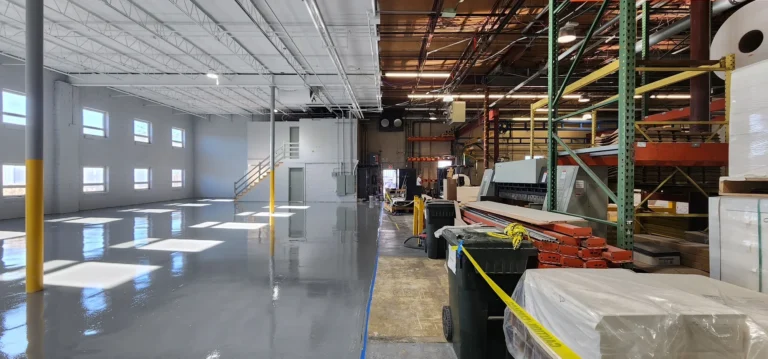
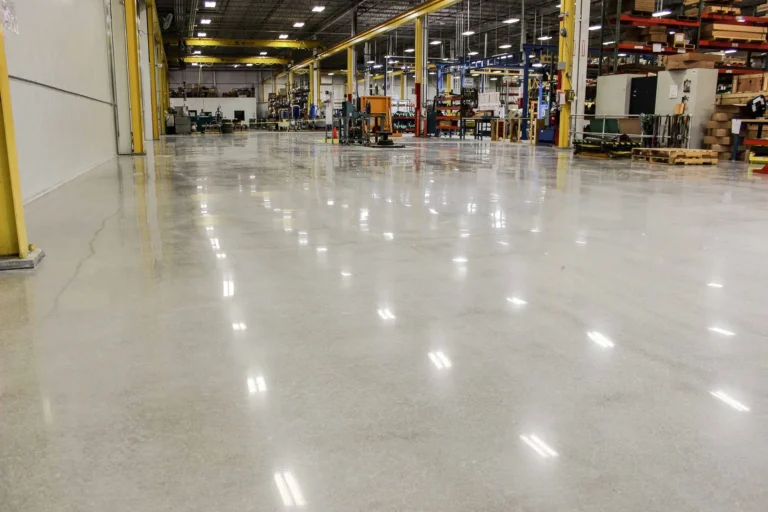
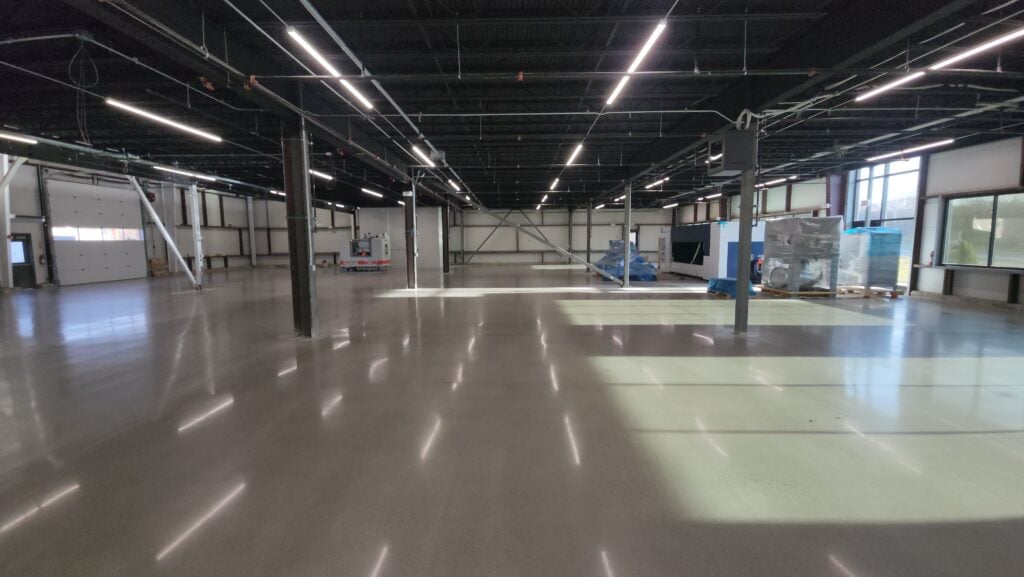
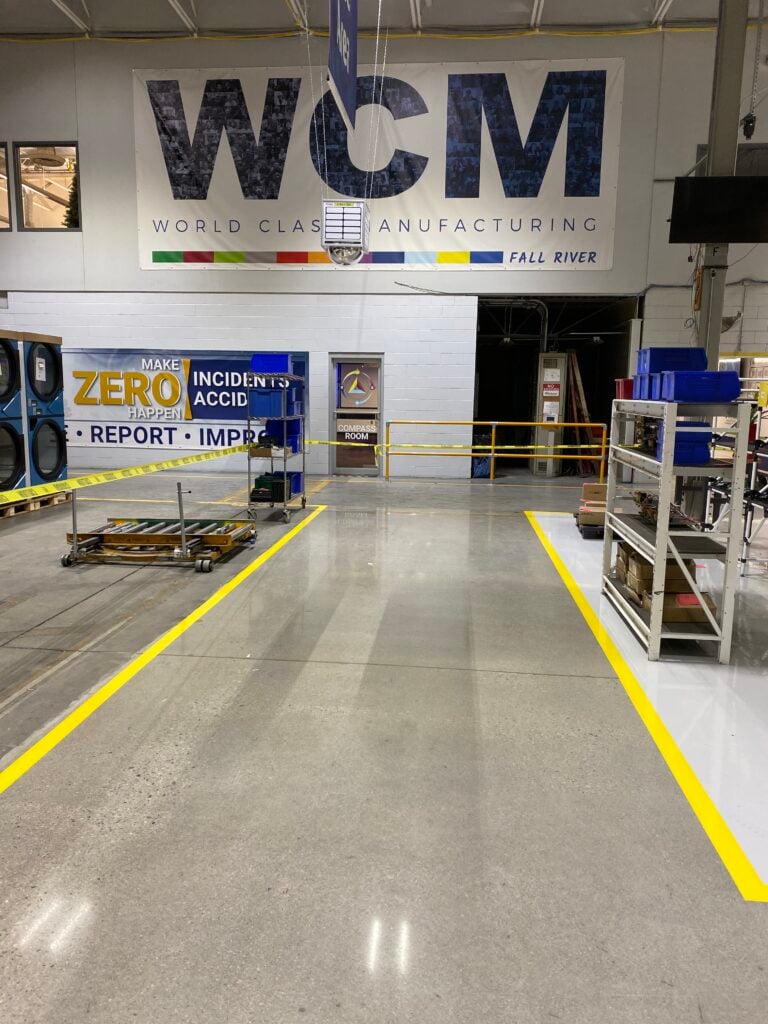
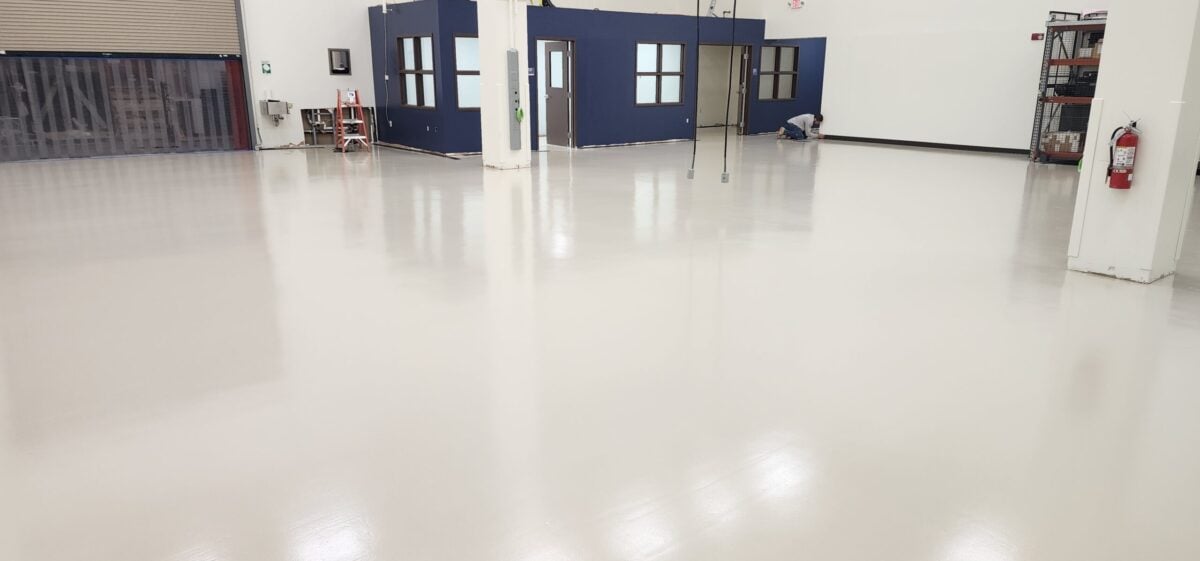
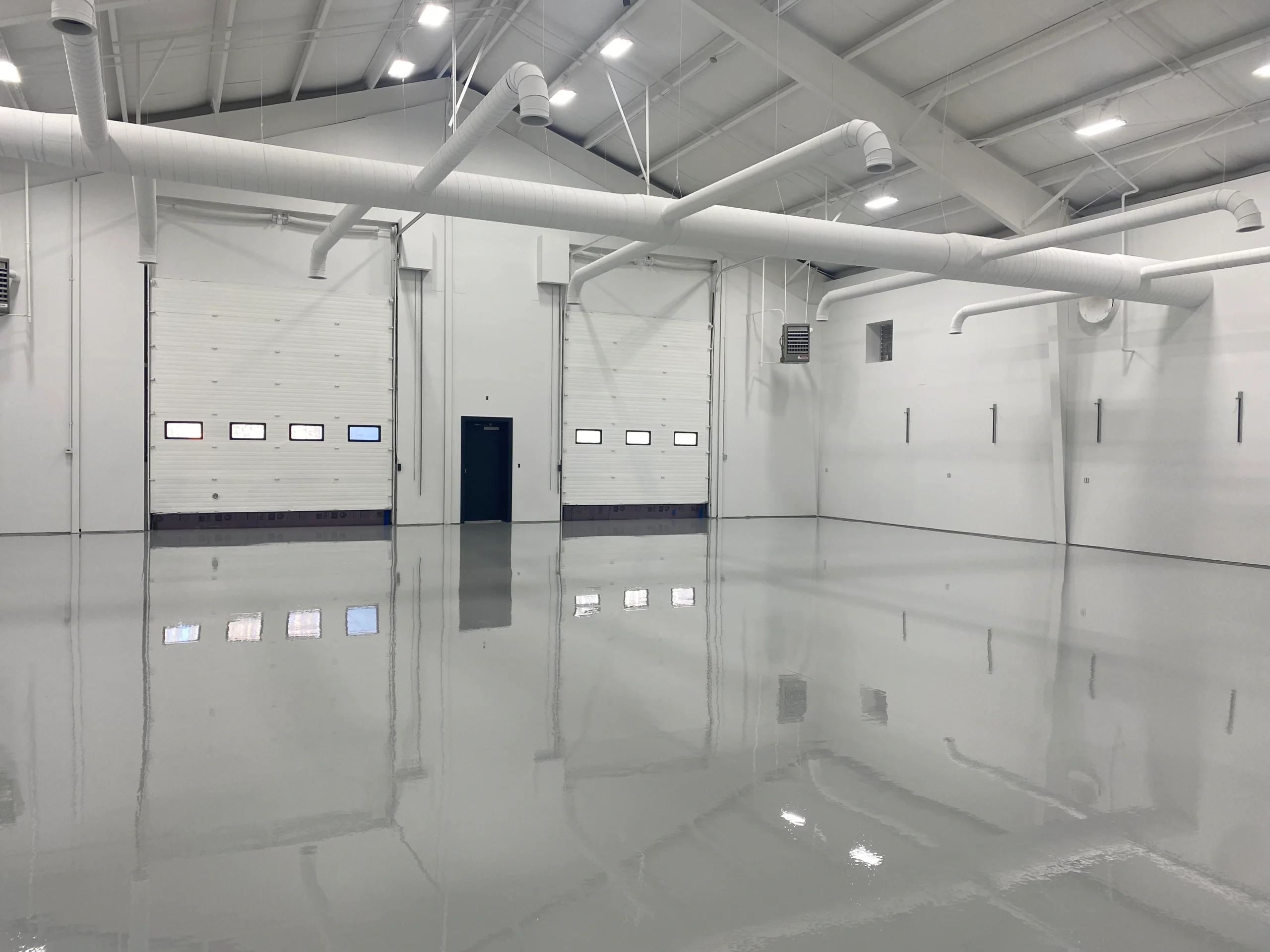
Budgeting a commercial flooring project without accurate cost data leads to one of two outcomes: you undershoot and scramble mid-project, or you overbid and lose work that should have been yours. Understanding commercial flooring cost per square foot means looking past the material price tag and accounting for surface preparation, system selection, labor, and the long-term performance expectations that make one option worth twice the upfront cost of another. For facility managers, contractors, and property owners in Braintree, MA and surrounding areas, where commercial and industrial floor systems take a beating from heavy use and harsh winters, getting the numbers right from the start is what separates a smart investment from a costly redo. The specifics of what goes into a durable, high-performance floor system matter as much as the number on the quote.
Here is what you will learn in this guide:
- What drives commercial flooring costs beyond the material price per square foot
- A 2026 cost breakdown across the most common commercial flooring systems
- Which factors push costs up or down on a real project
- How to evaluate total cost of ownership rather than just upfront price
- What facility owners in Braintree, MA and surrounding areas should ask before signing a contract
Why the Price Tag Alone Will Mislead You

Commercial flooring decisions made on material cost alone are almost always regretted. The square foot price of the material is often the smallest variable in the total installed cost of a commercial floor system. Labor, substrate preparation, existing floor removal, downtime during installation, and the frequency of reapplication or replacement all factor into what a flooring system actually costs over its useful life.
A facility that installs a low-cost system every three years and deals with frequent maintenance calls will spend significantly more over a decade than one that installs a premium system correctly and recoats on a 7 to 10 year cycle. The math on that trade-off is straightforward when you lay it out, but it gets obscured by the natural human tendency to focus on the number in front of you rather than the number over time. Here is what accurate cost evaluation actually protects:
- Budget Accuracy: Knowing the full installed cost prevents the mid-project budget surprises that delay completion and strain contractor relationships.
- System Suitability: Cost-driven selections that ignore performance requirements lead to premature failure and unplanned replacement expenses.
- Downtime Management: Understanding installation timelines and cure requirements helps facilities schedule work without costly operational interruptions.
- Lifecycle Planning: Total cost of ownership over 10 to 15 years is almost always a better decision framework than lowest upfront price per square foot.
- Competitive Bidding: Facility managers who understand true cost ranges can evaluate bids intelligently rather than defaulting to the lowest number.
2026 Cost Breakdown by Flooring System
Commercial flooring costs vary significantly based on the system type, the substrate condition, and the performance requirements of the space. The ranges below reflect fully installed costs in 2026, including materials, labor, and standard surface preparation on a floor in reasonable condition. Substrate repair, demolition of existing systems, and specialty requirements will add to these figures.
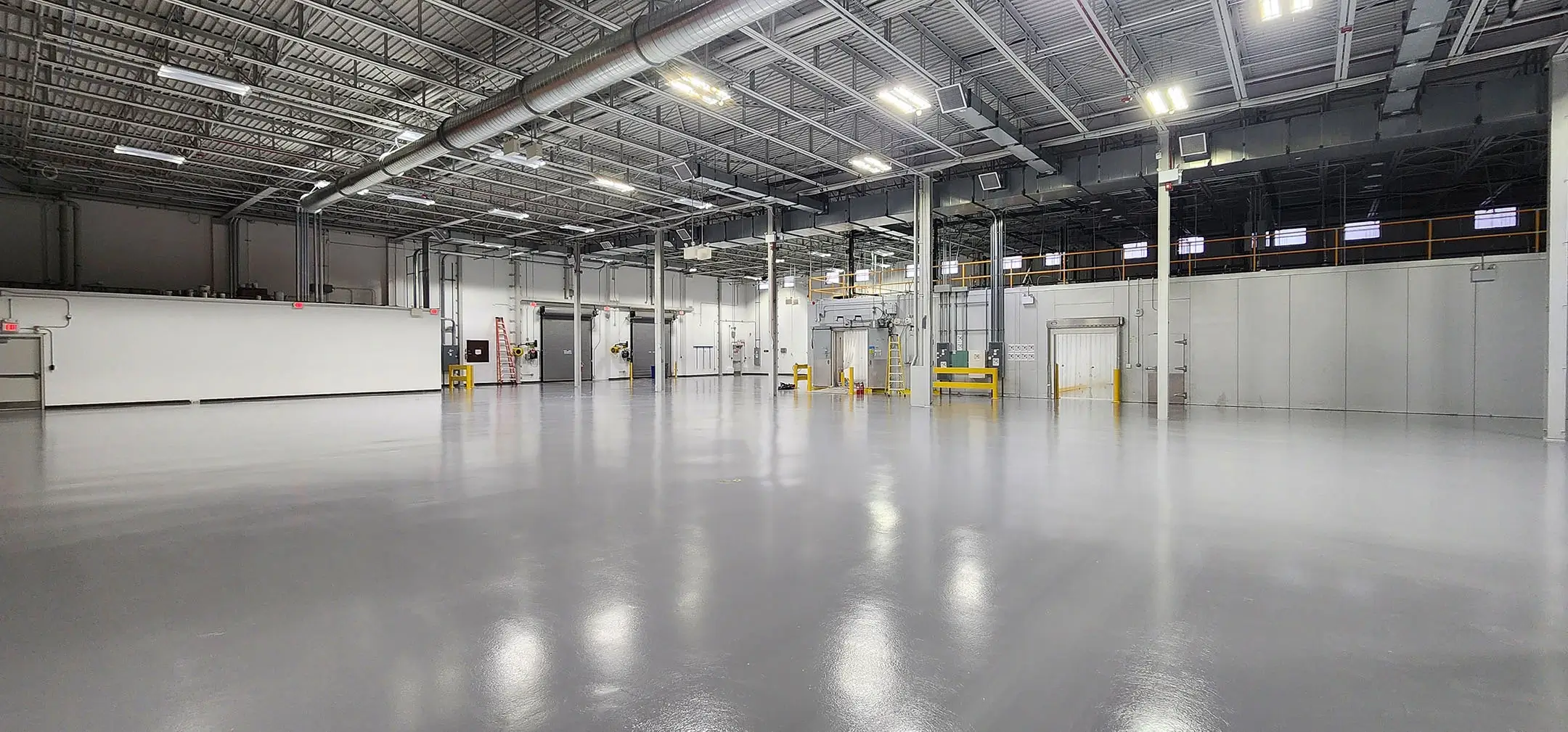
1. Epoxy Coating Systems: $3 to $12 Per Square Foot
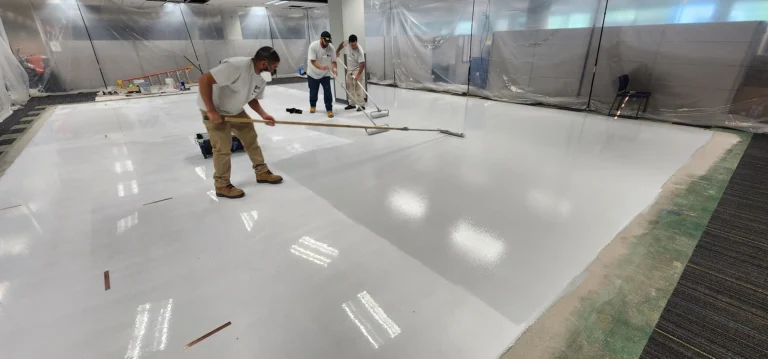
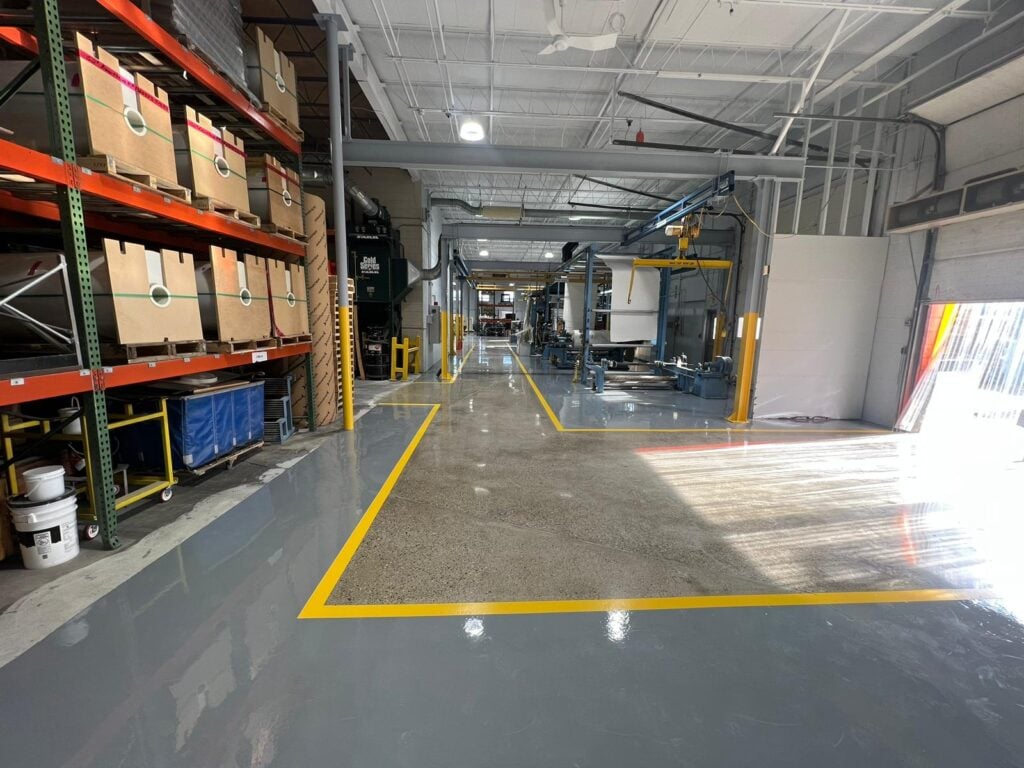
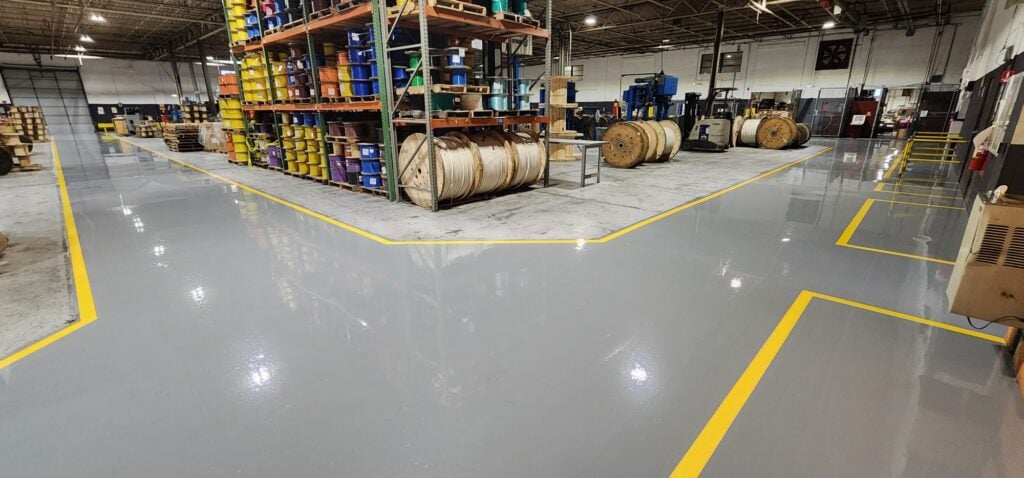
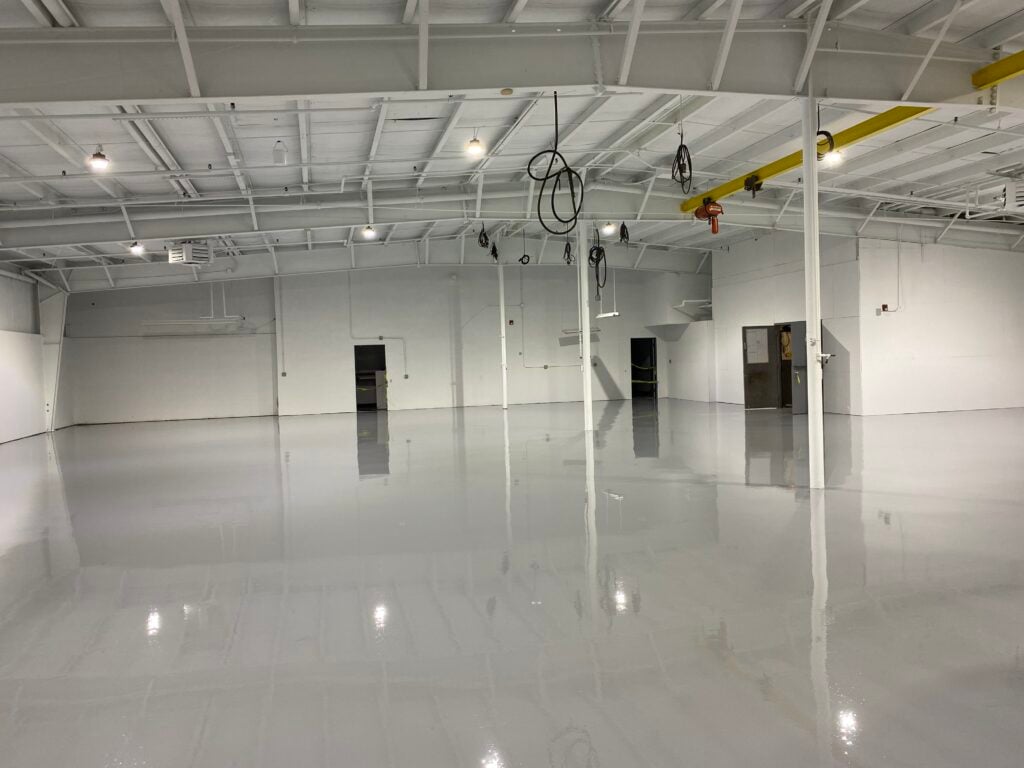
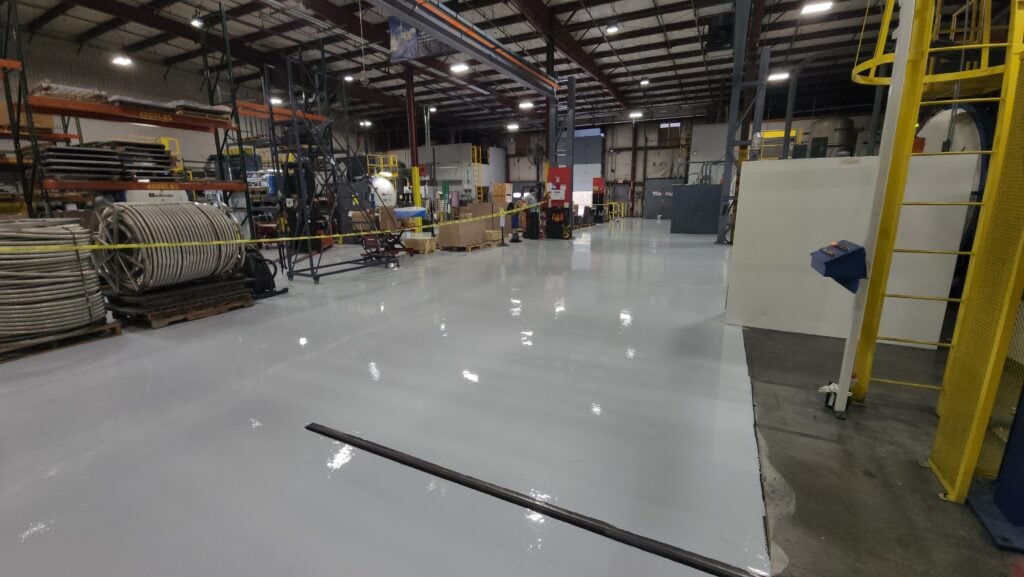
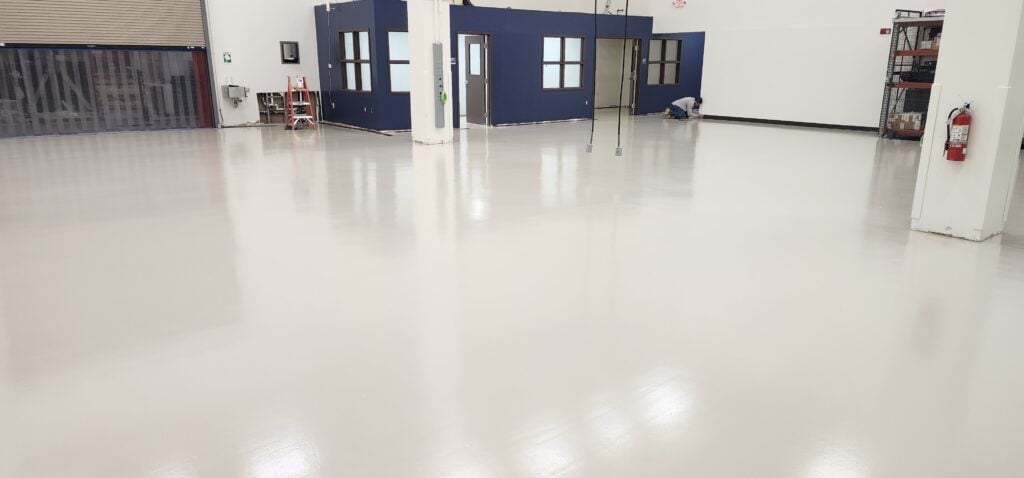
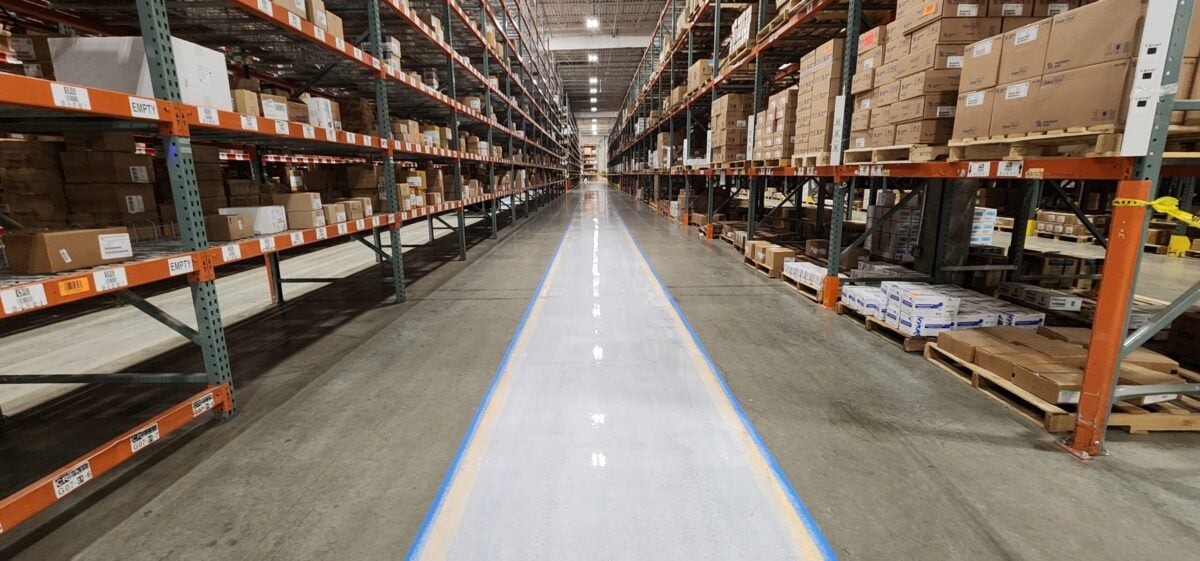
Epoxy is the most widely specified coating system for commercial and industrial concrete floors. It bonds directly to the concrete substrate, provides a durable, cleanable surface, and is available in a range of formulations suited to everything from light commercial use to heavy industrial environments. The wide cost range reflects the significant performance differences between a basic single-coat water-based epoxy and a high-build, multi-coat 100 percent solids system.
- Water-based epoxy, single coat: $3 to $5 per square foot, suitable for light-duty commercial use
- High-build 100 percent solids epoxy, two to three coats: $6 to $10 per square foot, appropriate for warehouses and light manufacturing
- Broadcast aggregate anti-slip epoxy systems: $8 to $12 per square foot, used in wet processing areas and safety-critical zones
2. Urethane Cement Systems: $8 to $18 Per Square Foot
Urethane cement is the system of choice for facilities where thermal shock, chemical exposure, and heavy mechanical wear are daily realities. Food processing plants, commercial kitchens, breweries, and pharmaceutical facilities are common applications. The material is self-leveling, bonds through residual moisture in the slab, and can be applied in coved configurations that eliminate the floor-to-wall joint where bacteria and contamination accumulate.
For facilities in Braintree, MA and surrounding areas in food production or processing, urethane cement is frequently the only system that meets both operational and regulatory requirements.
- Standard urethane cement broadcast system: $8 to $13 per square foot
- Coved base detail, added to floor system cost: $15 to $25 per linear foot
- High-build chemical-resistant urethane systems: $14 to $18 per square foot
3. Polyurea and Polyaspartic Coatings: $5 to $14 Per Square Foot
Polyurea and polyaspartic coatings have grown significantly in commercial specification over the past decade due to their rapid cure time, UV stability, and strong adhesion to concrete. These systems can typically return a floor to service within hours rather than days, making them attractive for facilities that cannot afford extended downtime. Polyaspartic formulations are also more UV stable than standard epoxy, which matters in spaces with significant natural light exposure.
- Single-coat polyaspartic with decorative flake: $5 to $9 per square foot for commercial showrooms and retail
- Multi-coat polyurea industrial system: $10 to $14 per square foot for high-traffic manufacturing and distribution environments
- Rapid return-to-service premium: typically adds $1 to $2 per square foot compared to equivalent epoxy systems
4. Polished Concrete: $3 to $12 Per Square Foot

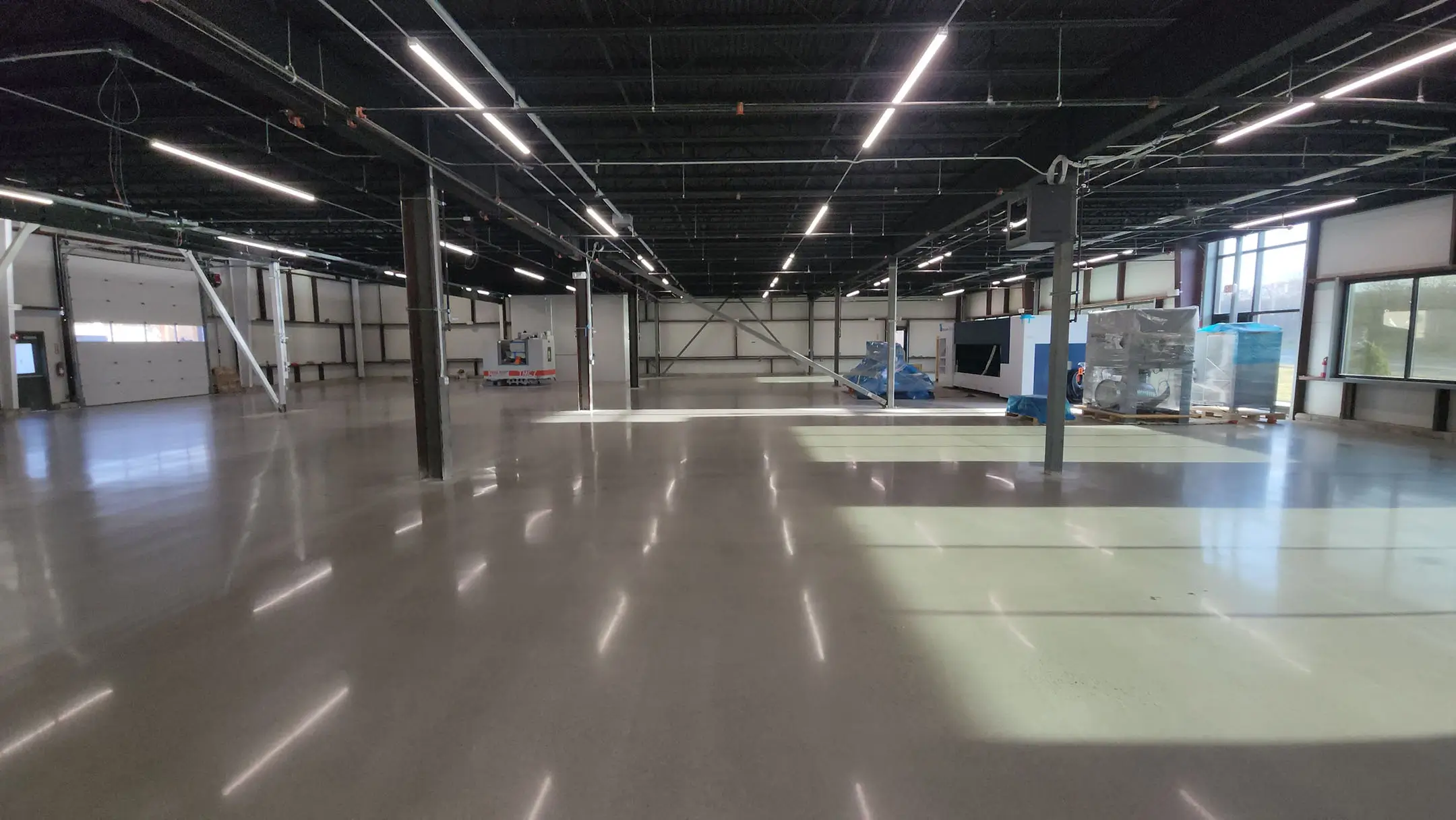
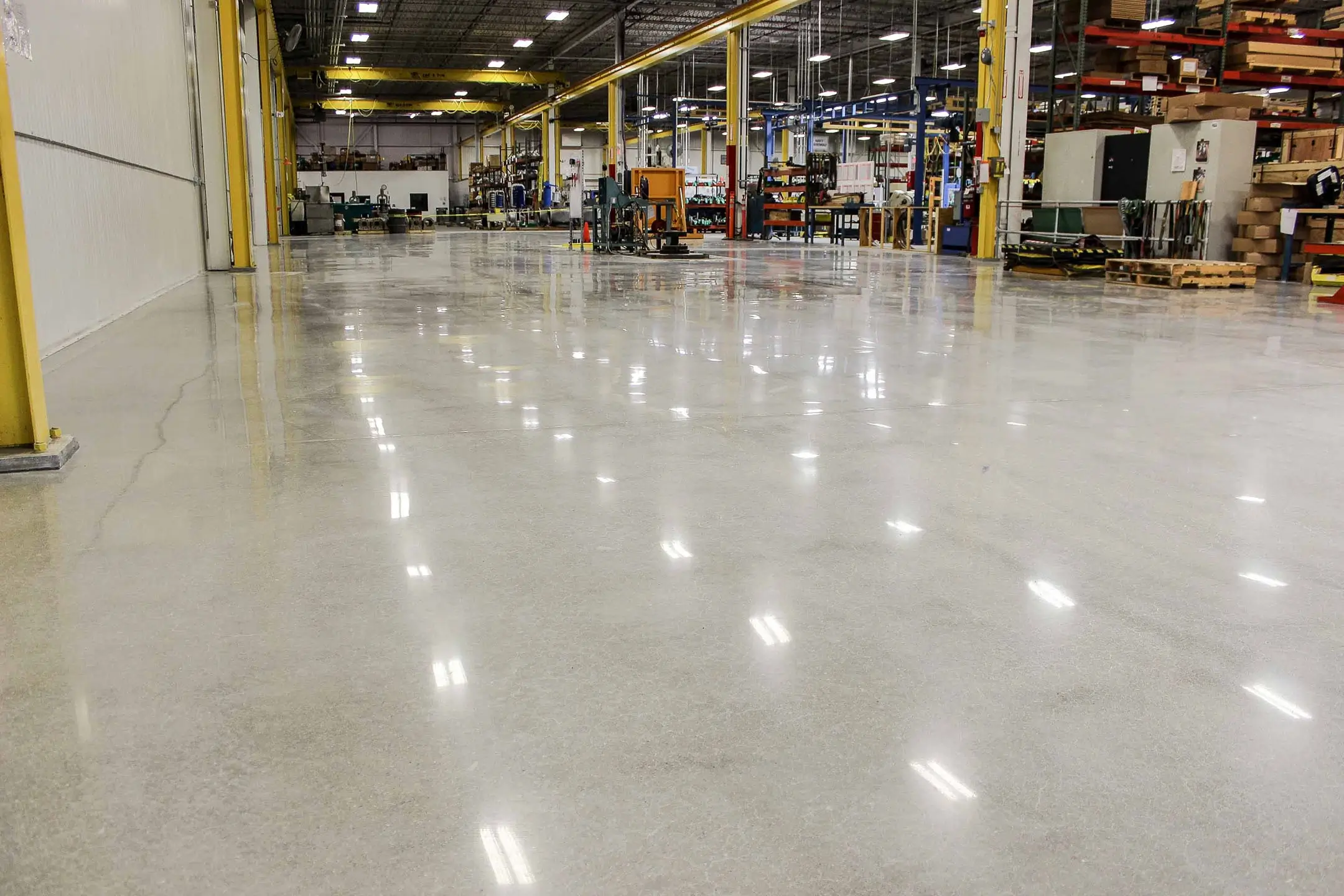
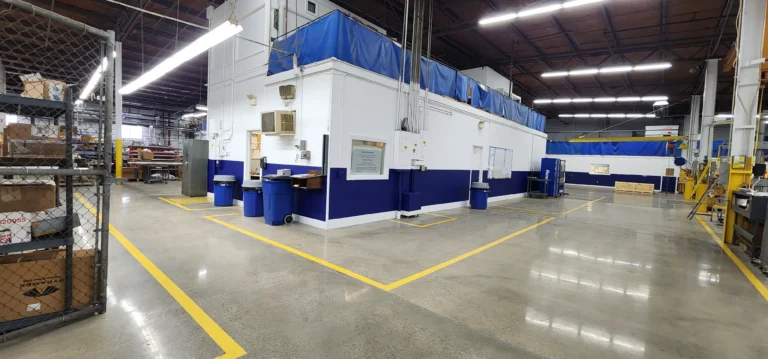
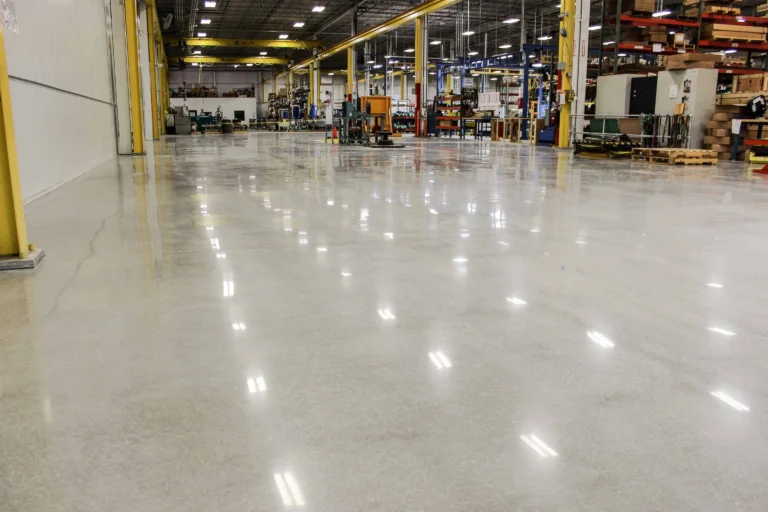
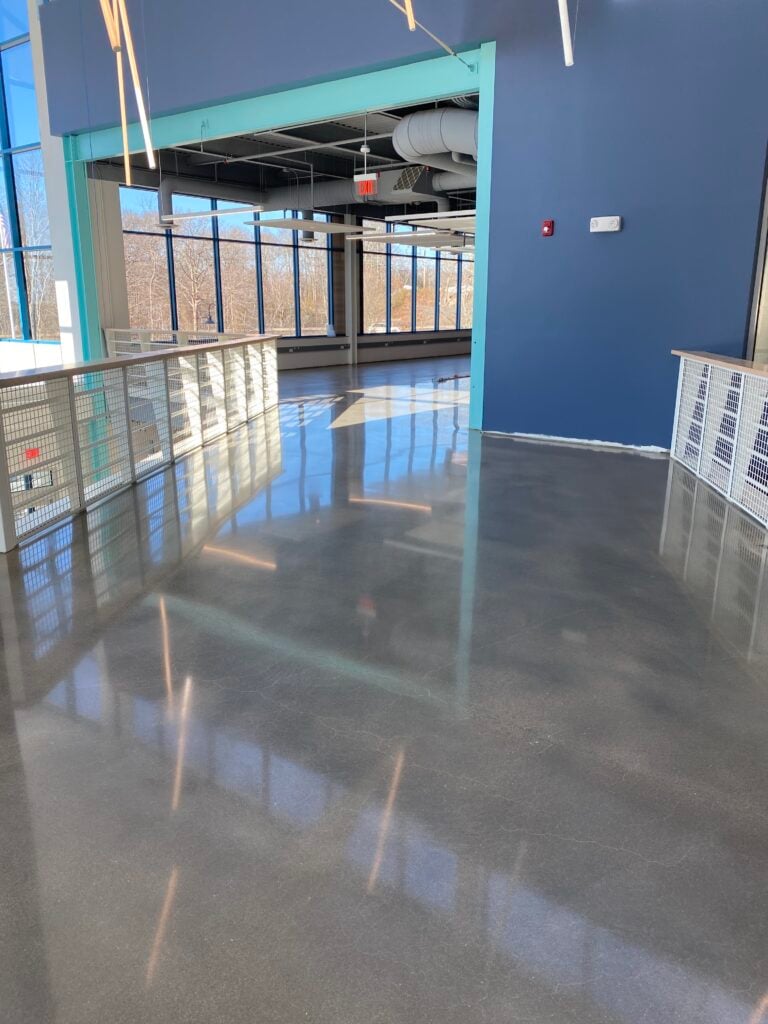
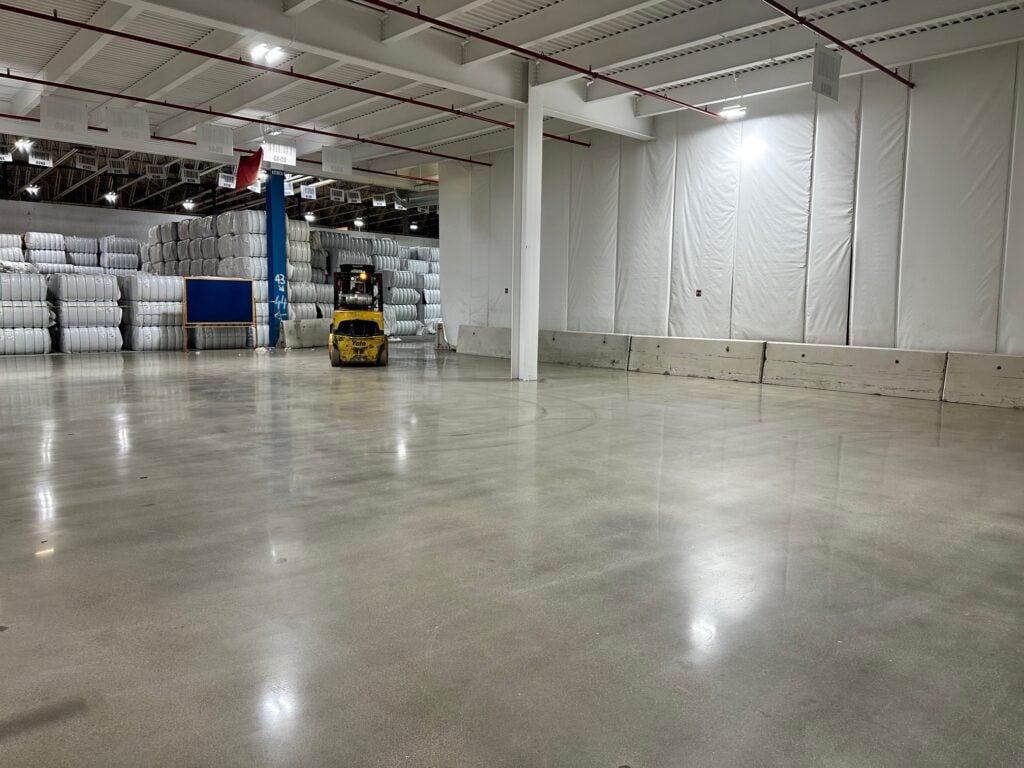
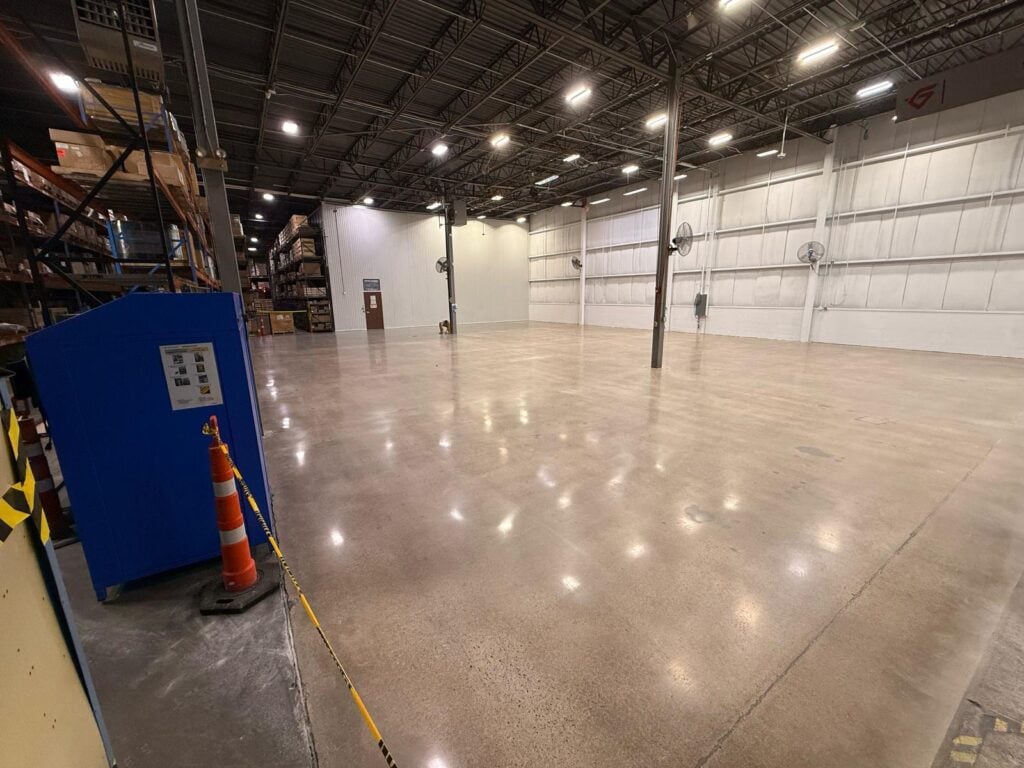
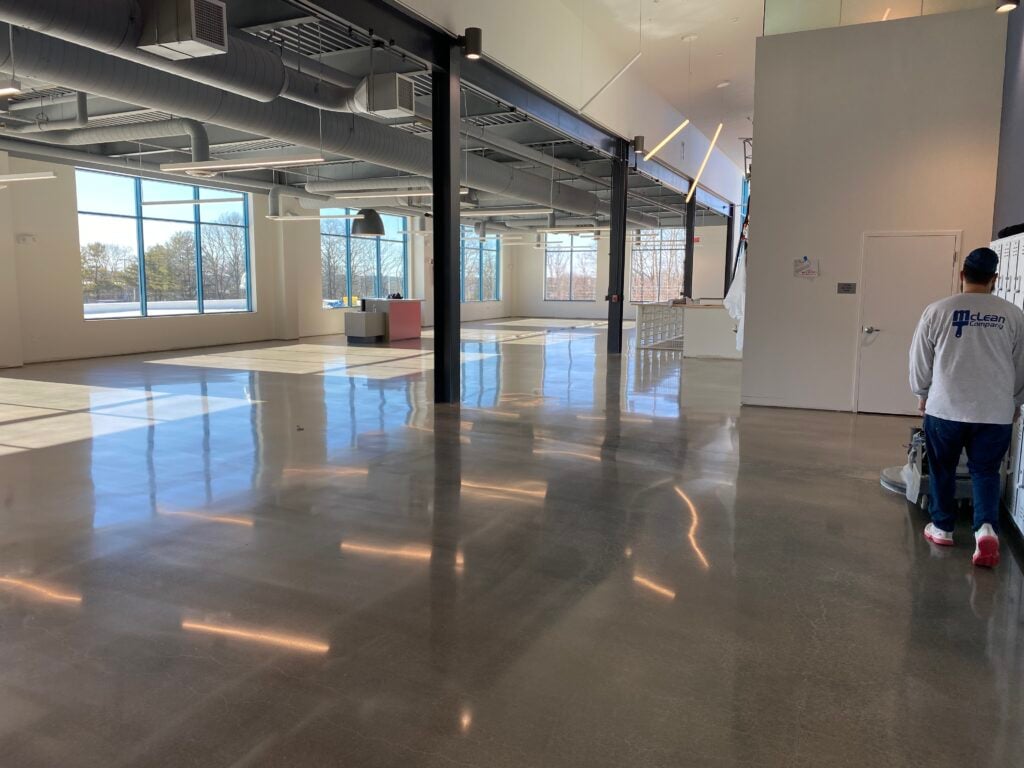
Polished concrete is increasingly specified in commercial retail, office, and mixed-use environments as both a cost management strategy and a design choice. The process mechanically refines the concrete surface through progressive grinding and densification, producing a durable, low-maintenance floor without a topical coating membrane. Cost depends heavily on the number of polishing passes, the desired gloss level, and the condition of the existing concrete.
- Basic grind and seal, low sheen: $3 to $5 per square foot
- Mid-range polish with densifier, medium sheen: $5 to $8 per square foot
- High-gloss full polish with dye or stain: $8 to $12 per square foot
5. Epoxy Terrazzo: $20 to $40 Per Square Foot
Epoxy terrazzo is specified for high-end commercial lobbies, healthcare facilities, airports, and institutional buildings where appearance, durability, and longevity are all premium requirements. It is the highest upfront cost system in commercial flooring, but it is also the one with the longest service life, often exceeding 40 years with basic maintenance. For facilities in Braintree, MA and surrounding areas planning major capital renovations of institutional or healthcare spaces, epoxy terrazzo deserves evaluation on a lifecycle cost basis rather than immediate dismissal based on square foot price.
- Standard two-color divider strip epoxy terrazzo: $20 to $28 per square foot
- Custom color and pattern terrazzo: $28 to $40 per square foot depending on complexity
- Curved or radius work adds to cost above standard straight-run installation
What Pushes Costs Higher on Real Projects
Published per-square-foot ranges give a starting framework, but real projects routinely land above the midpoint of those ranges because of conditions that are specific to the facility and the substrate. Understanding these cost drivers before you go to bid helps set realistic expectations and avoids the frustration of comparing a realistic quote to an unrealistic budget number.
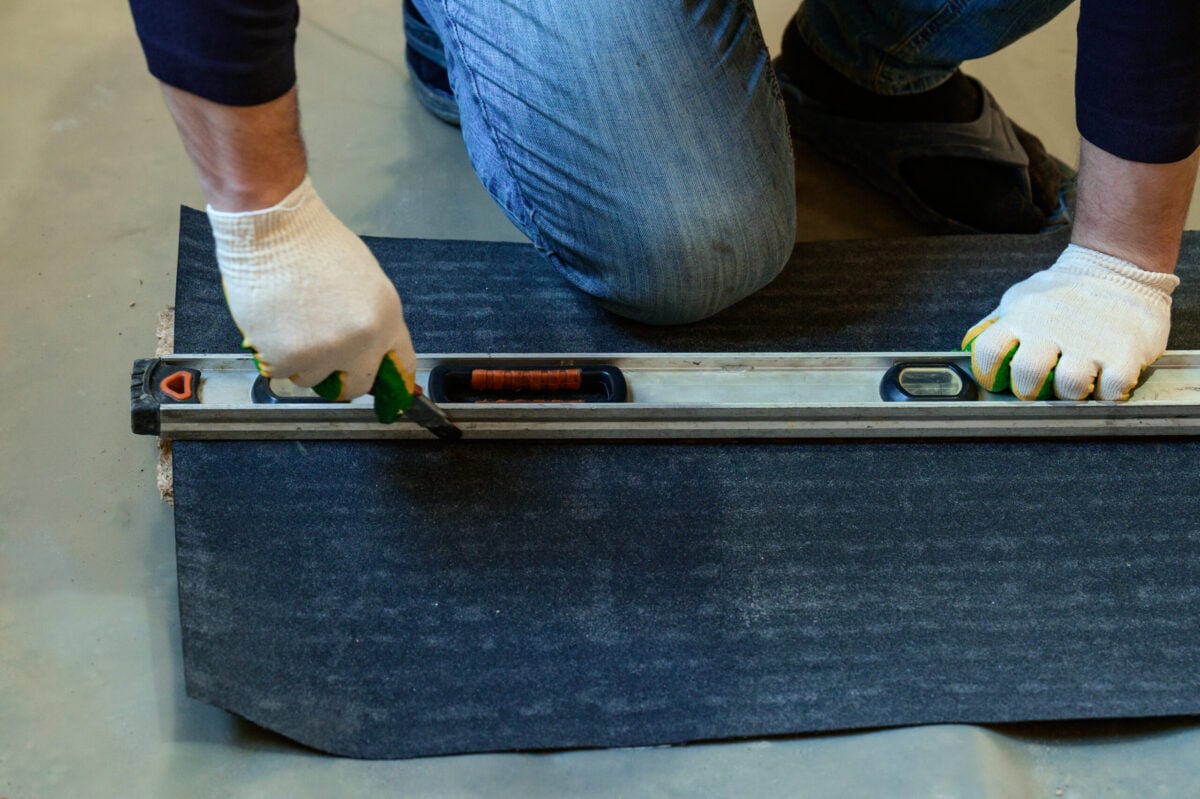
- Substrate Repair: Cracked, spalled, or contaminated concrete requires grinding, patching, or shot blasting before any coating system is applied. Repair work typically runs $1 to $5 per square foot depending on extent, and it is usually not visible until the floor is opened up.
- Existing System Removal: Removing old tile, adhesive residue, or failing coating systems adds cost that varies widely based on material type and adhesion. Mastic adhesive removal alone can run $2 to $4 per square foot on large commercial floors.
- Moisture Mitigation: Slabs with elevated moisture vapor emission require a moisture mitigation primer or membrane before the topical system is applied. Mitigation systems add $2 to $6 per square foot to the project cost.
- Tight Access and Small Square Footage: Labor efficiency drops significantly on small areas, around equipment, and in confined spaces. Small projects and complex layouts cost more per square foot than open, large-area applications.
- Scheduling and Shift Work: Facilities that require off-hours installation to avoid operational disruption pay a labor premium that can add 20 to 30 percent to the labor component of the project.
Evaluating Bids: What to Look for Beyond the Number

Getting three quotes on a commercial flooring project and selecting the lowest one is a strategy that reliably produces disappointing results. The variables between quotes often explain more than the price difference, and understanding those variables is how experienced facility managers consistently get better outcomes.
Scope Clarity
A bid that does not specify the system by manufacturer and product name, the number of coats, the target dry film thickness, and the surface preparation method is not a comparable bid. It is an invitation to a dispute when the installed product does not match expectations.
Surface Preparation Method
Shot blasting, diamond grinding, and acid etching all produce different surface profiles and achieve different adhesion results. The International Concrete Repair Institute (ICRI) surface profile standard that a given coating system requires should be specified in the bid. A quote that does not address prep method is almost certainly excluding adequate prep from the scope.
Warranty Terms
Manufacturer product warranties and contractor installation warranties are different documents with different coverage terms. Understanding what is and is not covered, and for how long, is part of evaluating the true value of a quote. A longer warranty from an experienced applicator often signals more confidence in the specification and installation quality.
References and Applicable Experience
A contractor who has installed the specified system in similar facility types and at comparable scale is a lower risk than one whose portfolio does not reflect relevant experience. Facilities in Braintree, MA and surrounding areas should ask specifically for references from commercial or industrial flooring projects, not just general painting or coating work.
Get the Right System at the Right Price
Commercial flooring cost per square foot is a starting point for the conversation, not the end of it. The system that fits your facility’s operational demands, substrate condition, and lifecycle budget will cost what it costs, and understanding that number clearly is worth more than chasing the lowest bid.
McLean Company works with commercial and industrial facilities across New England to specify and install floor systems that perform as promised and last as long as they should. We will walk your floor, assess the substrate, and give you a quote that accounts for what the project actually requires.
Contact us today to schedule a site visit and get an accurate cost breakdown for your commercial flooring project.