(978) 774-4330

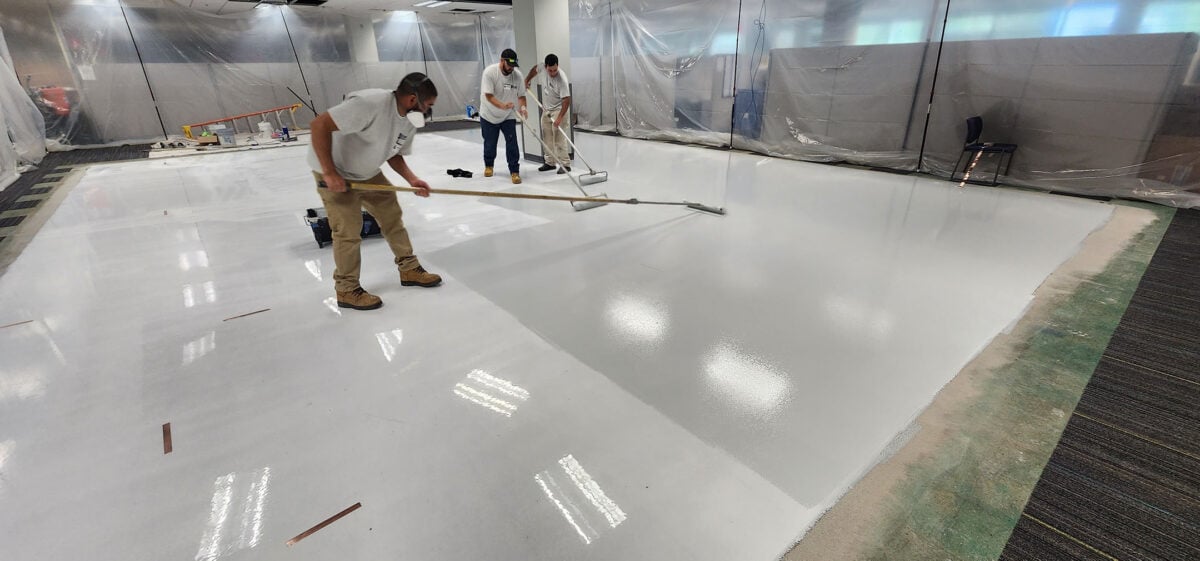
Concrete floors in commercial and industrial facilities do not fail because they are poorly made. They fail because they are left unprotected against conditions they were never designed to handle alone. A commercial floor coating is the layer between raw concrete and everything a working facility throws at it: forklift traffic, chemical spills, thermal cycling, heavy impact, and daily cleaning with aggressive products. For businesses and facility managers in Hartford, CT and surrounding areas, where manufacturing, distribution, and commercial operations run demanding daily schedules, the floor system underneath it all is either an asset or a liability. Understanding what goes into a coating system engineered for real industrial conditions is where better facility decisions begin.
Here is what you will learn in this guide:
- What separates a commercial floor coating from standard paint or sealer
- The 6 most effective coating systems for heavy-wear commercial and industrial environments
- How to match the right system to your facility’s specific exposure conditions
- What the installation process involves and why surface preparation determines everything
- How Hartford, CT and surrounding areas facility owners can extend floor life and reduce long-term maintenance costs
What Makes a Commercial Floor Coating System Different

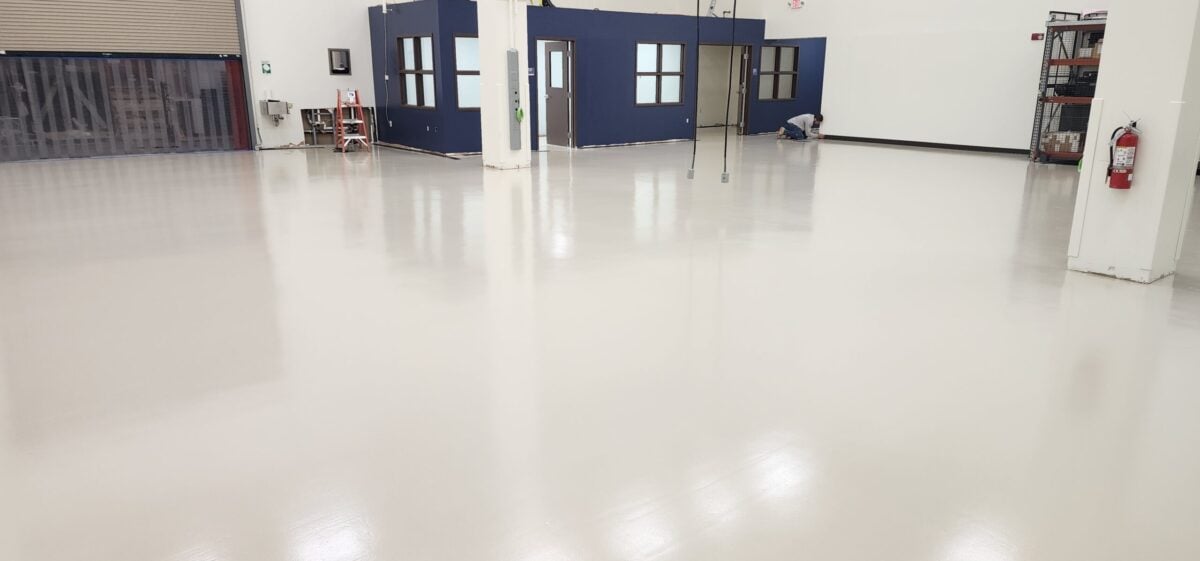
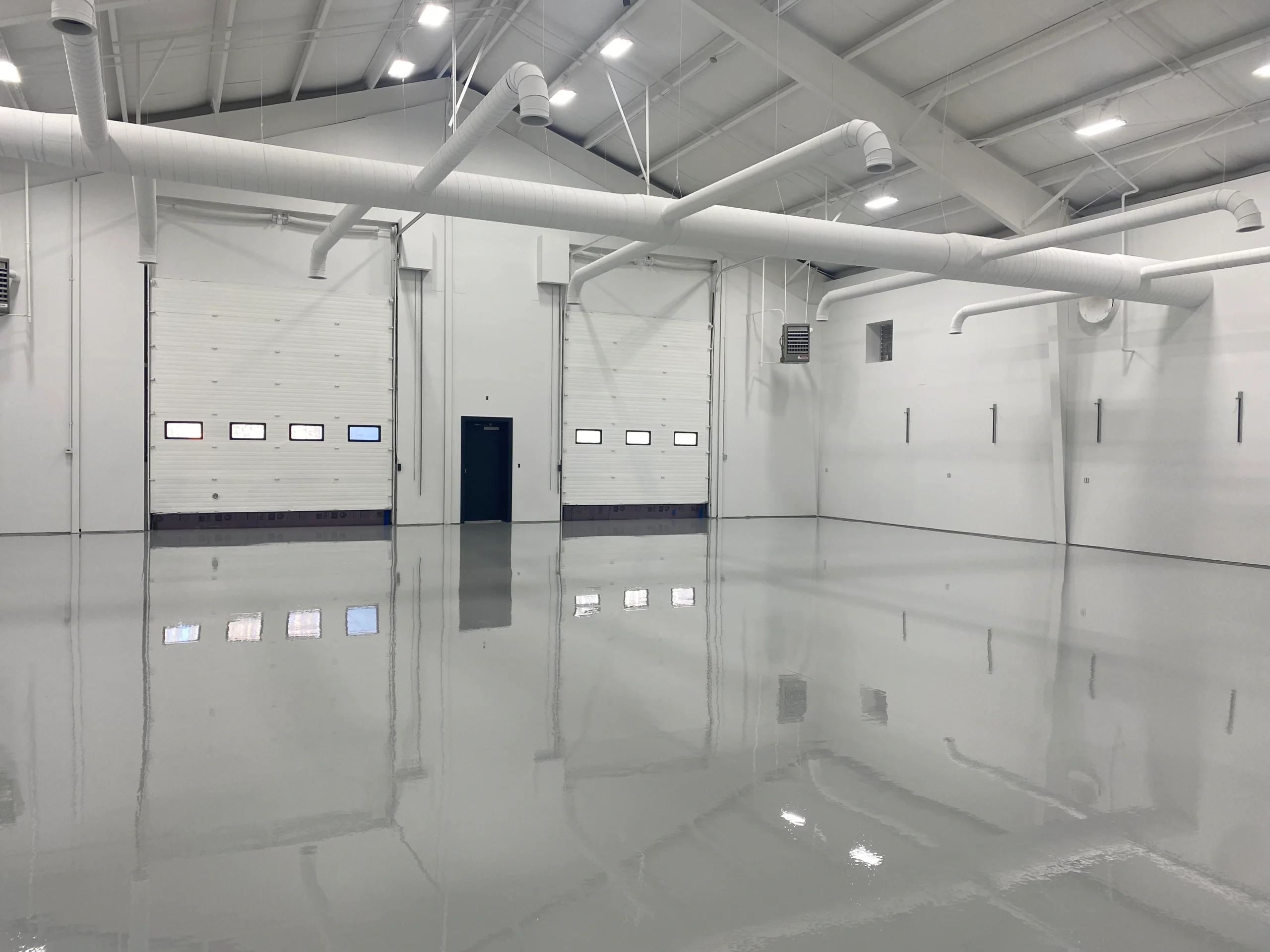
Not all floor protection products are created equal, and the gap between a commercial-grade coating system and a hardware store sealer is not a matter of degree. It is a matter of fundamental engineering. Commercial floor coatings are formulated to bond chemically to the concrete substrate, build to a specific dry film thickness, and deliver measurable resistance to the mechanical, chemical, and thermal forces present in working facilities.
Standard sealers penetrate or film over the surface but do not provide the structural bond or build thickness that separates a coated floor from an unprotected one under real load conditions. A commercial facility that applies a residential or light-duty product to an industrial floor is not getting partial protection. It is getting a surface treatment that will fail in the first season and leave the concrete in worse condition than before. Here is what a properly specified commercial floor coating actually delivers:
- Adhesion Strength: Commercial coating systems are engineered to achieve specific pull-off adhesion values that keep the coating bonded to the substrate under mechanical stress, not just sitting on top of it.
- Chemical Resistance: Formulated to resist the specific acids, caustics, solvents, and cleaning agents present in the facility rather than providing generic mild protection.
- Abrasion and Impact Resistance: Build thickness and coating chemistry work together to absorb surface wear and minor impact without fracturing or delaminating under daily operational loads.
- Moisture Management: Quality commercial systems address both surface water exposure and moisture vapor transmission from within the slab, which is one of the most common causes of coating failure.
- Compliance and Safety: Anti-slip aggregate, reflective color options, and chemical resistance ratings help facilities meet OSHA, FDA, and industry-specific floor requirements in one integrated system.
6 Systems for Heavy Wear
The six systems below represent the primary commercial floor coating options for facilities that cannot afford premature failure. Each has a distinct chemistry, performance profile, and best-fit application. Understanding the differences is what allows facility managers to make a specification decision based on their actual environment rather than defaulting to the most familiar name or the lowest price per gallon.
1. 100 Percent Solids Epoxy
One hundred percent solids epoxy is the baseline specification for serious commercial and industrial floor coating work. Unlike water-based or solvent-based epoxy products that contain diluents that evaporate during cure, 100 percent solids formulations convert entirely to coating material. The result is maximum film build per coat, superior adhesion, and a denser finished surface than diluted alternatives.
This system is appropriate for warehouses, distribution centers, manufacturing floors, and commercial garages where heavy foot and equipment traffic is the primary wear driver and chemical exposure is moderate.
- Typical application builds of 8 to 15 mils dry film thickness per coat
- Two to three coat systems are standard for heavy-duty commercial applications
- Primer coat selection is critical on porous or contaminated concrete substrates
2. High-Build Epoxy with Broadcast Aggregate
Broadcast aggregate epoxy systems take the performance foundation of 100 percent solids epoxy and add a layer of functional texture by broadcasting vinyl flake, quartz aggregate, or aluminum oxide into the wet base coat. The result is a floor that combines the adhesion and chemical resistance of epoxy with a surface profile that provides meaningful anti-slip performance and significantly better wear resistance than a smooth-troweled surface.
For facilities in Hartford, CT and surrounding areas with wet processing areas, wash-down zones, or pedestrian traffic in environments with incidental moisture, a broadcast aggregate system addresses both the protection and safety requirements in a single installation.
- Full broadcast systems provide a surface profile that is OSHA-compliant for slip resistance in wet areas
- Quartz aggregate broadcasts provide harder surface texture suited to heavy forklift traffic zones
- Vinyl flake broadcasts offer aesthetic variety alongside functional performance in customer-visible areas
3. Urethane Cement

Urethane cement is the system specified when standard epoxy reaches the limits of what it can handle. It is the floor coating of choice for commercial kitchens, food processing plants, breweries, pharmaceutical facilities, and any environment where the combination of thermal shock, chemical exposure, and heavy mechanical wear exceeds what epoxy systems are engineered to manage.
The material is a hybrid of urethane chemistry and cementitious filler that produces a coating with exceptional bond strength to concrete, resistance to steam cleaning and thermal cycling from near-freezing to over 200 degrees Fahrenheit, and compatibility with the most aggressive cleaning programs. It also bonds through residual moisture in the slab, which eliminates one of the most common prep complications that affects epoxy systems.
- Self-leveling formulations are available for smooth, monolithic surface installation
- Mortar-grade urethane cement provides a harder, more textured surface for extreme wear zones
- Coved base details using urethane cement eliminate the floor-to-wall joint in food-grade environments
4. Polyurea and Polyaspartic Coatings
Polyurea and polyaspartic systems have established a strong foothold in commercial floor coating specification over the past decade, primarily because of their ability to return a facility to service significantly faster than traditional epoxy systems. Cure times measured in hours rather than days make them particularly valuable in occupied facilities where extended downtime is operationally disruptive.
Beyond cure speed, these systems offer genuine performance advantages. Polyaspartic topcoats are more UV stable than standard aromatic epoxy, making them the appropriate choice for any floor with direct sunlight exposure. Both chemistries provide strong adhesion, chemical resistance, and abrasion performance comparable to epoxy at equivalent film builds.
- Full system installation and return to light traffic in as little as 6 to 12 hours under optimal conditions
- UV-stable formulations maintain color and gloss in sunlit retail, showroom, and partially enclosed garage environments
- Frequently used as a topcoat over epoxy base systems to combine the film build of epoxy with the UV stability and fast cure of polyaspartic
5. Epoxy Mortar Systems
Epoxy mortar systems are the heavy artillery of commercial floor coating. They combine 100 percent solids epoxy resin with a graded aggregate filler to produce a trowel-applied system that can be built to thicknesses of 3/16 inch to 1/4 inch or more. At that build, epoxy mortar provides impact resistance, compressive strength, and durability that no thin-film coating can approach.
These systems are specified for vehicle service pits, loading dock areas, heavy industrial floors with point loads from racking and machinery, and any zone where the floor takes direct impact or extreme concentrated loads on a regular basis.
- Installed at 125 to 250 mils total system thickness, compared to 10 to 30 mils for standard thin-film systems
- Provides structural repair capability in addition to surface protection on damaged concrete substrates
- Installation requires skilled trowel application and is more labor-intensive than spray or roller systems
6. Polished Concrete with Densifier and Sealer
Polished concrete is not a coating in the traditional sense, but it functions as a surface protection system and deserves a place in any honest comparison of heavy-wear commercial floor options. The process mechanically refines the concrete surface through progressive diamond grinding passes, then treats it with a chemical densifier that hardens and tightens the surface matrix. A penetrating sealer or guard system is applied as the final step.
The result is a floor that has no topical coating to delaminate, no film thickness to wear through, and a maintenance requirement that most occupied facilities can sustain with standard auto-scrubber equipment. For retail, office, and light commercial environments in Hartford, CT and surrounding areas where appearance and low maintenance matter more than chemical resistance, polished concrete is a compelling alternative to coated systems.
- No delamination risk because the protection is integral to the concrete rather than bonded on top of it
- Long-term maintenance costs are typically lower than coated systems that require periodic recoating
- Not appropriate for environments with significant chemical exposure, thermal shock, or heavy forklift impact loads
Surface Preparation: The Step That Determines Everything Else

Every commercial floor coating system discussed above has one thing in common: its performance is entirely dependent on the quality of the surface preparation that precedes it. A premium urethane cement system applied over contaminated, poorly profiled concrete will fail faster than a standard epoxy applied over a properly prepared substrate. Preparation is not a line item to reduce. It is the foundation the entire system stands on.
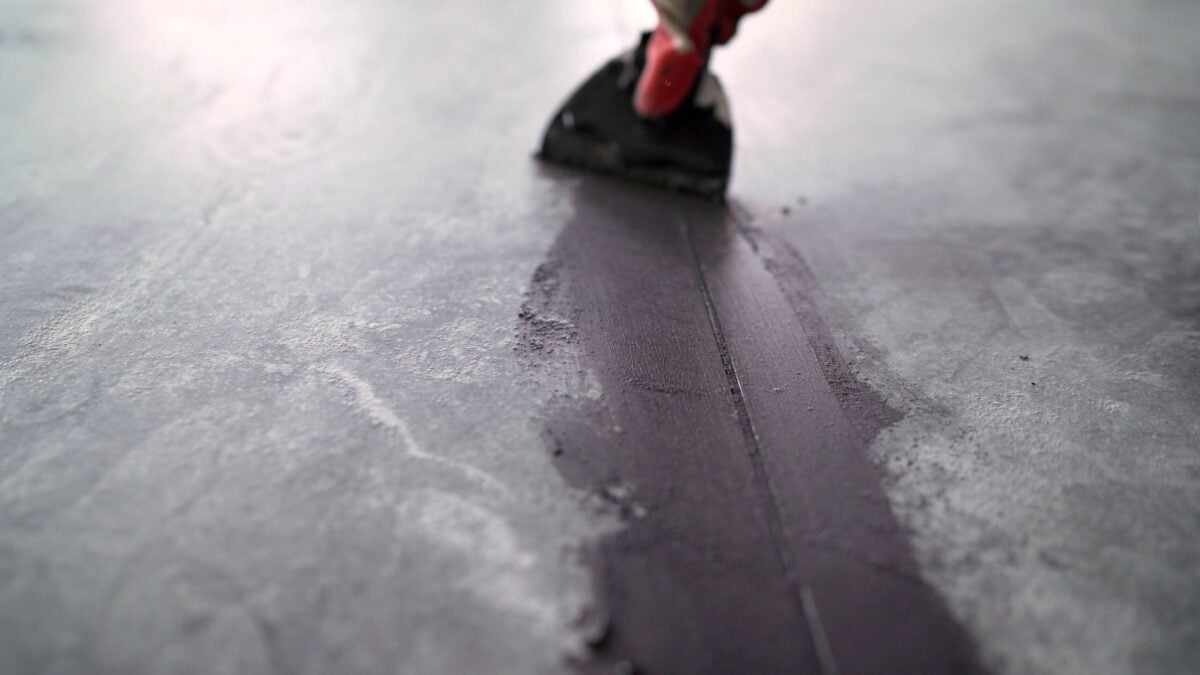
- Shot Blasting: The preferred mechanical preparation method for most commercial coating applications. Shot blasting removes surface laitance, opens the concrete pore structure for maximum adhesion, and produces a consistent surface profile across large floor areas. The ICRI CSP profile target should be specified for the system being applied.
- Diamond Grinding: Used for edge preparation, spot treatment, and areas where shot blast equipment cannot access. Also appropriate for lighter surface preparation requirements on concrete in good condition.
- Moisture Testing: Moisture vapor transmission from within the slab is one of the leading causes of commercial floor coating failure. Testing per ASTM F1869 or F2170 before system selection determines whether a moisture mitigation primer or barrier is required.
- Contamination Assessment and Removal: Oil, grease, curing compound residue, and existing coating remnants all interfere with adhesion. Chemical treatment, mechanical removal, or both may be required depending on the contamination profile.
- Crack and Joint Treatment: Cracks, control joints, and cold joints must be addressed before coating. The treatment method depends on whether the crack or joint is actively moving or dormant, and the filler material must be compatible with the topical coating system.
Evaluating Long-Term Value, Not Just Upfront Cost
The installed cost of a commercial floor coating is a meaningful number, but it is not the most meaningful number for evaluating what a floor system is actually worth to your facility. Total cost of ownership over the expected service life of the system tells a more accurate story, and it consistently favors systems that are correctly specified and properly installed over those that are selected primarily on initial price.
Recoat Cycle and System Longevity
A properly specified and installed 100 percent solids epoxy system in a moderate-duty commercial environment should deliver seven to ten years of service before a maintenance recoat is needed. A water-based product in the same environment might require recoating every two to three years. The math on that difference over a ten-year horizon is straightforward, and it does not account for the operational disruption of more frequent installation cycles.
Downtime Cost
For active commercial facilities in Hartford, CT and surrounding areas, the cost of floor installation downtime can exceed the cost of the floor system itself depending on the operation. Specifying a polyurea or polyaspartic system that returns a floor to service in hours rather than days has real dollar value for facilities where downtime is expensive, and that value should be part of the evaluation.
Maintenance Requirements
Different commercial floor coating systems have different ongoing maintenance requirements. Some need periodic waxing or resealing. Others are maintained with simple auto-scrubber cleaning. Polished concrete requires the least specialized maintenance of any system. Matching the maintenance requirements of the system to the facility’s realistic capacity for maintenance is part of making a specification that holds up over time rather than deteriorating because the required upkeep was never practical.
Specify the Right System for Your Facility
Commercial floor coating is not a commodity. The system that protects a food processing plant in year ten the way it did in year one is a fundamentally different product from the sealer that gets reapplied every spring. Getting the specification right from the start, backed by proper surface preparation and professional installation, is what separates floors that deliver long-term value from ones that become recurring budget problems.
McLean Company applies commercial floor coating systems to facilities across New England with the preparation standards and installation discipline that demanding environments require. We assess the substrate, specify the right system, and execute the work correctly so the floor performs the way it should.
Contact us today to schedule a site visit and get a straightforward recommendation for your facility’s floor coating project.