(978) 774-4330

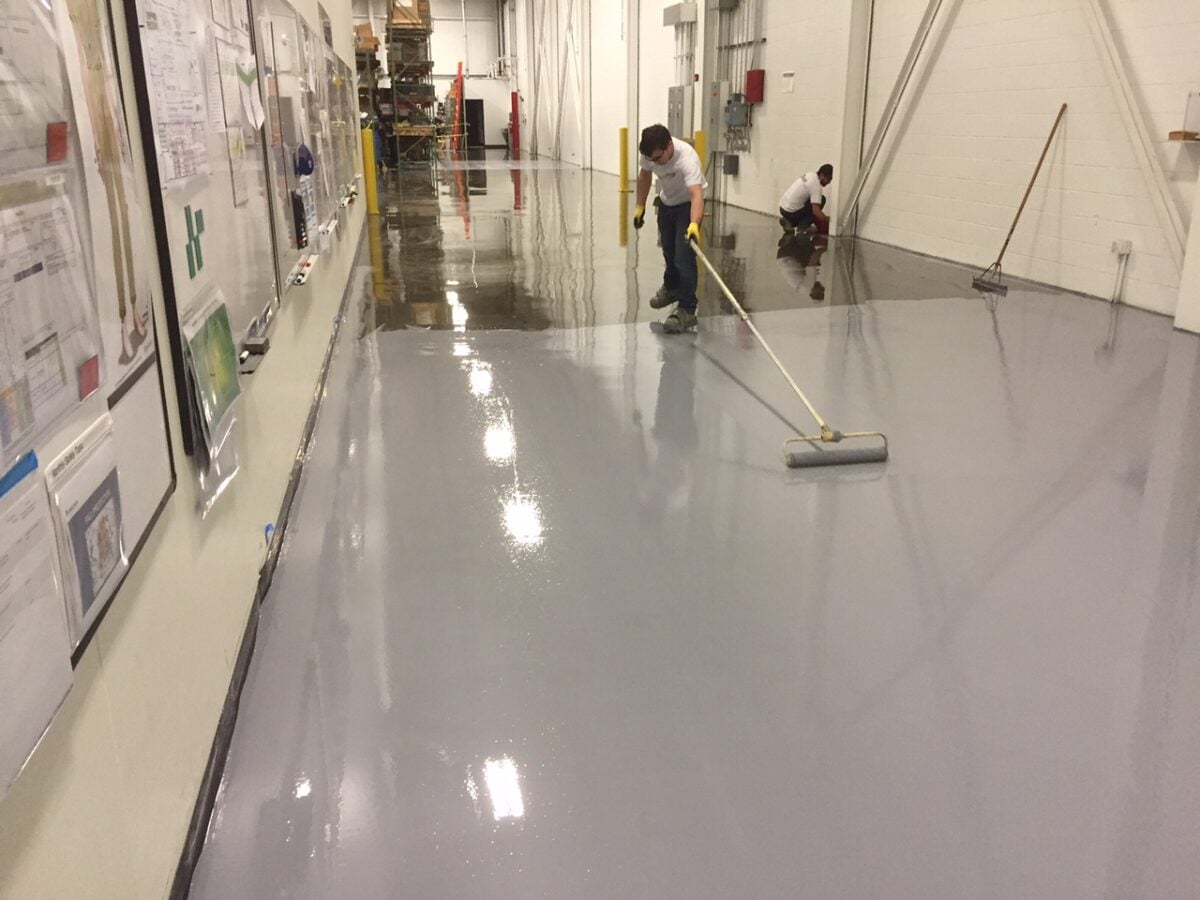
A manufacturing floor is not just a surface. It is part of the production system. The wrong floor coating fails under forklift loads, absorbs chemical spills that contaminate product, creates slip hazards that generate OSHA exposure, and requires recoating on a schedule that disrupts operations more than it should. Getting the specification right from the start is what separates a floor that supports the facility for a decade from one that becomes a recurring maintenance problem. Manufacturing facility flooring decisions need to be driven by the actual operating conditions on the floor, not by product marketing language or the lowest price per square foot. For industrial operators in Taunton, MA and surrounding areas, where manufacturing and production facilities run demanding daily schedules, understanding what the coating specifications actually mean is where better decisions start. The same technical discipline that defines high-performance floor systems built for demanding industrial environments is what makes the difference between a floor that performs and one that fails.
Here is what you will learn in this guide:
- Why manufacturing floor coating specifications are a production and safety decision, not just a maintenance one
- The coating specs that actually matter for manufacturing environments and what they mean in practice
- How to match the right system to the specific chemical, mechanical, and thermal exposures in your facility
- What the installation process involves and why preparation is the most critical variable
- What Taunton, MA and surrounding areas manufacturing operators should know before specifying or replacing a floor system
Why Heavy Duty Floor Coatings Are a Production Decision, Not Just a Maintenance One

Manufacturing facilities run on predictability. Equipment is maintained on schedule. Processes are documented. Supply chains are managed. The floor, which is subject to more daily abuse than almost any other element of the industrial space, is frequently the one asset that gets specified by lowest upfront cost and maintained reactively rather than proactively. That approach has a cost that shows up in ways that are easy to miss until they add up.
A floor that delaminates in forklift travel lanes creates a surface disruption that requires emergency repair and operational shutdown. A floor that absorbs process chemicals becomes impossible to clean to the standard the facility requires for product quality or regulatory compliance. A floor with inadequate slip resistance generates incident reports, workers’ compensation claims, and OSHA inspection risk. For manufacturing operators in Taunton, MA and surrounding areas, the floor is not a background element. It is a factor in production efficiency, regulatory compliance, and workforce safety, and its specification deserves the same rigor applied to process equipment selection. Here is what correctly specified heavy duty floor coatings deliver:
- Production Continuity: A floor system specified for the actual traffic loads, chemical exposures, and thermal conditions in the facility performs without disruption throughout its intended service life rather than requiring reactive repair during active production cycles.
- Chemical Resistance: Manufacturing floors exposed to process fluids, lubricants, cleaning agents, or food-grade chemicals require coating systems with verified resistance to those specific compounds. Generic coating descriptions do not provide that assurance.
- OSHA Compliance: Adequate slip resistance in wet, oily, or chemically contaminated floor areas is an OSHA requirement, not a preference. The coating system specification determines whether the floor meets that standard.
- Easy to Clean Surfaces: A sealed, non-porous floor surface supports the cleaning programs manufacturing facilities require for product quality, regulatory compliance, and general hygiene. Easy to clean surfaces reduce labor costs and contamination risk across the entire production area. Bare or compromised concrete flooring cannot be adequately cleaned.
- Extended Service Life: A correctly specified and properly installed floor system reaches the end of its intended service life before requiring replacement, rather than failing prematurely and incurring the full installation cost on a shortened cycle.
The Specs That Actually Matter for Manufacturing Facility Flooring Systems
Coating specifications for manufacturing facility flooring involve a set of technical parameters that determine how the system performs under real operating conditions. Understanding what each specification means allows facility managers to evaluate proposals accurately rather than defaulting to the most familiar product name or the lowest quoted price.
1. Chemical Resistance: The Most Critical Spec for Any Flooring Solution
The single most important specification for any manufacturing floor coating is chemical resistance, and it is the one most frequently underspecified. Chemical resistance is not a binary property. A coating that resists motor oil may be completely incompatible with the alkaline degreasers used to clean it. A floor rated for mild acids may fail within months in a facility with sustained exposure to strong organic acids.
Chemical resistance should be specified by identifying every substance that regularly contacts the floor, including process chemicals, lubricants, fuels, cleaning agents, and incidental spills, and verifying the coating system’s resistance to each of those specific compounds at the concentrations and contact times present in the facility. Manufacturer chemical resistance charts provide this data for most commercial coating products and should be reviewed before any flooring solution is specified for food processing, chemical handling, or heavy industrial use.
- 100 percent solids epoxy flooring provides good resistance to petroleum products, mild acids, and most general-purpose cleaning agents but has limitations with strong solvents and concentrated acids
- Novolac epoxy provides significantly enhanced chemical resistance to strong acids and solvents compared to standard epoxy and is specified for chemical processing and industrial cleaning environments
- Urethane cement handles alkaline cleaning chemicals and thermal shock from steam cleaning better than standard epoxy, making it the appropriate flooring solution for facilities with aggressive cleaning programs
2. Mechanical Load Rating for Heavy Duty Concrete Flooring
Manufacturing floors carry loads that standard commercial floors do not. Forklifts, pallet jacks, overhead crane loads transferred to floor-mounted equipment, and heavy machinery with point loads from leveling feet all apply force to the floor in ways that thin-film coating systems are not designed to handle. The coating system specification must account for the maximum wheel loads, the frequency of heavy traffic, and whether loads are static or dynamic.
For facilities in Taunton, MA and surrounding areas running loaded forklifts with hard polymer or steel wheels through high heavy traffic corridors, a minimum system build of 15 to 25 mils dry film thickness in 100 percent solids epoxy is the baseline for moderate-duty applications. Higher-traffic or heavier-load environments require broadcast aggregate or flake flooring systems, epoxy mortar base coats, or urethane cement that provide greater film build and impact absorption on concrete flooring.
- Hard steel wheels cause significantly more surface abrasion than rubber or polyurethane wheels and require heavier-build systems with harder aggregate topcoats even in areas with moderate foot traffic
- Point loads from machinery leveling feet can exceed 10,000 PSI and require full-depth epoxy mortar systems rather than thin-film coatings to prevent compression failure at contact points
- Ramp and transition areas experience concentrated impact and abrasion loads from both foot traffic and vehicle traffic that often require heavier specification than the main floor area even within the same facility
3. Slip Resistance Requirements

Manufacturing floors in wet, oily, or chemically contaminated conditions require documented slip resistance that meets OSHA standards for walking and working surfaces. The coefficient of friction of the floor surface determines whether it provides adequate traction under the specific contamination conditions present in each area of the facility.
Anti-slip aggregate type and broadcast density are the primary variables in coating-based slip resistance. Aluminum oxide provides excellent hardness and durability in dry and mildly wet conditions. Silica aggregate provides more aggressive texture for heavily contaminated or consistently wet areas. The aggregate profile should be specified by area based on the contamination type and the severity of the slip risk, not applied uniformly across the entire facility.
- OSHA 1910.22 requires floors to be maintained in a clean and dry condition or to provide slip-resistant surfaces where wet processes are used
- Anti-slip aggregate that has been polished smooth by foot traffic and vehicle traffic or contaminated by oil no longer provides meaningful slip resistance. Maintenance recoating to restore the aggregate profile is a planned maintenance item, not an indication of system failure
- Pedestrian-only areas with primarily foot traffic and vehicle travel lanes have different slip resistance requirements and should be specified separately within the same facility
4. Thermal Resistance and Thermal Shock Resistance
Manufacturing processes that involve heat generate thermal loads on the floor that standard epoxy systems cannot withstand at extreme temperatures. Hot water wash-down, steam cleaning, direct heat from process equipment, and the thermal cycling of freezer-to-ambient transitions in cold storage manufacturing environments all create thermal stress that causes standard epoxy to crack, delaminate, or lose adhesion. In environments where floors must withstand extreme temperatures on a daily basis, system selection is not optional.
Urethane cement systems deliver the thermal shock resistance that manufacturing floors in thermally demanding environments require. They tolerate rapid temperature changes from near-freezing to over 200 degrees Fahrenheit without fracturing, which makes them the standard specification for food processing plants, beverage facilities, and any industrial space with steam cleaning in the regular maintenance program.
- Standard 100 percent solids epoxy cannot withstand extreme temperatures beyond approximately 140 degrees Fahrenheit for sustained exposure. Above that range, softening and adhesion loss begin regardless of product brand
- Urethane cement delivers genuine thermal shock resistance that would protect a floor that would otherwise delaminate under the rapid temperature cycling common in beverage facilities and food processing plants
- Thermal expansion joints in the concrete slab must be addressed in the coating specification for any industrial space with significant temperature variation. Coating over unaddressed thermal joints produces cracking at those locations regardless of system quality
5. Moisture Vapor Transmission Management
Moisture vapor emission from the concrete slab is one of the most common causes of manufacturing floor coating failure, and it is one of the most frequently skipped pre-installation steps. Water vapor migrating upward through the slab from groundwater or a high water table pushes against the underside of the coating film and breaks the adhesion bond, producing the blistering and delamination that facility managers often attribute incorrectly to a product failure.
Moisture vapor emission testing per ASTM F1869 or ASTM F2170 before any coating is specified determines whether the slab requires a moisture-tolerant primer, a dedicated moisture mitigation membrane, or a system chemistry that bonds through residual moisture. This step is especially important in a new manufacturing facility where the concrete slab may not have fully dried to ambient equilibrium despite appearing visually dry. Urethane cement bonds through moisture in the slab by design, which is one reason it is specified in facilities where moisture vapor emission is a known or suspected issue.
- Standard epoxy primers are rated to handle moisture vapor emission up to 5 to 7 pounds per 1,000 square feet per 24 hours. Above that threshold, a moisture-tolerant primer or dedicated mitigation system is required
- Moisture mitigation membrane systems add $2 to $6 per square foot to the project cost but eliminate the failure mode that would otherwise require full system removal and reinstallation
- In a new manufacturing facility, concrete slabs require a minimum cure period of 28 days before coating, but moisture testing should be conducted regardless of slab age because environmental conditions affect moisture content independently of cure time
6. Surface Profile and Preparation Standard
The adhesion strength of any floor coating system is determined by the surface profile of the concrete flooring at the time of installation. Surface profile is measured using the ICRI Concrete Surface Profile scale, and each coating system has a minimum required profile for the adhesion values needed to achieve its rated performance. A coating applied over a surface that does not meet the required profile will not achieve the adhesion values needed for the system to perform under heavy traffic load, regardless of product quality.
Shot blasting is the preferred preparation method for manufacturing floor applications because it produces a consistent surface profile across large areas, removes surface laitance and contamination, and opens the concrete pore structure for mechanical adhesion. Diamond grinding is used for perimeter work and areas inaccessible to blast equipment.
- Most 100 percent solids epoxy flooring systems require ICRI CSP 3 to 5 surface profile for design adhesion values
- High-build urethane cement and epoxy mortar systems may require CSP 4 to 6 for the adhesion needed to resist the higher peel forces generated by heavy mechanical loads and sustained heavy traffic
- Oil-contaminated concrete common in manufacturing facilities requires chemical degreasing and verification of degreaser removal before mechanical profiling, because oil driven deeper into the concrete by shot blasting cannot be removed after the fact
How to Read an Epoxy Flooring and Floor Coatings Proposal
A proposal for manufacturing facility flooring that does not specify the coating system by manufacturer and product name, the number of coats, the target dry film thickness per coat and in total, the surface preparation method and ICRI profile target, and the test methods used to verify preparation adequacy is not a complete proposal. It is a framework that transfers risk to the facility owner when the installed system does not perform as expected.
Understanding how to evaluate competing proposals on an equal basis is the most practical skill a facility manager can bring to a flooring project. The sections below identify what a complete proposal includes and what missing scope looks like in practice.
- Product Identification: Generic descriptions like “epoxy flooring” or “industrial floor system” are not specifications. The manufacturer name, product line, and product code should be listed for every component of the system.
- Film Build Verification: The proposal should state how dry film thickness will be verified during and after installation. Wet film gauges during application and dry film gauges after cure are standard quality control tools that professional installers use routinely.
- Preparation Documentation: Surface profile confirmation, moisture testing results, and degreasing verification should be documented before coating begins and provided to the facility as part of the project closeout package.
- Warranty Terms: Both the manufacturer product warranty and the contractor workmanship warranty should be documented, with coverage periods, exclusions, and claim procedures clearly stated.
Planning Floor Coatings Installation for Food Processing Plants, Data Centers, and Active Facilities

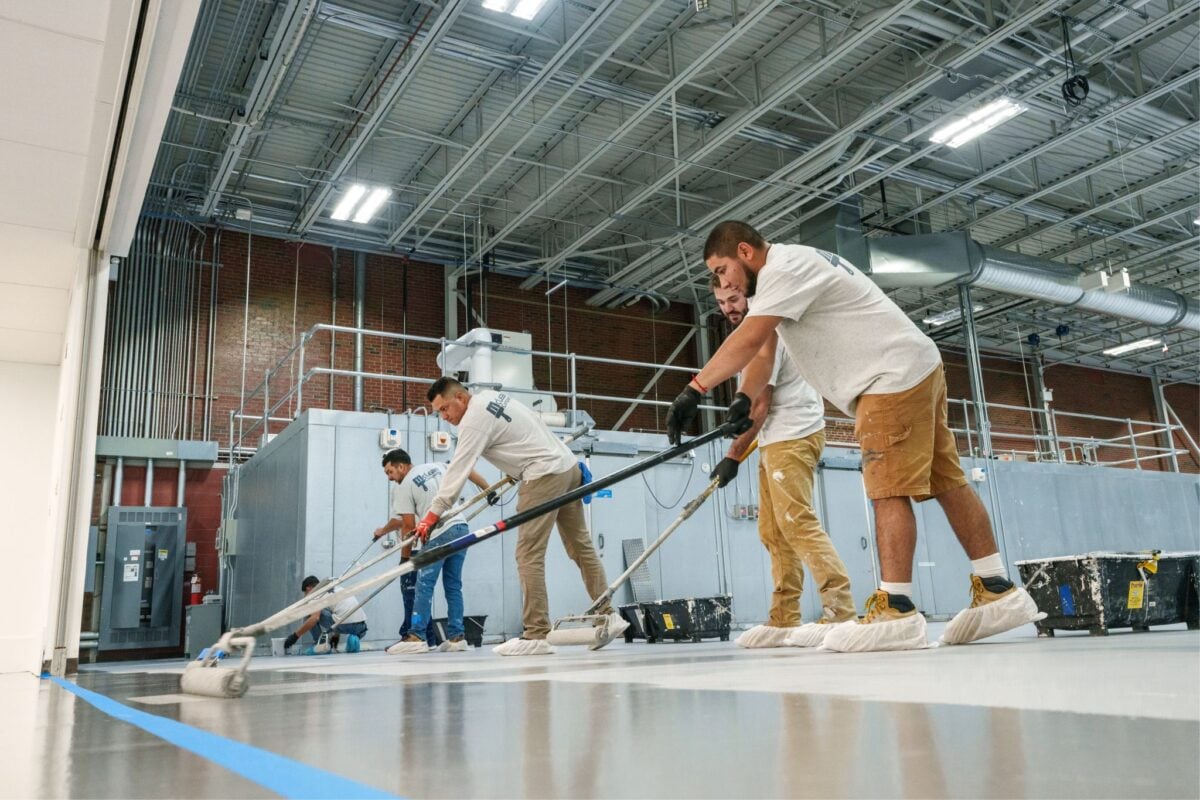
Manufacturing facilities cannot typically shut down for a week while floor coating cures. A phased installation plan that maintains operational access to critical production areas during each phase of the project is the standard approach for active facilities, whether they are food processing plants, beverage facilities, data centers, automotive manufacturing operations, or any other production environment. That plan needs to be developed before installation begins rather than improvised during the project.
Food processing facilities have specific cleaning and contamination control requirements during flooring installation that must be coordinated with the production team. Data centers require careful management of dust and debris during surface preparation to protect sensitive equipment. Each facility type has constraints that a qualified contractor should anticipate and address in the pre-project plan.
Zone-by-Zone Phasing for Easy Maintenance and Minimal Downtime
A practical phased installation plan divides the facility floor into zones by production area, traffic lane, and operational criticality. Each zone is completed and cured before the adjacent zone is started, allowing production to continue in unaffected areas. This approach also supports easy maintenance going forward because zone boundaries align with areas of similar use intensity, making targeted recoating of high-wear zones practical without disrupting the rest of the floor. Return-to-service timelines for each zone should be documented in the installation plan and shared with the facility’s production scheduling team before work begins.
Cure Time and Return to Service
Most 100 percent solids epoxy flooring systems require 24 to 72 hours before light foot traffic and 5 to 7 days before heavy traffic under optimal temperature and humidity conditions. Urethane cement systems typically return to light service within 6 to 24 hours. Polyurea and polyaspartic topcoat systems return to traffic within hours, which makes them valuable for facilities in Taunton, MA and surrounding areas where operational downtime is expensive.
Temperature and humidity during cure affect the timeline directly. Cold concrete and high humidity extend cure times significantly in New England conditions, which is a practical scheduling consideration for facilities planning floor work during transitional seasons.
Off-Hours and Phased Scheduling
For facilities that operate continuous or multiple-shift production, off-hours and weekend installation is the most common approach to managing floor projects without disrupting operations. Off-hours installation carries a labor cost premium of 15 to 25 percent over standard day-rate pricing but eliminates the production disruption cost that daytime installation in an active industrial space creates.
Specify the Right Flooring System for Your Manufacturing Facility
Manufacturing facility flooring is a technical specification with real consequences for production efficiency, workforce safety, and long-term facility maintenance costs. The flooring system that performs correctly for a decade is the one that was specified for the actual conditions on the floor, installed over properly prepared concrete, and allowed to fully cure before returning to service.
McLean Company works with manufacturing facilities and industrial operators across New England to assess floor conditions, specify the right flooring system for the actual operating environment, and execute installations with the preparation standards and application discipline that demanding facilities require. If your facility floor is underperforming, approaching end of service life, or being specified for a new manufacturing facility for the first time, we are ready to assess it and give you a straight answer on what it needs.
Contact us today to schedule a floor assessment and get a specification built around the actual conditions on your manufacturing floor.