(978) 774-4330

Fire-resistant paint isn’t just a niche coating, it’s a crucial safeguard in many commercial and industrial environments. Whether you’re managing a warehouse, upgrading an office building, or retrofitting infrastructure in Worcester, MA and surrounding areas, knowing which product to use on metal can make all the difference. Selecting the right fire resistant paint for metal can help you stay compliant with safety codes while extending the life of your structure. If you’re considering protective upgrades, take a closer look at how specialty coatings like this one can align with long-term facility improvements that may include a more extensive focus on interior or exterior needs.
Here’s what you’ll learn in this guide:
- Why fire-resistant coatings matter for metal surfaces
- Key options available on the market today
- What to look for when choosing a product
- How these paints work under real-world conditions
- When it’s time to call in a professional for application
Why Fire-Resistant Paint on Metal Matters

Fire-rated coatings for metal structures are a vital line of defense. While steel and other metals won’t combust like wood, they’re still vulnerable to extreme heat. Without protection, metal can bend, fail, or collapse in a fire scenario. Here’s why investing in the right paint matters:
- Life Safety Compliance: These coatings can help meet local and national fire codes, especially in commercial or industrial buildings.
- Structural Integrity: High heat can weaken metal. Fire-resistant paint slows down temperature rise, giving occupants more time to exit.
- Insurance & Liability Protection: Using approved products may reduce insurance premiums and protect against claims in fire-related incidents.
- Cost-Efficient Retrofitting: Rather than replacing metal components, applying a tested coating offers a practical and affordable upgrade.
- Peace of Mind: Business owners can rest easier knowing they’ve taken proactive steps to minimize risk.
5 Best Fire Resistant Paint Options for Metal
Not all fire-resistant paints are made alike. Some are intumescent, others ablative. Some require professional application, others are more DIY-friendly. Here are five options commonly used across commercial and industrial settings.
1. Sherwin-Williams Firetex FX6002
Sherwin-Williams Firetex FX6002 is an ultra-fast drying intumescent coating built for steel structures. It delivers up to 3 hours of fire resistance and can be handled in as little as one hour after application, making it ideal for time-sensitive commercial projects.
- Intumescent formula expands in heat to form insulating barrier
- Compatible with interior and exterior steel
- High-performance durability with minimal maintenance
- Often specified for hospitals, schools, and data centers
2. Nullifire SC902
Nullifire SC902 is part of the Tremco Construction Products Group and offers high fire performance with a single coat system. It’s especially effective in urban or industrial zones where rapid project turnaround is needed.
- Up to 120 minutes of protection with just one coat
- Low VOC and fast cure time
- Applied by airless spray, requiring professional handling
- Common in commercial structures and transport hubs
3. FlameOFF Coatings Fire Barrier Paint
FlameOFF Coatings Fire Barrier Paint is a water-based solution that’s UL-certified and engineered for metal, wood, and drywall. It’s a favorite among maintenance teams looking for flexibility and performance.
- Offers Class A fire rating when applied properly
- Can be used in warehouses, manufacturing plants, and even residential settings
- Easy to clean up and low-odor formulation
- Good for touch-up work or as part of a larger fireproofing plan
4. Albi Clad TF+
Albi Clad TF+ is used in major infrastructure and power plant settings, this heavy-duty product is known for meeting rigorous fire testing standards.
- Applied in multi-coat layers for long-term protection
- Extremely resistant to corrosion as well as heat
- Requires precise surface preparation
- Recommended for structural steel in industrial environments
5. International Paint’s Interchar 3120
Interchar 3120, manufactured by AkzoNobel, offers up to 2-hour protection for structural steel. Its thin-film profile makes it suitable for high-visibility areas where aesthetics matter.
- Smooth finish and architectural flexibility
- Compatible with a wide variety of topcoats
- Primarily used in stadiums, airports, and shopping centers
- Professional application required for consistent coverage
How Fire Resistant Paint Works on Metal

Once applied, fire-resistant paint doesn’t just sit passively, it actively responds in a fire. Here’s how different technologies function depending on the formulation:
- Intumescent Paints: These expand when exposed to heat, forming a thick char layer that insulates the metal substrate. This slows heat transfer, keeping the steel below failure temperature longer.
- Ablative Coatings: These function by absorbing heat and releasing it through endothermic chemical reactions, effectively delaying temperature rise.
- Cementitious Coatings: These are thicker, plaster-like applications often used in utility-scale projects. They absorb and deflect heat but are less common in aesthetic settings.
Important characteristics to consider:
- Dry Film Thickness (DFT): This measurement determines how well the product can protect the surface at high temperatures.
- Compatibility with Primers or Topcoats: Some coatings require specific underlayers to perform as tested.
- Application Environment: Temperature, humidity, and substrate condition all affect performance.
Choosing the Right Option for Your Property
When choosing the right fire-resistant paint for your metal surfaces, it’s not just about selecting a top brand. You’ll need to assess several environmental and structural factors to make the best call for your property in Worcester, MA and surrounding areas.
Local Code Compliance
Always verify that the product meets Massachusetts fire safety codes or any additional city-specific requirements in Worcester, MA and surrounding areas. Local authorities may require UL listing, ASTM E84 compliance, or other documentation.
Type of Metal Substrate
Some paints are designed specifically for steel, while others work with aluminum or iron. The surface type, existing coatings, and corrosion level can all impact which product will bond and perform properly.
Building Use & Occupancy
A warehouse may need a different product than a hospital or data center. Consider foot traffic, exposure to elements, and potential hazards. Higher-traffic or critical infrastructure buildings may need multilayered systems or higher fire ratings.
Project Timeline & Budget
Some coatings require multiple layers and days of curing, while others can be applied and finished in hours. If time is of the essence, or you’re working on an active site, choose accordingly.
Application Methods & Best Practices
Application is just as important as the product itself. Even the best coating will fail if it’s poorly installed.
- Surface Preparation: Clean, dry metal is non-negotiable. Remove rust, old coatings, and debris using sandblasting or grinding tools.
- Priming: Some fire-resistant paints require specific primers to adhere correctly and meet tested performance specs.
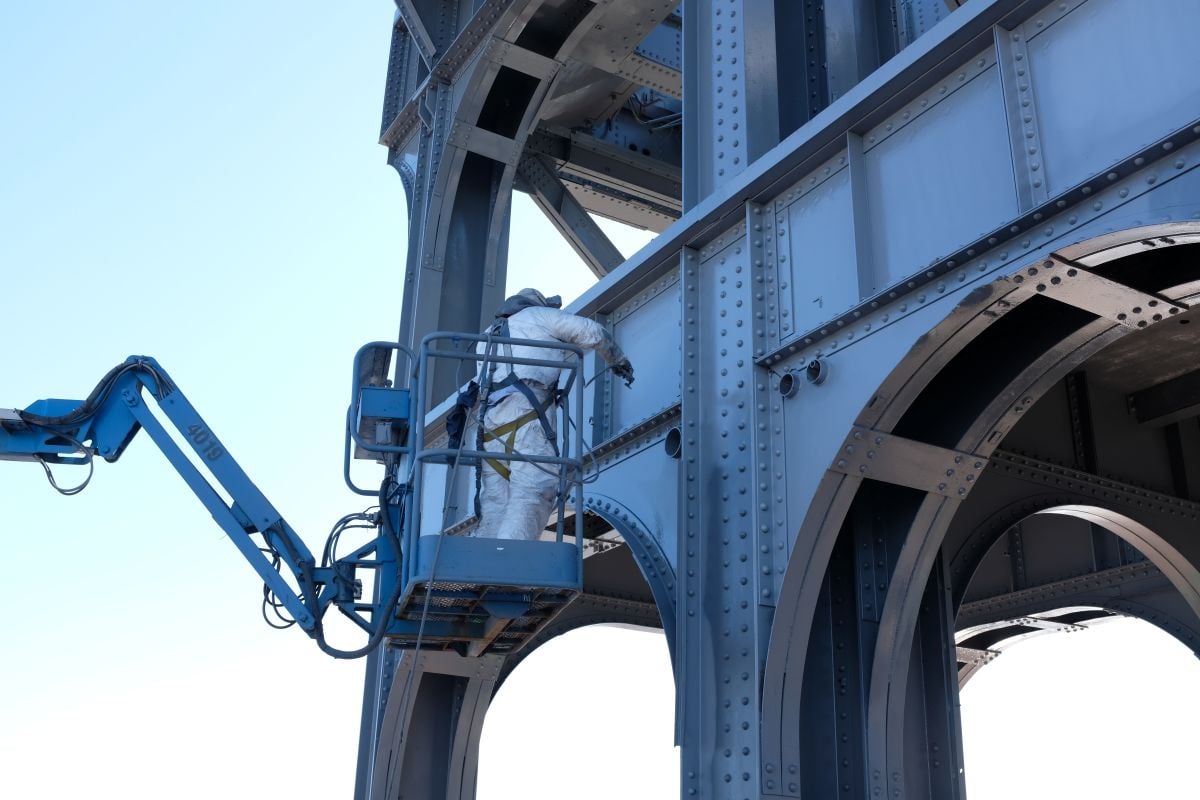
- Application Technique: Spraying is the most common method for commercial-scale projects, offering speed and even coverage. In smaller areas, brushes or rollers may be used, though multiple coats are typically required.
- Curing Time: Follow manufacturer instructions. Premature exposure to moisture, high traffic, or mechanical abrasion can reduce performance.
Professional vs DIY Application
While some products claim to be “DIY-friendly,” fire-rated paint application is almost always better handled by a trained team. Certified contractors ensure:
- Product is applied to spec (wet and dry film thickness)
- Consistent finish across wide spans
- Safety compliance documentation
- Coordination with other trades or inspections
How Fire-Resistant Paint Compares to Other Methods

Wondering if paint is your best option? Here’s how it stacks up against other common fireproofing solutions:
| Solution | Benefits | Drawbacks |
| Fire-Resistant Paint | Aesthetic flexibility, easy retrofitting, lower cost | Needs reapplication over time |
| Intumescent Coatings | Expands under heat, thin profile, good for exposed steel | Higher upfront material costs |
| Cementitious Coatings | High durability, great for utility settings | Bulky appearance, labor-intensive |
| Fireproofing Boards | Precise fire ratings, fast install | Limited to flat surfaces, visible seams |
Paints offer a unique combination of protection and appearance, ideal for spaces where both safety and visual presentation matter.
Fire-Resistant Paint in Worcester, MA Buildings
Whether it’s a manufacturing facility, historic structure, or commercial buildout in Worcester, MA and surrounding areas, fire-resistant paint plays an important role in extending building life and reducing fire damage. In this region, with its mix of older structures and modern builds, investing in the right protective solutions is part of maintaining value over time.
In some local jurisdictions, fire marshal inspections may even require annual reporting or proof of compliance for commercial properties. The right coating, properly applied, helps check that box with confidence.
Frequently Asked Questions
How long does fire resistant paint last on metal?
Most quality intumescent coatings on steel can last 15 to 25 years when properly applied and maintained, though this varies with exposure, environment, and whether a compatible topcoat has been used. Interior applications generally last longer than exterior ones exposed to weather.
Is fire resistant paint the same as fireproof paint?
No. Fire resistant paints delay the impact of fire on the substrate to buy time for evacuation and emergency response. No coating makes steel truly fireproof. The correct industry term is “passive fire protection,” which is what these coatings provide.
Do I need a permit to apply fire resistant paint to a commercial building?
Permit requirements vary by municipality and project scope. Many commercial fire protection projects require inspections and documentation from a licensed contractor, especially when meeting code compliance for occupancy or renovations. Check with your local building department before starting work.
Can fire resistant paint be applied over existing paint?
In most cases, existing paint must be removed or the surface heavily prepared before applying an intumescent coating. Adhesion is critical to how the paint performs in a fire, and old coatings can compromise the fire rating if the product wasn’t tested over that specific substrate.
Ready to Protect Your Investment?
Choosing the best fire-resistant paint for metal isn’t just about ticking a safety box, it’s about safeguarding your building, your people, and your bottom line. From product selection to professional application, McLean Company helps property owners in Worcester, MA and surrounding areas make informed, lasting decisions for their facilities.
If you’re ready to upgrade your building’s safety profile, contact us today to schedule a consultation or learn more about your options. At McLean Company, we combine expertise with precision to deliver lasting protection.