(978) 774-4330

Expansion joint failure is one of the most consistent and preventable sources of water infiltration and structural damage in commercial buildings, but most property owners do not think seriously about it until water is already inside the building. By that point, the repair scope is larger and more expensive than it would have been if the contractor had been selected and the work scheduled proactively. Choosing the right expansion joint repair contractor is not simply a matter of finding someone willing to apply caulk. It requires a contractor who understands movement calculations, sealant chemistry, substrate preparation, and the specific failure modes affecting each joint type in your building. For property owners and facility managers in Braintree, MA and surrounding areas, where freeze-thaw cycling puts building joints under sustained stress every winter, this is a decision that affects the condition of the building for years. The same technical discipline that defines durable concrete floor systems and joint treatments in commercial environments applies directly to how expansion joint repair needs to be approached.
Here is what you will learn in this guide:
- Why expansion joint repair is a technically specialized scope that requires a qualified contractor
- The key qualifications to verify before hiring an expansion joint repair contractor
- What a correctly executed expansion joint repair involves from assessment through sealant application
- How to evaluate proposals and identify contractors who are cutting scope to lower their price
- What Braintree, MA and surrounding areas property owners should know before selecting a contractor for this work
Why Expansion Joint Repair Is More Technical Than It Looks
Expansion joints exist in commercial buildings for one reason: the building moves. Thermal cycling, structural loading, concrete shrinkage, and differential settlement all cause building components to shift relative to one another, and expansion joints are the designed gaps that allow that movement to happen without cracking the surrounding structure. The sealants, covers, and assemblies within those joints are what keep the joint functional and watertight while still accommodating movement.
When those components fail, the consequences are progressive. Water enters through a failed joint sealant and begins attacking the substrate on both sides of the joint. In parking structures and exterior slabs, that water carries road salt and chlorides that corrode embedded reinforcing steel. In facade joints and window perimeters, it migrates into wall assemblies and causes insulation degradation, mold growth, and interior damage. The expansion joint itself gets wider as concrete edges spall from freeze-thaw damage, making subsequent repairs more complex and expensive than the original repair would have been. For commercial buildings in Braintree, MA and surrounding areas, the stakes of hiring an underqualified contractor to perform this work are real and measurable. Here is what choosing the right contractor actually protects:
- Building Envelope Integrity: A qualified contractor identifies every failure point in the joint assembly, not just the visible ones, and addresses them with materials and methods appropriate to the specific movement and exposure conditions.
- Repair Longevity: Expansion joint sealants applied over improperly prepared substrates, at the wrong joint width, or with incompatible chemistry fail in a fraction of their rated service life. A qualified contractor delivers repairs that last.
- Structural Protection: In parking structures and below-grade applications, the primary function of expansion joint sealants is to stop chloride-laden water from reaching embedded reinforcement. A repair that fails early allows that process to continue.
- Cost Efficiency: A repair done correctly the first time costs less over any meaningful time horizon than one that requires remediation within two years because preparation was skipped or the wrong sealant was specified.
- Liability Management: Open or failed expansion joints in pedestrian and vehicle traffic areas create trip hazards and surface irregularities that expose property owners to slip-and-fall liability until they are properly repaired.
6 Key Steps to Choose the Right Expansion Joint Repair Contractor

Selecting the right expansion joint repair contractor requires verifying a specific set of qualifications that not every general contractor or caulking crew possesses. The steps below reflect what experienced property managers and facility owners consistently do to identify contractors who can deliver repairs that actually last.
1. Confirm Relevant Experience With the Specific Joint Type
Expansion joint repair encompasses a wide range of joint types with very different repair requirements. Floor expansion joints in parking structures require different expertise than facade joints in curtain wall systems, roof-to-wall transition joints at parapets, or below-grade waterproofing joints in foundation walls. A contractor who is experienced with one type may have limited or no relevant experience with another.
Before engaging any contractor, ask for documented examples of completed projects involving the specific joint type present in your building. Parking structure joint repair experience is not equivalent to commercial roofing joint experience, even though both involve sealant products. A contractor who cannot produce relevant references for your specific joint application is telling you something important about their qualification for the work.
- Request project references that involve the same substrate type, joint width range, and exposure conditions as the joints being repaired in your building
- Ask specifically whether the contractor has experience with the movement accommodation required for your joint type. Joints in buildings with higher thermal cycling demand require sealants with higher movement capability, and the contractor needs to understand that specification
- Verify that the contractor has experience with occupied buildings if your project requires work in or around active areas, since that coordination requires specific protocols that inexperienced contractors handle poorly
2. Verify That the Contractor Conducts a Site Assessment Before Pricing

A proposal for expansion joint repair submitted without a physical site assessment is not a specification. It is a guess that will either be wildly over-scoped and expensive or under-scoped and produce a repair that fails early. Expansion joint conditions vary significantly even within a single building, and the preparation requirements, sealant selection, and repair method for each joint need to be assessed in person.
A qualified expansion joint repair contractor conducts a systematic assessment of every joint included in the project scope before pricing the work. That assessment documents the existing sealant condition, the substrate condition on each side of the joint, the joint width and any evidence of width variation due to past movement or substrate damage, and the presence of any active water infiltration at the joint location.
- Walk any site assessment the contractor performs with them and ask them to explain what they are finding. A contractor who cannot clearly explain the failure modes they are observing is not operating at a professional level
- Ask how the assessment findings affect the repair method and product selection. Different failure modes require different approaches, and a qualified contractor should be able to connect what they observed to what they are proposing to do
- In Braintree, MA and surrounding areas, older parking structures and commercial buildings frequently have expansion joints that have been improperly repaired multiple times. Ask the contractor how they handle joints with existing sealant layers that were applied without proper preparation
3. Require Specific Product Identification in the Proposal
A proposal that describes the repair as “apply new sealant to joints” without identifying the specific product, the joint preparation method, and the backer rod specification is not a complete proposal. Sealant selection for expansion joint repair is driven by the joint movement range, the substrate types on each side of the joint, the exposure conditions, and the movement accommodation requirement. The wrong sealant in any of those dimensions will fail before its rated service life regardless of how well it was applied.
Every proposal for expansion joint repair should identify the sealant product by manufacturer and product name, the movement accommodation percentage, the primer requirement for the substrate type, the backer rod size and material, and the expected service life of the specified system under the project exposure conditions.
- Polyurethane sealants are appropriate for most commercial building expansion joint applications, offering high movement accommodation and paintability. Silicone sealants offer better UV and temperature resistance but are not paintable and have substrate adhesion limitations that must be verified
- Backer rod diameter should be specified at 25 percent larger than the joint width to achieve the correct three-point adhesion geometry that allows the sealant to accommodate movement correctly
- Primer is required by most sealant manufacturers on porous or previously contaminated substrates. A proposal that does not address primer is either assuming the substrate does not need it without verifying, or intentionally omitting a cost item to lower the bid
4. Ask How They Handle Substrate Damage and Concrete Edge Spalling
Expansion joint repair frequently involves more than sealant replacement. Concrete edges that have been damaged by freeze-thaw cycling, mechanical impact, or the progressive widening of the joint due to historical sealant failures often require repair before new sealant can be applied. New sealant applied over spalled, crumbling, or unsound concrete edges bonds to the deteriorated surface layer rather than the sound concrete beneath it, producing a repair that fails within the first winter.
A qualified expansion joint repair contractor includes a concrete edge repair scope in their proposal wherever substrate damage is present, using repair mortar products that are chemically compatible with the sealant being applied over them. For parking structures and exterior slabs in Braintree, MA and surrounding areas, this is not an edge case. It is a standard condition that any experienced contractor should anticipate and address proactively.
- Ask the contractor specifically how they verify that concrete edges are sound before sealant application. A simple tap test with a hammer is the minimum standard. Hollow-sounding areas indicate delamination that must be addressed before sealant is applied
- Repair mortar for concrete edges adjacent to expansion joints should be fast-setting and achieve adequate compressive strength before the sealant primer and sealant are applied. Ask the contractor what product they use and what the required cure time is before sealant application can proceed
- In joints where the concrete edge damage has widened the joint beyond the design dimension, the repair mortar scope may include re-establishing the joint width to match the sealant’s working range. A contractor who proposes applying a wide-joint sealant without rebuilding the edge is accepting a repair geometry that reduces sealant performance
5. Evaluate How They Handle Existing Sealant Removal
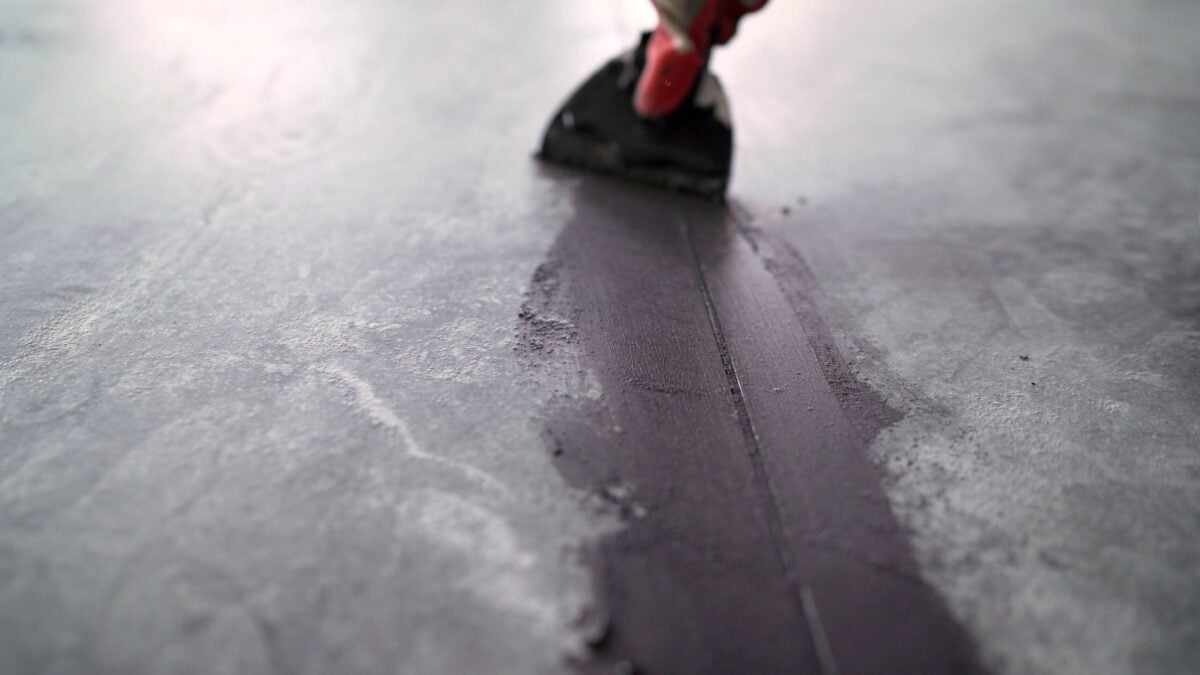
The single most common cause of expansion joint repair failure is applying new sealant over existing sealant rather than removing it completely and applying new sealant to the original substrate. New sealant bonds to old sealant rather than to the concrete, and when the old sealant eventually releases from the concrete, the entire multi-layer system comes with it. The result is a repair that looks intact until it fails catastrophically.
Complete removal of existing sealant is labor-intensive and adds cost to the project. It is also non-negotiable for a repair that is intended to last. A proposal that describes the preparation as “removing loose sealant and applying new” is describing an incomplete preparation that will produce a short-lived repair. Ask any prospective contractor to describe their sealant removal process specifically, including how they address sealant residue and bond-breaker contamination on the substrate after mechanical removal.
- Oscillating tools, reciprocating blades, and grinders are the standard tools for mechanical sealant removal. The appropriate tool depends on the joint geometry and the type of existing sealant
- After mechanical removal, the substrate must be solvent-wiped or mechanically abraded to remove residual sealant and any silicone contamination. Silicone contamination on a substrate prevents adhesion of any subsequently applied sealant regardless of product quality
- Bond-breaker tape or rod applied over the backer rod prevents three-sided adhesion of the new sealant, which is essential for the hourglass flex profile that allows the sealant to accommodate joint movement without tearing
6. Confirm Warranty Terms and Post-Completion Accountability
The workmanship warranty an expansion joint repair contractor provides is the most direct indicator of their confidence in the quality of their own work. A contractor who has properly assessed the substrate, specified the correct sealant, and executed preparation and application at a professional standard should be willing to warranty the work for a meaningful period. A contractor who is unwilling to provide written warranty terms, or who provides only a six-month warranty on work that is expected to last seven to ten years, is communicating something about their assessment of what they are delivering.
Warranty terms for expansion joint repair should be documented in the contract, specify the coverage period, define what constitutes a covered failure, and describe the contractor’s response obligation when a warranty claim is made. Manufacturer product warranties and contractor workmanship warranties are separate documents and both should be provided at project close.
What Incomplete Proposals Look Like and Why They Matter

The most common way unqualified expansion joint repair contractors compete for projects is by submitting proposals that appear complete at a glance but exclude the preparation steps that account for a significant portion of the project cost. Understanding what a complete proposal includes allows property managers to identify scope gaps before signing a contract rather than discovering them during the project or after the repair fails.
Missing Preparation Scope
A complete expansion joint repair proposal specifies complete removal of existing sealant, concrete edge assessment and repair scope, substrate cleaning method, primer product and application conditions, and backer rod size and material. Proposals that describe preparation as “cleaning and priming as needed” are leaving the most expensive and most critical steps undefined, which allows the contractor to minimize them without violating the letter of the contract.
Missing Product Specifications
A complete proposal identifies every product by manufacturer and product name, including the sealant, the primer, the backer rod, and any concrete repair mortar being used. Proposals that describe the sealant as “elastomeric sealant” or “polyurethane caulk” without naming the product are creating space to substitute lower-quality materials after the contract is signed.
Missing Access and Logistics Detail
Expansion joint repair in active commercial buildings and parking structures requires access planning, traffic management, and in some cases overnight or weekend scheduling to avoid operational disruption. A proposal that does not address these logistics is either assuming conditions that may not hold, or transferring the cost and complexity of access planning to the building owner after the contract is signed.
Work With a Contractor Who Gets Expansion Joint Repair Right
Choosing an expansion joint repair contractor is a consequential decision. The repair that is done incorrectly does not just fail to solve the problem. It often makes the next repair more difficult and expensive by adding contamination layers, allowing further substrate damage, and in some cases driving the property owner to accept a replacement cover system when a sealant repair would have been adequate if done correctly the first time.
McLean Company works with commercial property owners and facility managers across New England to assess expansion joint conditions, specify the right repair approach for each joint type and failure mode, and execute repairs with the preparation standards and sealant specifications that produce results that last. If your building has failing or failed expansion joints, we can walk the building with you and give you a straight assessment of what each joint needs.
Contact us today to schedule an expansion joint assessment and get a proposal built on an accurate understanding of the actual conditions in your building.