(978) 774-4330

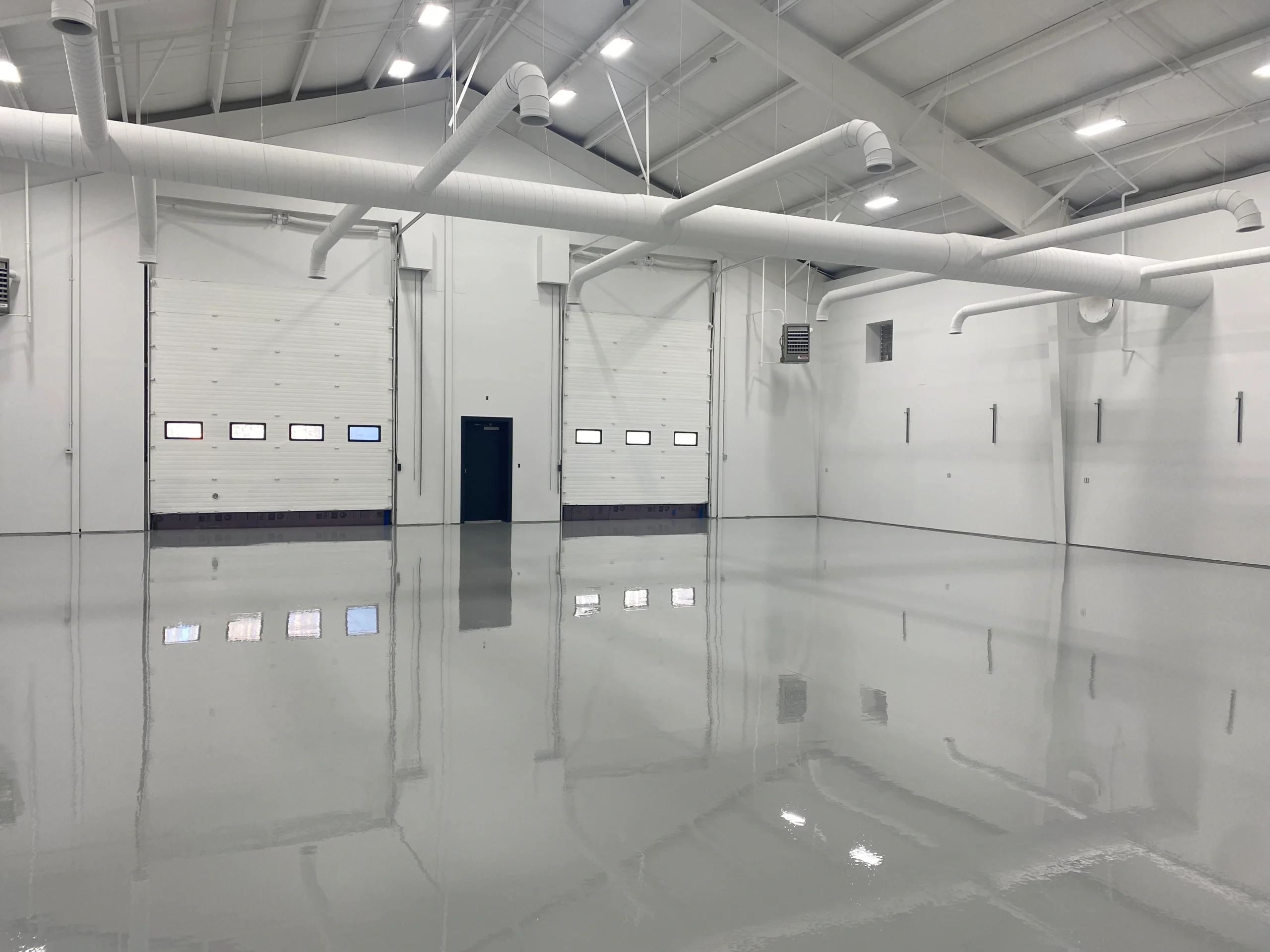
Painting the interior of a warehouse, manufacturing facility, or distribution center is not the same project as painting an office building. The ceilings are high, the floor space below is active or full of equipment, and overspray from conventional paint can contaminate machinery, inventory, and finished surfaces in ways that create far more cost than the painting project itself. A high ceiling and dryfall painting contractor brings the specific product knowledge and process discipline that these projects require to execute them safely and efficiently. For facility managers in Warwick, RI and surrounding areas running warehouses, industrial plants, or large-format commercial spaces, understanding how dryfall paint works and what separates a qualified contractor from a general painter is critical before any ceiling project begins. The same attention to surface protection and coating performance that drives durable floor systems in commercial and industrial environments applies equally to the ceilings above them.
Here is what you will learn in this guide:
- What dryfall paint is, how it works, and why it is specified for high-ceiling commercial and industrial applications
- The key factors that determine whether a high ceiling painting project is executed correctly
- What facility managers should look for when evaluating a dryfall painting contractor
- How to plan a high ceiling painting project around active facility operations
- What Warwick, RI and surrounding areas facility managers should know before scheduling ceiling work
What Dryfall Painting Is and Why It Matters for Warehouse Ceiling Projects

Standard interior paint applied with airless spray equipment at heights of 20, 30, or 40 feet does not stay on the target surface. Overspray drifts across the facility floor, settles on machinery, equipment, product inventory, and any surface below the spray path. Cleaning that overspray, or dealing with the damage it causes to sensitive equipment and finished goods, can cost far more than the painting project itself.
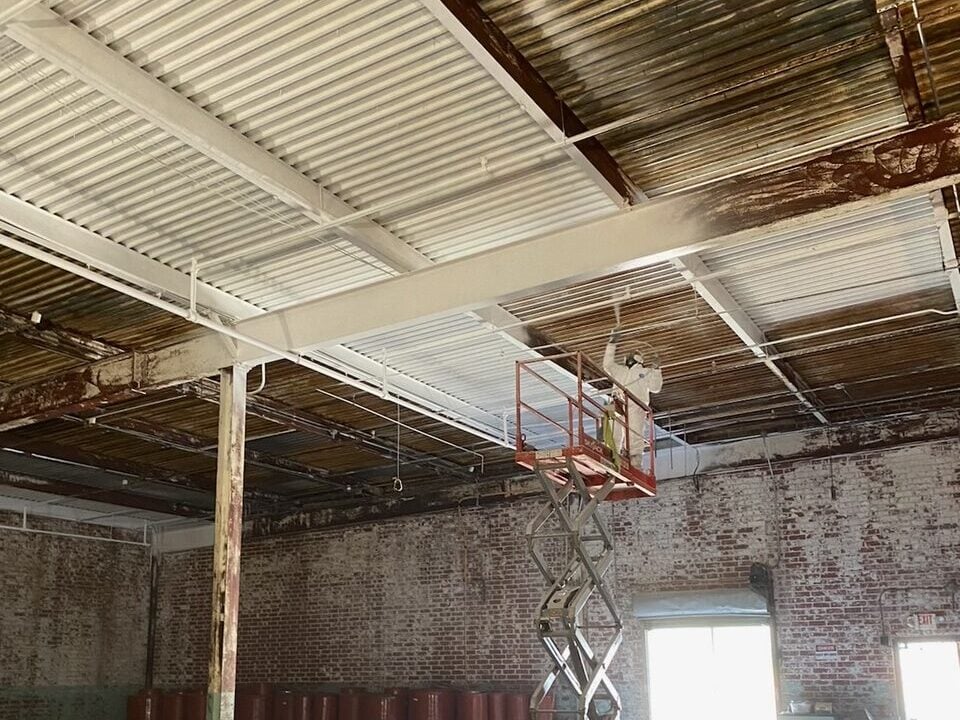
Dryfall paint solves this problem through its chemistry. It is formulated to atomize into fine particles during spray application and dry before those particles can settle on surfaces below the spray area. At typical application heights in industrial and commercial ceilings, the droplets complete their cure cycle in the air column between the spray tip and the floor, landing as dry powder rather than wet paint. For facility managers in Warwick, RI and surrounding areas managing active production environments, cold storage facilities, or warehouses with inventory on the floor, dryfall is not a specialty product. It is the standard specification for high-ceiling interior work. Here is what correctly specified and applied dryfall paint delivers:
- Overspray Containment: Dryfall atomizes and cures during its fall through the air column, landing as dry powder that sweeps or blows off equipment and inventory rather than bonding to it as wet paint would.
- Operational Continuity: Because overspray does not contaminate surfaces below the work area, facilities can often remain partially or fully operational during ceiling painting rather than requiring full shutdown and equipment relocation.
- Faster Project Completion: Airless spray application of dryfall at high-ceiling heights covers large surface areas efficiently, which reduces project duration compared to conventional brush and roller application on the same scope.
- Uniform Coverage on Complex Surfaces: Exposed structural steel, bar joists, mechanical ductwork, and other complex ceiling components are more effectively coated by spray application than by brush or roller, and dryfall makes that spray application practical in occupied facilities.
- Appearance and Reflectance: A properly applied dryfall ceiling coating provides a uniform appearance that improves light reflectance in the facility, which contributes to a better-lit work environment without additional lighting infrastructure investment.
6 Things Every Facility Manager Should Know About Dry Fall Paint and High Ceiling Projects
High ceiling painting with dryfall is a specialized scope that requires more planning, more equipment, and more contractor expertise than standard commercial interior painting. The six considerations below are what distinguish a well-executed high-ceiling dryfall project from one that causes more problems than it solves.
1. Dry Fall Paint Has a Minimum Application Height
Dryfall paint is not interchangeable with standard interior paint at low ceiling heights. The overspray containment mechanism depends on the product having enough air column below the spray tip to complete its cure cycle before reaching floor level. Most dryfall products require a minimum application height of 20 to 25 feet to function as specified.
Applied at lower heights, the paint particles do not have sufficient distance to dry before landing, which produces the same overspray contamination problem that dryfall is designed to prevent. Facilities with ceilings below the minimum application height should discuss alternative application methods with the contractor before assuming dryfall is the appropriate specification.
- Confirm the minimum application height for the specific dryfall product being specified before committing to the product for areas of the facility with varying ceiling heights
- Mezzanine levels, office areas within the facility, and areas beneath overhead conveyor systems may have reduced ceiling heights that require different product or application method selection
- The contractor should walk the full scope of the ceiling area and identify any zones where the dryfall application height specification cannot be maintained before the project begins
2. Surface Preparation Still Matters

One of the most common misconceptions about high ceiling painting is that preparation is less important because the ceiling is not a high-contact surface. In reality, the conditions that cause coating failure on high ceilings are the same as those that cause failure anywhere else. Rust on structural steel, contamination from process oils or cooking vapors in food production facilities, and existing failing paint all prevent new dryfall from achieving the adhesion needed to perform over a reasonable service life.
For facilities in Warwick, RI and surrounding areas with steel structure that has visible rust, a wire brush or power tool cleaning step followed by a rust-inhibitive primer coat is the correct preparation before dryfall topcoat. Skipping this step produces a ceiling that looks correct at completion and begins to peel within the first year as rust continues to develop beneath the topcoat.
- Existing peeling or flaking paint on structural steel must be removed before new coating is applied. New paint applied over failing existing paint bonds to the failing layer, not to the steel, and will peel on the same timeline
- Oil or chemical contamination on ceiling surfaces in food processing, cooking, or manufacturing environments requires specific cleaning with compatible degreasers before any coating is applied
- New structural steel that has mill scale must be prepared to the appropriate SSPC standard before primer application. Mill scale prevents coating adhesion and leads to early coating failure regardless of product quality
3. Access Equipment Determines Scope Efficiency
Getting crews to ceiling heights of 20, 30, 40 feet or more requires access equipment that is a significant project variable in terms of both cost and scheduling. The type of access equipment selected affects how efficiently the ceiling area can be covered, how much floor space is blocked during the project, and what impact the project has on facility operations during the work.
Scissor lifts are efficient for open floor areas with clear access lanes. Articulating boom lifts are necessary for areas with equipment, racking, or structural obstructions that prevent straight-line access. For projects with complex overhead geometry or limited floor access due to permanent equipment, the access planning is as important as the coating specification itself.
- Lift aisle width requirements should be confirmed against the facility’s actual floor layout before equipment is mobilized. A lift that cannot navigate the available aisles adds cost through idle time and project delay
- For facilities where floor equipment cannot be moved, contractor experience with boom lift positioning around fixed obstacles is a meaningful qualification to verify before awarding the project
- Lift rental duration is a real project cost variable. Contractors who plan access equipment efficiently reduce rental time and deliver projects more cost-effectively than those who mobilize without an access plan
4. Masking and Protection Planning
Even with dryfall’s overspray containment properties, deliberate masking and protection of sensitive equipment and surfaces is still required. Dryfall overspray that lands as dry powder can be swept or blown away from most surfaces, but mechanical or electrical equipment with open components, conveyor systems with exposed chains or bearings, and finished product inventory all require protective covering during the project.
The masking and protection scope is the contractor’s responsibility to plan and execute, but the facility manager needs to understand what is and is not covered in the proposal. A contractor who does not include a detailed masking plan in their pre-project documentation is transferring the risk of equipment contamination to the facility.
- Identify all equipment with open components, sensitive electronics, or food-contact surfaces before the pre-project walkthrough and confirm with the contractor that specific protection measures are included in the scope
- Conveyor systems and overhead material handling equipment that cannot be shut down during painting require specific masking approaches that the contractor should detail before work begins
- Floor protection in high-traffic areas below the work zone, while not required for dry overspray management, may be specified to protect from dust and debris dislodged during preparation and application
5. Scheduling Around Facility Operations
High ceiling painting in an active facility requires scheduling coordination that goes beyond setting a start date. The vertical nature of the work and the spray application method mean that areas directly below the work zone need to be cleared of personnel and sensitive operations for the duration of each shift. Coordinating that clearance with the facility’s production schedule requires advance planning that not every painting contractor manages effectively.
For facilities in Warwick, RI and surrounding areas running around-the-clock operations, ceiling painting is typically phased by bay or section, with each section completed before moving to the next, allowing production to continue in areas not currently being worked. This approach extends the project duration but eliminates the complete facility shutdown that a single-phase approach would require.
- Develop a bay-by-bay or section-by-section phase plan with the contractor before the project starts, with clear documentation of which areas are off-limits to personnel during each phase
- Confirm ventilation requirements for the product being applied. Some dryfall formulations require specific air movement to function correctly, and the facility’s HVAC configuration may need temporary adjustment during application
- Night and weekend shifts are an effective way to minimize operational impact in facilities that cannot accommodate daytime painting in active production areas, but they carry labor cost premiums that should be reflected in the proposal
6. Hiring a High Ceiling and Dryfall Painting Contractor: What to Look For

High ceiling dryfall painting is not a scope that every commercial painting contractor is equipped to execute correctly. The combination of specialized product knowledge, spray equipment calibration experience, access equipment operation, and facility coordination capability required for large industrial ceiling projects represents a distinct set of skills that separates contractors who regularly perform this work from those attempting it for the first time on your facility.
Ask prospective contractors for documented examples of completed high ceiling dryfall projects at comparable height, scale, and facility type. Request references from facility managers who can speak to how the contractor handled operational coordination, overspray management, and project completion relative to the original schedule and budget.
- Spray equipment calibration for dryfall application at high ceiling heights is a technical skill that affects both product performance and overspray containment. Confirm that the contractor’s crew has specific experience with the equipment and product being used
- Contractor safety programs should include documented procedures for aerial lift operation, which is one of the higher-risk activities in commercial painting. Request the contractor’s written safety plan before work begins
- For facilities in Warwick, RI and surrounding areas with food safety, pharmaceutical, or other regulated production environments, confirm that the contractor understands and can comply with the facility’s specific access and contamination control requirements
How Dryfall Painting Compares to Other Commercial Painting Approaches for High Ceilings
Dryfall is the most widely specified approach for high ceiling painting in commercial and industrial facilities, but it is not the only option. Understanding how it compares to alternatives helps facility managers evaluate contractor recommendations with context and make the right specification decision for their specific facility type and operational constraints.
Dryfall vs. Conventional Spray Paint with Full Masking
Conventional interior latex or alkyd paint can be applied at high ceiling heights with full masking and containment of the floor area below the spray zone. This approach uses the same spray equipment as dryfall but requires comprehensive floor protection and more extensive masking of equipment, which increases project setup time and cost. For facilities with highly sensitive equipment where even dry powder overspray is a concern, full masking with conventional paint may be the more appropriate specification. For most commercial and industrial ceilings, dryfall is faster and more cost-effective.
Dryfall vs. Brush and Roller Application
Brush and roller application eliminates overspray entirely but is significantly slower and less effective at achieving uniform coverage on complex structural steel, bar joists, and mechanical systems. At high ceiling heights, brush and roller application also requires more extensive access equipment time because each surface must be individually reached rather than sprayed from a distance. For large industrial ceiling areas, the cost and time premium of brush and roller over spray application is rarely justified by the overspray elimination benefit when dryfall is an available alternative.
Dryfall vs. No Coating
Some facility operators defer ceiling painting indefinitely because the operational disruption and cost of working at height seem disproportionate to the benefit. This is a reasonable assessment for facilities where the ceiling structure is in good condition, corrosion is not a risk, and appearance is not a priority. For facilities with exposed structural steel subject to corrosion in humid, chemically aggressive, or coastal environments, deferring ceiling coating allows rust to progress to the point where preparation and coating become significantly more expensive than they would have been if addressed earlier.
Plan Your Warehouse Ceiling Painting Project with the Right Contractor
Dryfall paint for high ceilings is a specialized scope, and the contractor you select determines whether the project delivers a clean, well-coated ceiling with minimal operational disruption or becomes a contamination and rework problem that costs more than the original estimate. The product, the process, the access planning, and the facility coordination all have to be right.
McLean Company has been executing high ceiling and dryfall painting projects in commercial and industrial facilities across New England for decades. We understand the product specifications, the access planning, and the facility coordination that these projects require, and we deliver work that meets the standard the facility expects without the overspray and operational problems that underqualified contractors consistently produce.
Contact us today to discuss your high ceiling painting project and get a proposal built around the actual scope and operational requirements of your facility.