(978) 774-4330

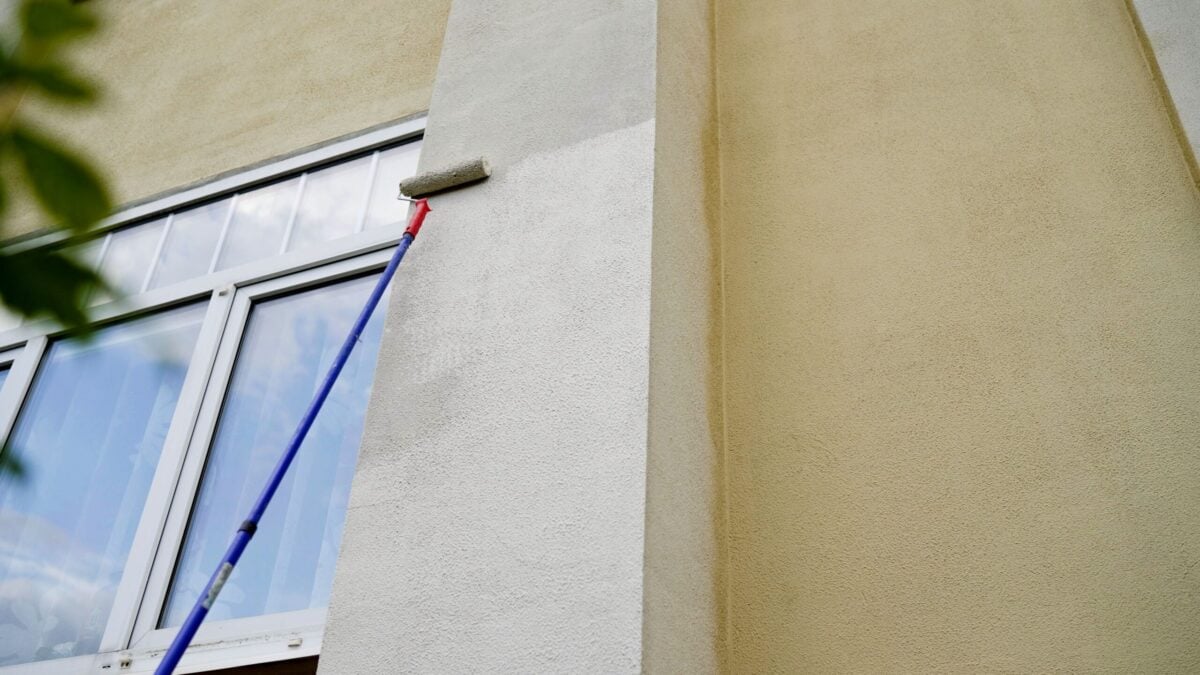
Getting an accurate budget number for a commercial painting project is harder than it looks from the outside. Square footage is a starting point, not a price. The actual cost of a commercial paint job is determined by a combination of factors that vary significantly from one building to the next, and from one project scope to another. Understanding commercial painting prices before you go to bid helps you evaluate proposals accurately, set realistic budget expectations, and avoid the frustration of quotes that differ by 40 percent without a clear explanation of why. For property owners and facility managers in Boston, MA and surrounding areas, where commercial painting projects range from retail touch-ups to full industrial recoats, knowing what drives cost is what separates an informed decision from a surprise invoice. The same variables that experienced crews factor into professional coating work on commercial structures apply directly to how every line of a proposal is built.
Here is what you will learn in this guide:
- Why commercial painting prices vary so widely between projects and proposals
- The 8 cost factors that determine what a commercial painting project actually costs
- How to read and compare proposals accurately before signing a contract
- What scope gaps look like and how to identify them before they become change orders
- How Boston, MA and surrounding areas property owners can budget more accurately for their next project
Why the Cost of Commercial Painting Differs from Residential Projects

Commercial painting projects operate in a fundamentally different cost environment than residential ones. The scale is larger, the surface preparation requirements are more demanding, the coating systems are more specialized, and the scheduling constraints of an occupied commercial building add complexity that residential jobs rarely face. A contractor who primarily paints houses is not equipped to price a commercial project accurately because the inputs are different.
Labor rates in commercial painting reflect journeyman-level skill, not general handyman capacity. Surface preparation on commercial buildings, which includes pressure washing, scraping, priming deteriorated substrates, and addressing masonry cracks and joints, is often more work than the painting itself. The coatings specified for commercial use are higher-performance and higher-cost products than residential paint. And access requirements, whether that means scaffolding, aerial lifts, or swing stage, add significant cost that does not appear in a residential job. Here is why understanding commercial painting prices from the start protects your project:
- Budget Accuracy: Knowing the real cost drivers prevents the gap between initial budget estimates and actual proposal figures from derailing projects at the approval stage.
- Proposal Comparability: Understanding what each cost factor covers lets you evaluate whether two proposals at different price points are actually bidding the same scope or not.
- Change Order Prevention: Projects with accurate upfront scopes have fewer change orders because the cost variables were identified before work started rather than discovered mid-project.
- Contractor Selection: Price alone is a poor selection criterion for commercial painting. Understanding cost factors allows you to evaluate value rather than just total dollars.
- Lifecycle Planning: Knowing what drives cost helps facility managers budget for future recoat cycles rather than being caught off guard by the true cost of maintenance painting.
6 Cost Factors That Determine Commercial Painting Cost Per Square Foot
The eight factors below account for the majority of cost variation between commercial painting proposals and between projects of similar size that seem like they should cost the same. Each one is a real variable that experienced estimators quantify before submitting a number.
1. Surface Area and Complexity of the Commercial Building
Total square footage is the most obvious input into commercial painting cost, but it is also the most misleading when used in isolation. A 10,000-square-foot flat wall surface is not the same job as 10,000 square feet of exterior masonry with multiple window reveals, decorative banding, and HVAC penetrations. Surface complexity drives both labor hours and material consumption in ways that square footage alone does not capture.
For commercial buildings in Boston, MA and surrounding areas with detailed facades, mixed substrate types, or irregular surface geometry, the complexity multiplier on base square footage cost can be significant.
- Flat, uninterrupted wall surfaces are the most efficient to coat and carry the lowest labor cost per square foot
- Surfaces with frequent penetrations, architectural details, or mixed materials require significantly more labor for masking, cutting in, and detail work
- Multi-story exteriors with varied surface conditions at each level are priced differently than a single-story building of equivalent total area
2. Surface Preparation Requirements

Surface preparation is consistently the most underestimated cost in commercial painting proposals and the most common place where low bids cut scope to reduce price. Proper preparation for a commercial exterior or interior paint project includes pressure washing, scraping loose and failing paint, spot priming bare areas, filling cracks and voids in masonry or drywall, addressing rust on metal substrates, and allowing adequate drying time before coating begins.
Each of those steps takes time and material, and the condition of the existing surface determines how much of each is needed. A building that has been well-maintained with regular painting cycles needs far less preparation than one that has not been painted in fifteen years with peeling, chalking, and biological growth across the facade.
- Pressure washing alone on a large commercial exterior can represent 10 to 20 percent of the total project labor cost
- Rust remediation on metal substrates, including hand tool or power tool cleaning to the appropriate SSPC standard, adds significant cost when corrosion is present
- Masonry crack filling and joint caulking prior to painting is frequently excluded from low commercial painting proposals and shows up as a change order after the project starts
3. Coating System Specification and Its Effect on Painting Costs
Not all paint is priced equally, and the coating system specified for a commercial project has a direct and significant effect on material cost. A standard interior latex wall paint at $30 to $50 per gallon is a fundamentally different product from a 100 percent acrylic elastomeric exterior coating at $80 to $120 per gallon or a two-component epoxy coating for an industrial interior at $150 or more per gallon. The product specification drives material cost per square foot, and that difference compounds across the square footage of a large commercial project.
The right coating system for the application also affects the number of coats required, which multiplies both material and labor cost. A properly specified commercial exterior system typically involves a primer coat and two finish coats. An industrial interior may require a primer, an intermediate coat, and a finish coat from different product families.
- Higher-performance coatings cost more per gallon but often require fewer recoat cycles over the building’s life, which reduces total lifecycle cost
- Two-component coating systems require precise mixing ratios and have limited pot life, which affects both material waste and labor efficiency
- Coating coverage rates vary by product. Lower coverage rate products require more material per square foot even when the cost per gallon is comparable
4. Access and Staging Requirements
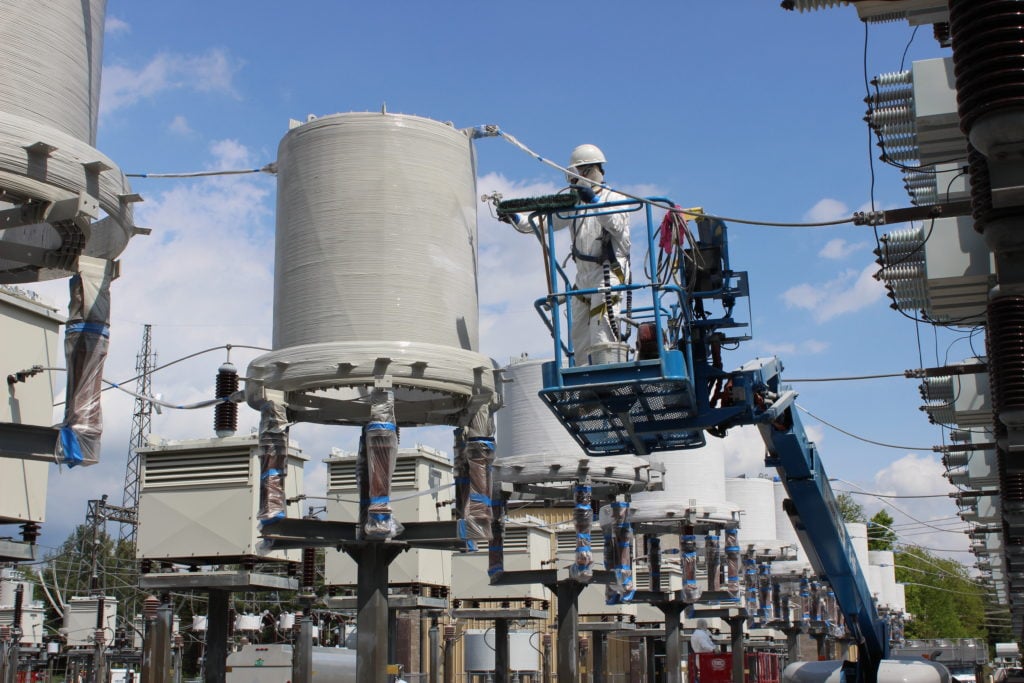
How crews get to the surface is one of the most significant and most variable cost inputs in commercial painting. Interior painting in an occupied single-story office building requires only ladders and extension poles. Exterior painting on a four-story masonry building requires scaffolding, aerial lift rental, or swing stage rigging, each of which carries significant cost that is entirely separate from labor and material.
For commercial properties in Boston, MA and surrounding areas with height, proximity to other structures, or active occupancy that limits where access equipment can be positioned, access cost can represent 15 to 30 percent of the total project budget.
- Scaffolding on large commercial exteriors is typically rented by the week and priced by the linear foot of coverage
- Aerial lift rental costs vary significantly between straight boom, articulating boom, and scissor lift equipment based on the height and access angle required
- Swing stage rigging on high-rise buildings requires certified riggers and engineering documentation that adds to project cost beyond equipment rental alone
5. Scheduling Constraints and Their Impact on Your Painting Project
Commercial painting projects in occupied buildings require scheduling coordination that adds cost in several ways. Work may need to be performed during off-hours or weekends to avoid disrupting tenants or operations, which carries a labor premium of 15 to 25 percent over standard day-rate pricing. Phased access, where only certain areas can be painted at a time to keep the building operational, reduces crew efficiency and extends project duration. And low-VOC or zero-VOC coating requirements in occupied spaces sometimes restrict product selection to higher-cost alternatives.
- Off-hours and weekend labor premiums apply to the full crew and equipment cost for each shift worked outside standard business hours
- Phased project schedules increase mobilization and demobilization costs as crews return to the site multiple times rather than completing the work in a single continuous run
- Occupied health care, food service, and education facilities often require zero-VOC coatings and air quality documentation that standard commercial projects do not
6. Number of Colors and Finish Changes
Color changes and finish transitions add both material and labor cost that is easy to overlook in initial project scoping. Each color requires its own material, and surfaces where two colors meet require careful masking and cutting-in labor that slows production significantly compared to a single-color application. Multiple sheen levels within a single space, such as eggshell walls with semi-gloss trim and flat ceilings, require the same surface to be worked multiple times with different products.
For commercial properties with branded color schemes, accent walls, or detailed trim packages, the color and finish complexity premium on a painting project can be meaningful compared to a straightforward single-color scope.
- Each color change on an exterior facade requires masking the adjacent color and allowing adequate dry time before the adjacent surface is painted
- Trim and detail painting is consistently the most labor-intensive component of any commercial interior painting project on a per-square-foot basis
- Dark accent colors often require additional coats to achieve full hide over lighter existing colors, which adds both material and labor cost
How to Read Commercial Painting Proposals and Compare Interior Painting Bids

Getting three proposals on a commercial painting project and comparing them line by line sounds straightforward. In practice, proposals from different contractors often describe the work at different levels of specificity, which makes direct comparison difficult without knowing what to look for. This is especially true when comparing interior painting bids where scope details like primer coats, surface preparation method, and coat count are easy to omit from a general description.
What a Complete Proposal Specifies
A complete commercial painting proposal specifies the preparation method and scope for each surface type, the coating system by manufacturer and product name for each application, the number of coats, the areas included and excluded from the scope, the access method and associated equipment, the project schedule and phase plan for occupied buildings, and the warranty terms for both materials and workmanship.
What Missing Scope Looks Like
Proposals that describe the work in general terms without specifying products, coat counts, or preparation methods are not complete proposals. They are framework documents that allow scope to be added as change orders after the contract is signed. Common missing scope items in low commercial painting proposals include surface preparation beyond basic cleaning, primer coats on bare or deteriorated surfaces, caulking and crack filling prior to painting, and access equipment for areas above standard ladder reach.
Painting Per Square Foot: Price vs. Long-Term Value
The lowest painting per square foot price on a commercial project almost never represents the best value when evaluated over the expected service life of the coating system. A correctly specified, properly prepared, and professionally applied paint system on a commercial building should deliver seven to ten years of service before a maintenance recoat is needed. A low-cost system applied without adequate preparation may look acceptable at completion and fail within two to three years, requiring the full cost of the project to be repeated on a shortened cycle.
Is Your Painting Proposal Complete?
Check what your proposal actually specifies. Unchecked items become change orders.
A complete commercial painting proposal names seven things: the prep work for each surface, the exact coating products, the number of coats, which areas are included and which are excluded, the access equipment, the schedule for occupied areas, and the warranties on materials and workmanship. When those details are missing, a cheaper bid usually means less work rather than a better price.
Get an Accurate Commercial Painting Price for Your Project
Commercial painting prices are not mysterious, but they are not simple either. The cost factors outlined above interact differently on every project, and the only way to get an accurate number for your specific building is a site assessment by a contractor who understands how to evaluate each variable and price it honestly.
McLean Company has been providing commercial painting services to properties across New England for decades. We assess every project on site before pricing it, specify the right coating system for the substrate and exposure conditions, and deliver proposals that account for the full scope of work without hidden gaps that become change orders after the job starts.
Contact us today to schedule a site visit and get a commercial painting price built on an accurate assessment of what your project actually requires.