(978) 774-4330

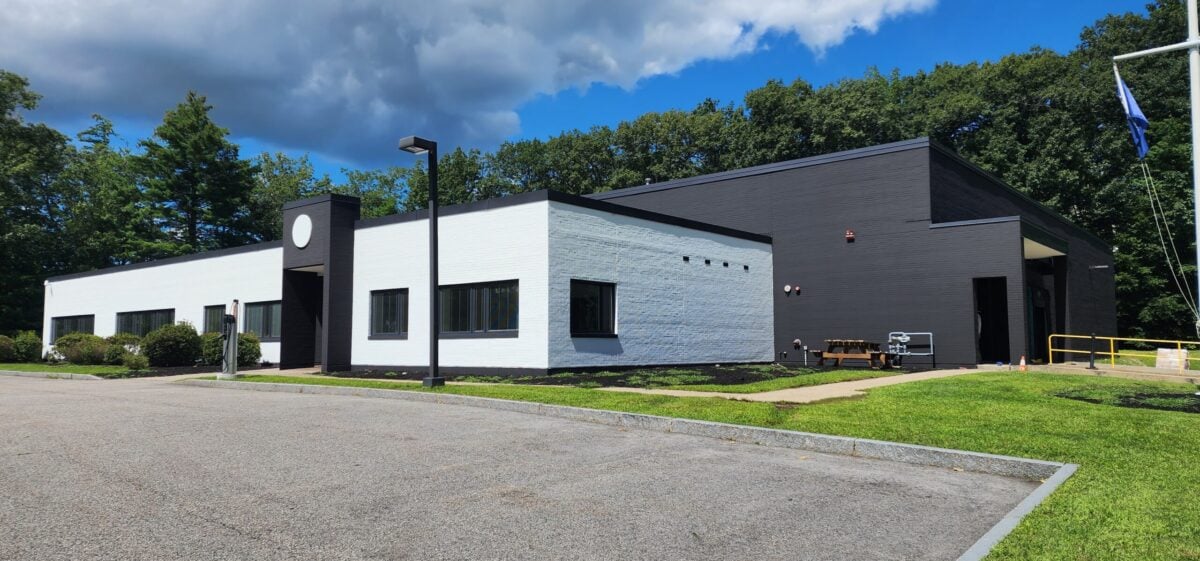
The exterior of a commercial building is the first thing clients, tenants, and partners see. A paint job that peels within two seasons, drips on property below the work area, or leaves streaks across a storefront window does not just look bad. It signals that something in the process went wrong, and that process started with contractor selection. Choosing the right commercial exterior painting contractor is not about finding the lowest bid. It is about finding a contractor who prepares correctly, specifies the right products for the substrate and climate, and manages the project without disrupting the building’s operations or tenants. For property owners and facility managers in Worcester, MA and surrounding areas, where the building stock ranges from historic brick to modern curtain wall and the climate puts exterior coatings through a serious test every year, this decision matters more than most. The same rigor that goes into exterior coating systems built to last on commercial masonry and concrete should go into evaluating the contractor who applies them.
Here is what you will learn in this guide:
- Why contractor selection determines the outcome of a commercial exterior painting project more than any other variable
- The key qualifications to verify before hiring a commercial exterior painting contractor
- What red flags look like in proposals, references, and on-site conduct
- How to compare proposals accurately when bids come in at very different price points
- What Worcester, MA and surrounding areas property owners should prioritize when evaluating exterior painting contractors
Why the Contractor Matters More Than the Product

Commercial exterior painting projects fail more often because of process failures than product failures. A premium elastomeric coating applied over an inadequately cleaned or improperly primed substrate will delaminate just as surely as a budget product. The difference is that a premium product costs more, so the failure is both more expensive and more frustrating. The coating system a contractor specifies matters, but it is a secondary variable to the preparation and application standards the contractor actually executes on site.
The exterior of a commercial building in Worcester, MA and surrounding areas faces freeze-thaw cycling, wind-driven rain, UV degradation, and in some cases salt air exposure that puts every layer of the coating system under sustained stress. A contractor who understands how to prepare masonry, concrete, metal, or EIFS for those conditions, and who specifies the right system for the substrate and exposure, will deliver results that last. A contractor who underestimates the preparation scope to win on price will deliver results that fail early and require the full cost of the project to be repeated. Here is what selecting the right contractor actually protects:
- Coating Performance: The quality of surface preparation determines whether the specified coating performs to its rated service life. A contractor who executes preparation correctly is the difference between a seven-year and a three-year paint cycle.
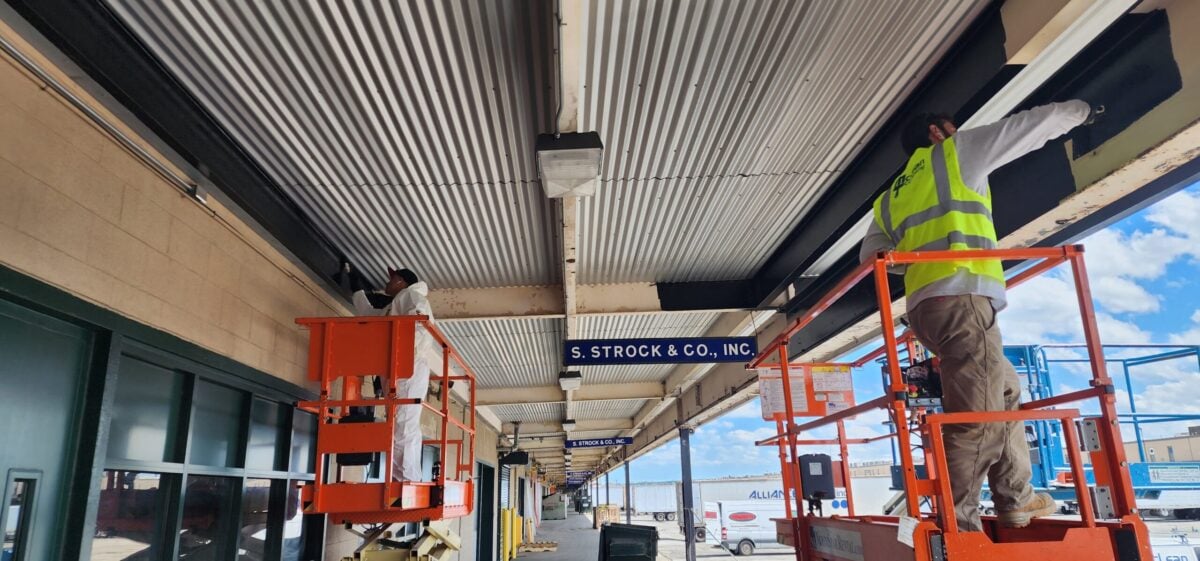
- Property Protection: Commercial exterior painting projects involve work at height, overspray risk, and access equipment that can damage landscaping, vehicles, windows, and adjacent properties. A qualified contractor plans for and prevents these risks.
- Tenant and Operations Continuity: Occupied commercial buildings require scheduling and communication protocols that minimize disruption. The right contractor has a process for managing that; the wrong one improvises and creates problems.
- Compliance and Insurance: Commercial painting contractors working on occupied buildings need appropriate insurance coverage and, in some cases, licensing specific to the work type or building occupancy. A contractor without these exposes the property owner to liability.
- Warranty Accountability: A qualified contractor stands behind their work with documented workmanship warranty terms. A contractor who disappears after project completion is not a contractor who was confident in the quality of their own work.
How to Choose a Commercial Exterior Painting Contractor: 7 Key Steps
The process of selecting a commercial exterior painting contractor is not complicated, but it does require discipline. Each step below exists to reduce the risk of a specific failure mode that underqualified or dishonest contractors consistently produce.
1. Verify Commercial Experience Specifically
The skills required for residential exterior painting and commercial exterior painting overlap at the basic level of holding a brush and roller. Beyond that, they diverge significantly. Commercial projects involve larger surface areas, more complex access requirements, more demanding product specifications, occupied buildings with scheduling constraints, and accountability to property management standards that residential projects rarely require.
Ask any prospective contractor to provide documented examples of completed commercial exterior painting projects at comparable scale and building type. A portfolio that consists primarily of residential work, even high-quality residential work, is not evidence of commercial capability.
- Request references from commercial property managers or owners, not homeowners, and follow up on at least two of them with specific questions about schedule adherence and how unexpected conditions were handled
- Ask what percentage of the contractor’s annual revenue comes from commercial exterior painting. A contractor for whom commercial work is a small side business operates differently from one for whom it is the core business
- Verify that the contractor has completed projects on building types similar to yours. Historic brick, EIFS, metal panels, and tilt-up concrete all have different preparation and coating requirements
2. Confirm Insurance and Licensing Before Going Further
A commercial exterior painting contractor working on your building needs to carry general liability insurance at limits appropriate to the project scale and workers’ compensation coverage for all employees and subcontractors. Requesting a current certificate of insurance before any other conversation proceeds is standard practice, not an unusual demand.
For projects on buildings with specific occupancy requirements, historically designated structures, or work involving lead paint on pre-1978 construction, additional certifications and compliance documentation may be required. In Worcester, MA and surrounding areas, contractors working on commercial properties in historic districts or on municipally owned buildings may face additional compliance requirements that should be confirmed before the project is awarded.
- General liability coverage should be verified at limits that reflect the actual replacement cost exposure of the building and adjacent property, not just the minimum the contractor could obtain
- Workers’ compensation coverage must apply to every person working on the project, including any subcontractors the general contractor brings in for specialty work
- Lead paint RRP certification under EPA rules is required for renovation work on pre-1978 buildings. Confirm the contractor’s certification status if your building falls in that category
3. Require a Detailed Written Scope Before Comparing Prices
A proposal that describes the project as “exterior painting of building as discussed” is not a specification. It is a liability for the property owner because it creates no defined standard against which the completed work can be evaluated. Every proposal for a commercial exterior painting project should specify the preparation method for each surface type, the products being applied by manufacturer and product name, the number of coats, the areas included and excluded from the scope, and the access equipment that will be used.
Without that level of specificity, comparing two proposals at different price points is impossible because you cannot know whether they are describing the same work. The lower proposal may be cheaper because it excludes preparation steps or specifies lower-grade products, not because the contractor is more efficient.
- Pressure washing method and pressure should be specified, not just described as “power wash.” High-pressure washing on aged masonry can cause damage that creates more prep work than it solves
- Primer specification matters as much as topcoat specification. Skipping a primer coat on bare or deteriorated substrates is one of the most common scope reductions in low commercial painting bids
- Access equipment should be itemized and matched to the building height and geometry. A proposal that does not address access for a multi-story building is hiding a significant cost variable
4. Ask About the Actual Crew, Not Just the Company

Commercial exterior painting projects are executed by the crew on site, not by the owner or sales representative who presented the proposal. The difference between a crew with ten years of commercial exterior experience and one hired for the season from a general labor pool is significant and directly affects the quality of the preparation and application work.
Ask the contractor who specifically will be on site managing the work, what the experience level of the crew members is, and whether subcontractors will be used for any part of the scope. If subcontractors are involved, the same insurance and experience verification applies to them.
- A dedicated site supervisor who is present daily and accountable for quality at each stage of the project is a standard expectation for commercial exterior projects. A contractor who cannot identify who will be supervising the work is not organized at the level a commercial project requires
- Crew continuity through the project matters. Crews that change composition mid-project produce inconsistent results because preparation and application standards vary between workers
- Ask specifically how the contractor handles quality control. Wet film thickness measurement during application and documentation of surface preparation at each stage are standard practices for commercial contractors who take quality seriously
5. Check References with Specific Questions
A reference check for a commercial exterior painting contractor should go well beyond confirming that the project was completed. It should gather specific information about how the contractor managed schedule changes, what the crew’s site conduct was like, whether the proposal accurately reflected what was delivered, and whether the client would hire the contractor again for a comparable project.
For projects on occupied commercial buildings in Worcester, MA and surrounding areas, references from property managers who can speak to how the contractor coordinated with tenants and building operations are particularly valuable. A contractor who completed a beautiful paint job while making tenant life miserable during the project is not the right contractor for an occupied building.
- Ask the reference specifically whether the project was completed on schedule and on budget, and if not, what changed and how the contractor communicated about it
- Ask whether there were any warranty claims after project completion and how the contractor responded
- Ask whether the property looked as expected at project completion and at six months and one year post-completion, if the reference has that information
6. Evaluate Proposals on Value, Not Price
When commercial exterior painting proposals come in at significantly different price points, the first question should be what is different about the scope, not what is wrong with the higher-priced proposal. Contractors who invest in proper preparation, quality products, and skilled labor cannot compete on price with contractors who cut those corners. Choosing the lower proposal without understanding why it is lower transfers the risk of inadequate preparation and premature failure to the building owner.
The right framework for evaluating commercial painting proposals is total cost over the expected service life of the system. A correctly specified, properly prepared, professionally applied commercial exterior paint system should deliver seven to ten years of service before a maintenance cycle is needed. A low-cost system applied by an underqualified crew may require complete repainting within three to four years, at which point the cumulative cost of two paint cycles exceeds what the better system would have cost for one.
- Request that all proposals specify the same surface preparation scope so you are comparing equivalent systems. If one contractor proposes significantly less preparation than another, ask both to explain the reasoning
- Ask each contractor what their expected service life is for the system they are proposing and what conditions they are assuming. That conversation reveals a lot about their technical knowledge and their honesty
- Consider the disruption cost of a shorter paint cycle. An occupied commercial building that requires exterior repainting every three years instead of every eight incurs not just material and labor cost but tenant communication, access logistics, and operational disruption costs that add up
7. Confirm Warranty Terms in Writing Before Signing
The workmanship warranty a commercial exterior painting contractor provides is the documentation of their confidence in their own work. A contractor who provides a two-year workmanship warranty and one who provides a five-year warranty are making very different statements about the durability of their preparation and application standards.
Warranty terms should be documented in the contract, not verbal assurances made during the proposal process. The warranty document should specify what is covered, what the exclusions are, how a claim is initiated, and what the contractor’s response obligation is when a warranty claim is made.
- Standard commercial painting workmanship warranties in the New England market typically range from two to five years. A warranty shorter than two years on a commercial exterior project is below market standard and worth questioning
- Manufacturer product warranties cover material defects and are separate from the contractor’s workmanship warranty. Both should be documented as part of the project closeout package
- Warranty exclusions commonly include damage from building movement, substrate failure not related to the coating application, and physical damage from third parties. Understanding what is excluded matters as much as understanding what is covered
What Red Flags Actually Look Like

Underqualified commercial exterior painting contractors do not typically announce themselves. They present confidently, provide references who confirm basic project completion, and produce proposals that look complete at a glance. The signals that something is wrong are more subtle, and knowing what they look like protects property owners from expensive mistakes.
- Vague preparation language: Proposals that describe preparation as “cleaning and priming as needed” without specifics are hiding the scope. Professional contractors specify what they will do, not what they might do depending on conditions they have not assessed.
- Unable to name the products: A contractor who cannot immediately name the manufacturer and product line they are proposing for each surface is not specifying at a professional level. They are buying whatever is on sale and applying it.
- No site visit before pricing: A proposal for a commercial exterior painting project submitted without a physical site assessment is a guess, not a specification. Surface conditions, access complexity, and substrate type all affect scope and cannot be assessed from photos or descriptions.
- Pressure to sign quickly: Time pressure is a sales tactic, not a legitimate business constraint for most commercial exterior painting projects. A contractor who creates urgency to prevent you from doing due diligence has something to hide.
- No written warranty offer: A contractor who has not offered written warranty terms by the time a proposal is presented is not planning to stand behind the work.
Start Your Contractor Search the Right Way
Choosing a commercial exterior painting contractor is a decision with consequences that play out over years, not days. The building owner who invests time in verifying credentials, checking references, comparing scopes rather than just prices, and confirming warranty terms before signing consistently gets better outcomes than one who selects on convenience or lowest bid.
McLean Company has been providing commercial exterior painting services to property owners and facility managers across New England for decades. We assess every project on site before pricing it, specify the right system for the substrate and exposure conditions, execute preparation to the standard the product requires, and stand behind the work with documented warranty terms.
Contact us today to schedule a site visit and get a commercial exterior painting proposal built on an honest assessment of what your building actually needs.