(978) 774-4330

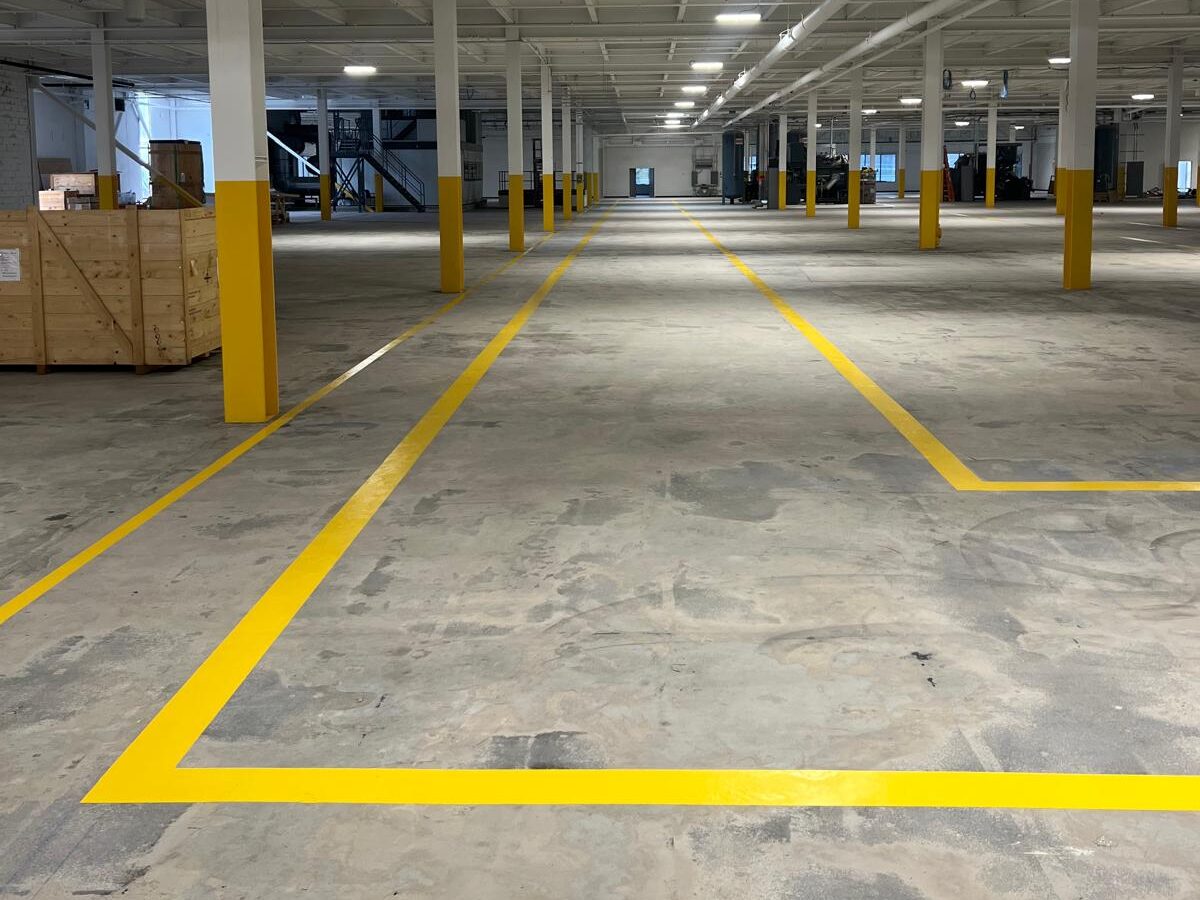
A faded, cracked, or poorly laid out parking lot sends a message before anyone walks through your front door. Parking lot striping is one of the most visible indicators of how a commercial property is maintained, and it carries real consequences beyond appearance. Misaligned stalls waste usable space. Missing ADA markings create legal exposure. Lines that wear out in a single season cost more to maintain than a properly applied system done right the first time. For property owners and facility managers in Framingham, MA and surrounding areas, getting striping right means understanding the materials, the process, and what separates a lasting result from one that needs to be redone before the year is out. The same attention crews bring to protective coatings on demanding surfaces applies directly to exterior marking work.
Here is what you will learn in this guide:
- Why parking lot striping is a liability and maintenance issue, not just a cosmetic one
- 8 professional tips that determine how long your striping actually lasts
- Which paint types perform best on asphalt and concrete in New England conditions
- What ADA compliance requires and where most lots fall short
- How to evaluate whether your lot needs a refresh or a full restripe
More Than Painted Lines: What’s Actually at Stake

A parking lot is often the first and last interaction a customer, tenant, or visitor has with your property. Crisp, well-placed markings communicate order and professionalism. Faded lines and missing safety zones communicate neglect. But the stakes go well beyond first impressions.
From a liability standpoint, parking lots are one of the most common locations for slip-and-fall incidents and vehicle collision claims. Poorly defined traffic flow, missing pedestrian crosswalk markings, and faded fire lane boundaries all contribute to the conditions that lead to incidents and subsequent claims against the property owner. In Framingham, MA and surrounding areas, commercial properties are subject to both state accessibility requirements and local enforcement of fire lane and traffic control markings. Letting those markings degrade is not a passive maintenance decision, it is an active increase in exposure. Here is what well-maintained parking lot striping protects:
- Legal Compliance: ADA stall dimensions, access aisle widths, and signage placement are federally mandated. Non-compliant lots face fines and litigation risk.
- Traffic Safety: Defined drive lanes, directional arrows, and stop bars reduce vehicle conflicts and pedestrian incidents in active parking areas.
- Fire Lane Integrity: Fire lanes must remain clearly marked and unobstructed. Faded markings invite parking violations that can affect emergency access.
- Space Efficiency: Properly laid out stall configurations maximize the number of usable spaces without compromising circulation.
- Property Value: Well-maintained lots signal active property management and reflect on the overall condition of the asset.
8 Tips for Long-Lasting Results
Parking lot striping that holds up through New England winters, spring freeze-thaw cycles, and heavy daily traffic does not happen by accident. The tips below reflect what experienced crews do differently from one season to the next.
1. Start With a Clean, Dry Surface
Surface condition at the time of application is the single biggest predictor of how long parking lot markings will last. Paint applied over dirt, oil contamination, standing water, or loose pavement material will fail early regardless of product quality. Professional crews pressure wash the surface, allow adequate drying time, and address any oil spots with appropriate degreasers before a single line is laid down.
- Asphalt should be dry to a depth that eliminates surface moisture, not just visually dry
- New asphalt requires a minimum cure period, typically 30 to 90 days, before striping
- Oil contamination requires chemical treatment and re-testing before coating adhesion is reliable
2. Assess Pavement Condition Before You Stripe
Striping over cracked, crumbling, or heaved pavement is a short-term fix at best. Paint cannot bridge structural failure, and markings applied over deteriorating surfaces will lift, peel, and fragment along with the pavement beneath them. A pre-striping pavement assessment identifies areas that need crack filling, patching, or surface repair before the marking work begins.
For commercial properties in Framingham, MA and surrounding areas, pavement maintenance and restriping are often most cost-effective when coordinated as a single project scope rather than scheduled separately.
- Crack filling should be completed and cured before paint is applied over repaired areas
- Patched sections may require a different paint formulation or primer depending on patch material
- Severely deteriorated lots may require sealcoating before restriping to stabilize the surface
3. Use the Right Paint for the Surface and Climate

Not all traffic paint performs equally on asphalt versus concrete, or in climates with significant freeze-thaw cycling. Water-based latex traffic paint is the most common choice for standard commercial lots due to its fast dry time, lower VOC content, and reasonable durability. Chlorinated rubber and epoxy-based formulations offer longer service life in high-traffic or chemically exposed environments but require more controlled application conditions.
- Water-based latex: best for standard commercial asphalt, fast dry, seasonal reapplication typical
- Epoxy-based: superior durability and chemical resistance, better suited for concrete surfaces and high-wear zones
- Thermoplastic: highest durability, applied as a heated material, typically specified for high-volume lots and drive-through lanes
4. Apply at the Correct Mil Thickness
Paint applied too thin wears faster. Paint applied too thick takes longer to dry, risks cracking, and can actually reduce adhesion. Professional crews use calibrated equipment to apply traffic paint at the manufacturer-specified wet film thickness, which translates to the correct dry film build after solvent evaporation.
- Standard traffic paint is typically applied at 15 to 20 mils wet film thickness
- Two-coat applications significantly extend service life in high-traffic areas
- Mil thickness verification is part of quality control on any professional striping project
5. Lay Out the Design Before You Paint
Measuring and snapping chalk lines or using a layout machine before the first stripe goes down is how professional crews ensure that stall dimensions, aisle widths, and circulation paths meet code and maximize lot efficiency. Eyeballing layout is how lots end up with uneven stall sizes, pinched drive lanes, and ADA spaces that do not meet dimensional requirements.
For lots in Framingham, MA and surrounding areas that are being restriped over faded existing markings, verifying that the original layout was code-compliant before reproducing it is a step that should never be skipped.
- ADA stall minimum width is 8 feet with an adjacent 5-foot access aisle
- Van-accessible stalls require an 8-foot access aisle
- Drive aisle widths for two-way traffic should be a minimum of 24 feet
6. Factor in Temperature and Weather Windows
Traffic paint applied in temperatures below 50 degrees Fahrenheit or above 95 degrees Fahrenheit will not cure correctly. High humidity, imminent rain, and direct intense sunlight on hot pavement all affect adhesion and dry time. Professional crews monitor conditions and schedule application during windows that allow proper cure before the lot reopens to traffic.
In New England, the usable striping season generally runs from late April through October, though warm fall days can extend that window. Planning restriping during this period rather than waiting until late in the season reduces the risk of application delays and ensures the markings have time to fully cure before winter.
- Minimum surface temperature should be confirmed, not assumed, before application
- Avoid application if rain is forecast within two to four hours
- Freshly applied lines should be protected from traffic for at least 30 minutes under optimal conditions, longer in humidity
7. Address ADA Requirements as a Standalone Checklist
ADA compliance in parking areas is detailed and specific. Many property owners and managers know they need a certain number of accessible spaces but are less familiar with the dimensional requirements, surface slope tolerances, and signage specifications that make a space legally compliant. A parking lot restriping project is the right time to conduct a full ADA audit of the existing layout.
- One accessible space is required for every 25 standard spaces up to 100 total spaces
- Accessible spaces must be located on the shortest accessible route to the building entrance
- Surface cross slopes within accessible spaces and access aisles cannot exceed 2 percent in any direction
- Signage with the International Symbol of Accessibility must be mounted at a specific height and location
8. Schedule Maintenance Restriping Proactively
The best time to restripe is before markings become invisible, not after. Most commercial parking lots in New England need restriping every one to two years depending on traffic volume, surface type, and paint specification. Waiting until lines are completely faded means operating a non-compliant lot for some period, which carries the liability exposure described earlier.
Building restriping into the annual facility maintenance calendar, budgeted and scheduled before the season opens, keeps the lot compliant and eliminates the rushed decision-making that leads to corners being cut.
Choosing Between a Refresh and a Full Restripe

Not every parking lot needs to be completely restriped from scratch. Understanding the difference between a line refresh and a full restripe helps property owners budget accurately and avoid paying for more than the situation requires.
When a Refresh Is Enough
A line refresh involves painting over existing markings that are faded but still legible and correctly positioned. This approach works when the layout is compliant, the pavement is in good condition, and the original lines are straight and accurately dimensioned. A refresh is faster, less expensive, and appropriate for lots that have been consistently maintained.
- Existing lines must be visible enough to guide the crew without re-layout
- Pavement condition must be stable with no significant cracking or surface deterioration
- ADA markings should be verified for dimensional compliance before refreshing rather than reproducing potential errors
When a Full Restripe Is Necessary
A full restripe starts with a clean layout, regardless of what was there before. It is the right choice when the existing layout is non-compliant, when pavement repairs have altered the surface, when the lot is being reconfigured, or when existing markings have deteriorated to the point where they no longer provide reliable guidance for a refresh application.
Lots in Framingham, MA and surrounding areas that have not been touched in three or more years typically benefit from a full restripe that allows the crew to verify dimensions, update ADA compliance, and optimize the layout for current use patterns.
Comparison at a Glance
| Factor | Refresh | Full Restripe |
| Existing layout compliant | Yes | Not confirmed |
| Pavement condition | Good | Repaired or deteriorated |
| Lines still visible | Yes | Faded or missing |
| ADA audit needed | Verify only | Full assessment |
| Cost | Lower | Higher, more comprehensive |
Get Your Parking Lot Striping Done Right the First Time
Parking lot markings are a maintenance item that directly affects your property’s compliance, safety record, and professional appearance. Cutting corners on surface prep, paint specification, or layout accuracy creates problems that show up before the next season is out.
McLean Company brings the same standards to exterior marking work that we apply to every coating project across New England. Our crews assess the surface, verify the layout, use the right materials for the conditions, and deliver work that holds up. If your lot is overdue for a restripe or you are not sure whether your current markings meet ADA requirements, we will give you a straight answer.
Contact us today to schedule a site visit and get a quote on parking lot striping that lasts.