(978) 774-4330


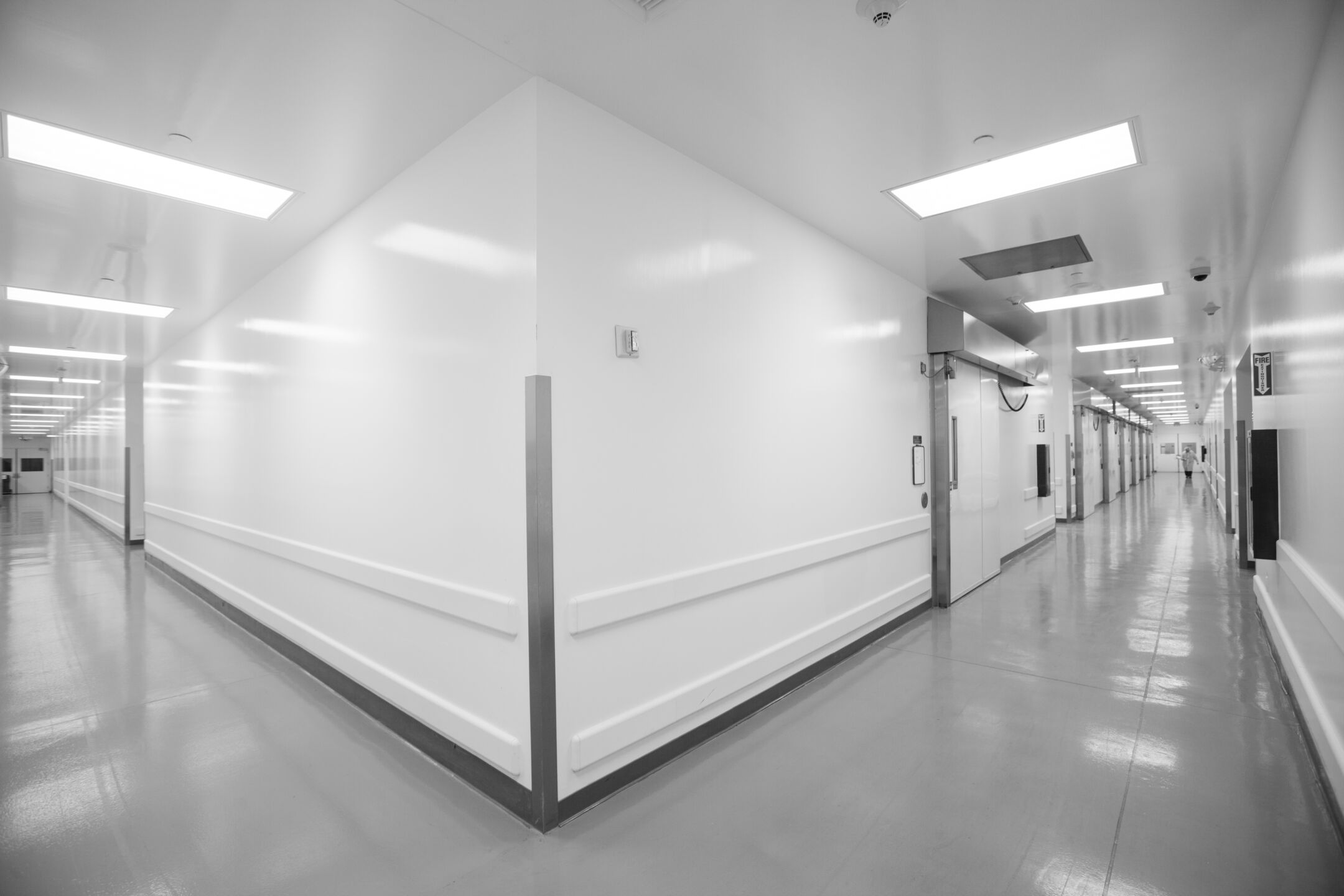
In a pharmaceutical cleanroom, walls and ceilings are just as critical as floors. Chipping paint, pinholes, and porous finishes shed particles and harbor microbes that put product and audits at risk. Specifying the right cleanroom coatings means choosing smooth, durable, chemical-resistant surfaces that survive constant disinfection. For manufacturers and labs in Framingham, MA and surrounding areas, getting this right protects compliance and uptime. The same expertise behind protective coating systems engineered for industrial facilities is what regulated environments demand on every vertical surface.
Here is what you will learn in this guide:
- Why wall and ceiling coatings are a core part of contamination control in pharmaceutical facilities
- The performance requirements that cleanroom coatings must meet
- The coating types used on cleanroom walls and ceilings and where each fits
- How application, containment, and documentation affect compliance
- What Framingham, MA and surrounding areas manufacturers should consider before specifying a coating
Why Walls and Ceilings Matter in Pharmaceutical Cleanrooms
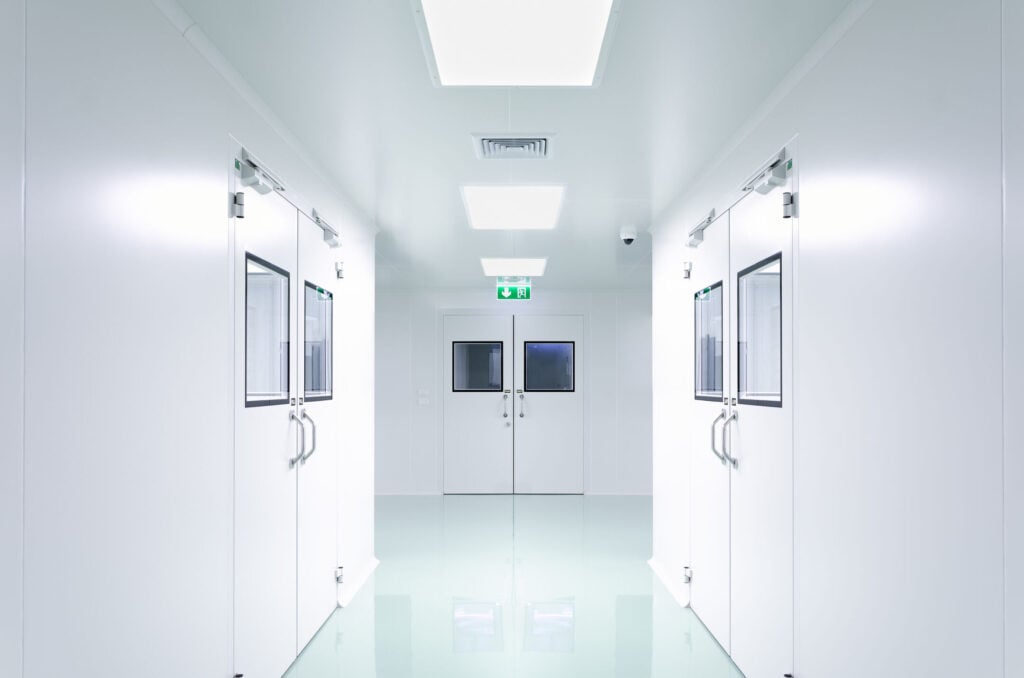
Cleanroom design focuses heavily on airflow, filtration, and gowning, but every surface in the room contributes to the overall contamination picture. Walls and ceilings make up most of the exposed surface area in a cleanroom, and they are cleaned and disinfected on a regular schedule alongside the floors. A coating that cracks, flakes, chalks, or develops pinholes becomes a source of particles and a place where residue and microbes can collect.
Pharmaceutical facilities also expose coatings to unusual chemical demands. Disinfectants are rotated to prevent resistance, and some facilities use vaporized hydrogen peroxide or similar decontamination processes that can attack inferior finishes. For manufacturers in Framingham, MA and surrounding areas, including biotech labs, fill-finish operations, and contract manufacturers, a coating that fails under that regimen means downtime, requalification, and costly rework. Here is what a properly specified wall and ceiling coating delivers:
- Particle Control: A smooth, well-adhered, nonporous film does not shed dust or fragments, which supports the particulate limits required in classified spaces.
- Cleanability: A dense, glossy surface with no pores or texture can be wiped and disinfected thoroughly, which makes cleaning more effective and validation more dependable.
- Chemical Durability: Resistance to the disinfectants, sanitizers, and decontamination agents used in the facility keeps the finish intact through years of repeated exposure.
- Audit Confidence: Intact, uniform surfaces show inspectors and quality teams that the environment is under control and well maintained.
- Reduced Downtime: A coating that holds up avoids the repairs and recoats that force controlled spaces out of service.
5 Requirements Cleanroom Coatings Must Meet on Walls and Ceilings
Not every paint that looks smooth and glossy is suitable for a cleanroom. The coating has to meet a defined set of performance requirements, and a contractor experienced in regulated spaces will evaluate each one before recommending a product. The five requirements below are the ones that most often separate a successful cleanroom finish from a failed one.
1. A Smooth, Nonporous, Seamless Film
The most basic requirement is a surface that does not trap contaminants. Cleanroom coatings are applied to form a continuous, smooth film with no brush marks, runs, orange peel, or pinholes that could harbor particles. Gloss levels are usually higher than in conventional paints because glossy surfaces are denser and easier to clean.
Achieving that finish depends on substrate preparation as much as on the coating. Walls and ceilings need to be properly patched, sanded, and primed, and any porous substrate has to be sealed so the coating does not absorb unevenly.
- Surfaces should be free of texture, pinholes, and visible defects
- Gloss or semi-gloss finishes are typically preferred for cleanability
- Substrate sealing and priming are essential to avoid pinholing and uneven absorption
2. Chemical Resistance to Disinfectants and Decontamination Agents
Cleanroom coatings must withstand the specific chemicals used in the facility’s cleaning and disinfection program. That can include quaternary ammonium compounds, alcohols, bleach-based products, peracetic acid, and hydrogen peroxide, often in rotation. A coating that is compatible with one of these may degrade under another.
The best practice is to review the facility’s cleaning and disinfection protocols before selecting a coating and to confirm compatibility with the manufacturer. Where decontamination with vaporized hydrogen peroxide is used, the coating should be verified for that exposure as well.
- Provide the coating manufacturer with the list of disinfectants and concentrations in use
- Confirm resistance to vaporized hydrogen peroxide where it is part of the protocol
- Test a sample area when there is uncertainty about long-term compatibility
3. Low Particulate Generation and Low Outgassing
A coating that dusts, chalks, or sheds fine particles as it ages does not belong in a cleanroom. Cured films should be hard, stable, and resistant to abrasion from wiping and cleaning tools. Low-odor, low-VOC formulations are also important, because outgassing from curing or aging coatings can affect sensitive processes and product.
Allowing adequate cure time and ventilation before the space returns to service reduces the risk of residual odor and outgassing. Some facilities require air quality checks before a space is released for production.
- Choose hard, stable finishes that do not chalk or powder
- Favor low-VOC, low-odor formulations suited to controlled spaces
- Build cure and ventilation time into the schedule before the room returns to service
4. Durability and Strong Adhesion
Cleanroom walls take impacts from carts, equipment, and daily activity, and the coating has to resist chipping and peeling. Poor adhesion is one of the most common causes of failure, and it usually traces back to inadequate preparation or an incompatible primer. Two-component systems with strong bond strength generally perform better in high-contact areas.
Areas that take the most abuse, such as corridors, door frames, and wall areas near equipment, may benefit from a tougher system or protective guards. Ceilings are subject to less physical contact but still need to hold up to cleaning and moisture.
- Use primers compatible with both the substrate and the finish coat
- Specify tougher systems for high-impact wall areas
- Inspect and repair damage promptly to prevent peeling from spreading
5. Sealed Details, Coves, and Penetrations
Even the best coating can be undermined by poor detailing. Gaps at joints, penetrations, light fixtures, and wall-to-ceiling transitions become cracks and crevices where contamination collects. Cleanroom details are typically sealed with compatible sealants, and transitions are coved or rounded where possible so there are no sharp corners.
Coordinating these details with the coating system ensures that the entire surface behaves as a continuous, cleanable envelope rather than a collection of separate surfaces with vulnerable seams.
- Seal all penetrations and joints with sealants compatible with the coating and cleaning agents
- Use coves or rounded transitions at wall-to-floor and wall-to-ceiling junctions
- Coordinate coating work with other trades so details are not disturbed after finishing
Coating Types Used on Cleanroom Walls and Ceilings
Several coating chemistries are used in pharmaceutical cleanrooms, and the best choice depends on the classification of the space, the chemical exposure, the schedule, and the substrate. A knowledgeable contractor will recommend a system for each area rather than defaulting to a single product throughout the facility.
Two-Component Epoxy Wall Systems
Epoxy wall coatings form a hard, dense, chemical-resistant film with excellent adhesion and cleanability. They are widely used on cleanroom walls, particularly in high-contact and wet or washdown zones. Their toughness and resistance to disinfectants make them a standard choice for many pharmaceutical applications.
Epoxies can chalk and yellow under UV exposure, which matters little inside a controlled room but is worth noting where there is natural light. They also have a strong odor during application, which requires ventilation and planning.
Polyurethane Coatings
Polyurethane coatings offer high abrasion resistance, good chemical resistance, and better color and gloss retention than epoxy. They are often used as a topcoat over epoxy or on their own in areas where appearance and long-term stability matter. Their durable, smooth finish is well suited to cleanroom use.
Water-Based and Low-VOC Systems
Water-based epoxies and low-VOC systems have improved considerably and are a good option where odor, ventilation, or schedule are major constraints. They produce less odor during application, cure with less outgassing, and can be easier to apply in occupied or adjacent spaces. Their performance depends on the specific product and the exposure, so they should be verified against the facility’s chemical regimen.
Antimicrobial Additives
Some coatings include antimicrobial additives intended to inhibit microbial growth on the coating surface. These can be a useful supplement in some settings, but they do not replace cleaning and disinfection, and their long-term performance varies. Any such product should be reviewed with the facility’s quality team and evaluated against regulatory expectations.
| Coating Type | Typical Use | Chemical Resistance | Odor During Application | Notes |
| Two-component epoxy | Cleanroom walls, washdown areas | Excellent | Strong | Tough, dense, excellent adhesion |
| Polyurethane | Topcoat or high-wear walls and ceilings | Excellent | Moderate | Strong abrasion resistance, stable gloss |
| Water-based or low-VOC epoxy | Odor-sensitive or adjacent occupied areas | Good to very good | Low | Verify against disinfectant regimen |
| Coatings with antimicrobial additives | Supplemental protection in select areas | Varies | Varies | Does not replace cleaning protocols |
Application, Containment, and Validation in Clean Rooms
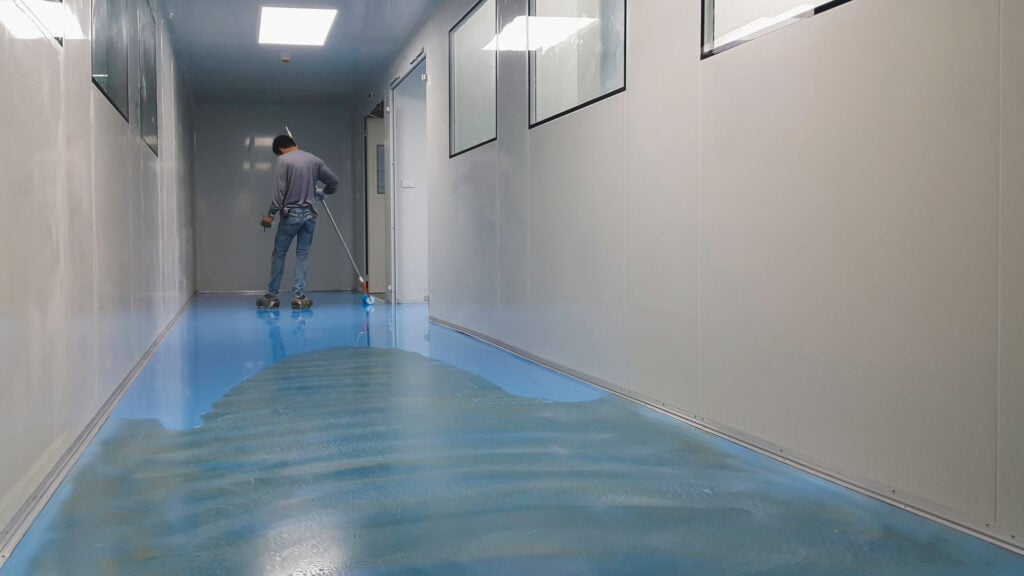
How a cleanroom coating is applied is as important as what is applied. Work in or next to a controlled space requires planning, containment, and documentation that general painting projects do not, and a contractor with regulated-environment experience will address each of them up front.
Containment and Scheduling
Painting generates dust, odor, and overspray, and those have to be contained so that adjacent classified spaces are not compromised. Temporary barriers, negative air, and careful sequencing help protect the rest of the facility. For plants in Framingham, MA and surrounding areas, work is often scheduled during planned shutdowns or in phases by suite so production can continue elsewhere.
- Plan containment and air handling before work starts
- Sequence work to protect adjacent classified spaces
- Build in cure, ventilation, and cleaning time before requalification
Surface Preparation
Surface preparation determines how well the coating will adhere and how smooth it will look. Existing coatings are evaluated, loose or failing material is removed, substrates are patched and sanded, and surfaces are cleaned and primed. Skipping or rushing this stage is the leading cause of early failure.
Documentation and Cleaning After Painting
Records of products used, batch numbers, application conditions, and inspection results support the facility’s quality system. After the work is finished, the room needs to be cleaned to the facility’s standards before it returns to service, and many facilities perform environmental monitoring as part of requalification.
Ongoing Care
Inspect coatings routinely for chips, cracks, or discoloration, repair them promptly, and use cleaning agents that are compatible with the finish. Small repairs made early prevent particle generation and avoid more extensive recoating projects later.
Specify Cleanroom Coatings That Hold Up to Every Audit
Cleanroom coatings are a small part of the budget and a large part of the contamination control picture. The right system, specified for the room’s classification and chemical regimen, prepared and applied with care, and documented properly, keeps walls and ceilings performing for years. The wrong one becomes a recurring source of particles, repairs, and risk.
McLean Company works with pharmaceutical, biotech, and regulated manufacturing facilities across New England to assess wall and ceiling conditions, recommend the right coating systems, and apply them with the preparation, containment, and documentation these environments demand. If your facility is planning a refresh, repairing damaged surfaces, or preparing for an audit, we can walk the space with you and give you a clear recommendation.
Contact us today to schedule a facility assessment and get a coating recommendation built around the cleanliness, chemical, and compliance requirements of your space.