(978) 774-4330


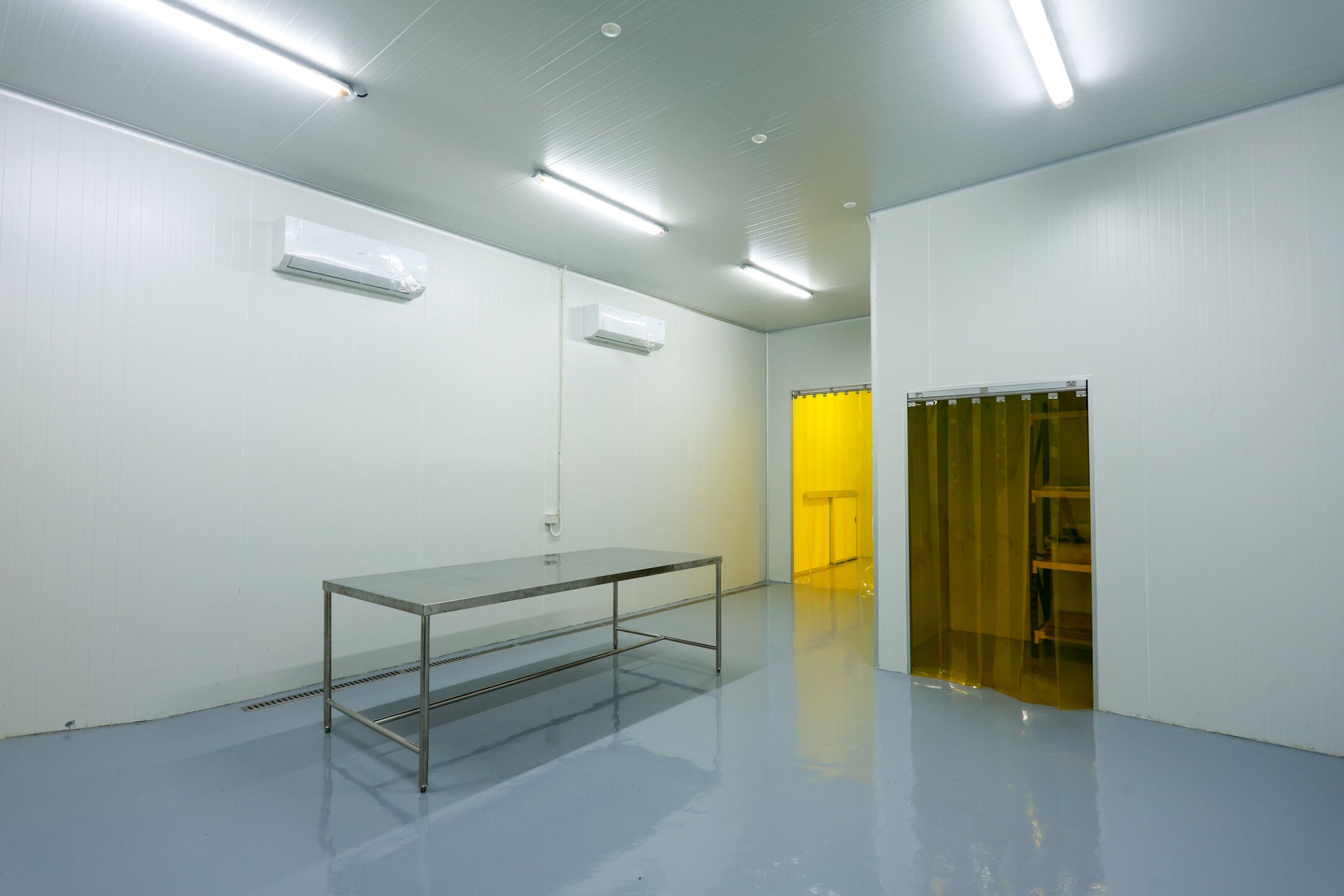
In a pharmaceutical plant, the floor is part of the contamination control strategy. Cracks, seams, and porous surfaces harbor microbes and shed particles that can compromise product and fail audits. Choosing the right pharmaceutical facility flooring means matching cleanroom-grade coatings to each classified space. For manufacturers and labs in Lowell, MA and surrounding areas, getting this right supports compliance and uptime. The same rigor behind seamless floor systems engineered for regulated industrial environments is essential when GMP standards apply.
Here is what you will learn in this guide:
- Why the floor is a critical part of contamination control in pharmaceutical manufacturing
- The cleanroom-grade coating systems used in pharmaceutical facilities and where each fits
- The design details, such as coves, seams, and drains, that make a floor truly cleanable
- How installation, moisture control, and documentation affect compliance
- What Lowell, MA and surrounding areas manufacturers should consider before specifying a floor
Why Pharmaceutical Flooring Is Part of Contamination Control
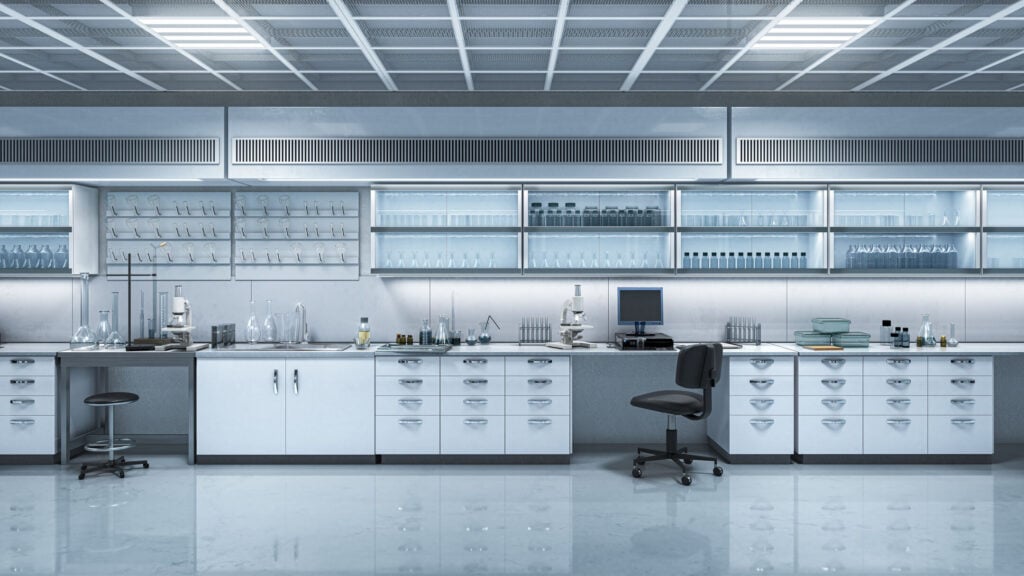
Pharmaceutical manufacturing operates under current good manufacturing practice expectations, and those expectations extend to every surface in the facility. Floors are the largest horizontal surface in a production space, and they are touched constantly by wheels, boots, carts, and cleaning equipment. A floor that sheds particles, absorbs liquids, or develops cracks becomes a source of contamination rather than a barrier against it.
Cleaning and disinfection are also unusually demanding. Pharmaceutical facilities rotate disinfectants, run frequent wash-downs, and rely on cleaning validation to prove that surfaces are clean. A floor that degrades under those chemicals, or that has seams and pores where residue can hide, makes validation harder and increases the risk of cross-contamination. For manufacturers in Lowell, MA and surrounding areas, including contract manufacturers and biotech labs, a well-specified floor supports audits, protects batches, and reduces downtime. Here is what a properly designed floor delivers:
- Seamless Cleanability: A monolithic surface with no joints or grout lines leaves no place for microbes or residue to collect, which makes cleaning and validation more reliable.
- Chemical Resistance: Resistance to repeated exposure to disinfectants, solvents, and process chemicals keeps the surface intact through years of sanitation cycles.
- Particle Control: A dense, nonporous surface does not shed dust or fragments, which supports the particle limits in classified cleanrooms.
- Audit Readiness: A smooth, intact, well-documented floor demonstrates control to inspectors and quality auditors during facility reviews.
- Operational Durability: Resistance to carts, pallet jacks, and equipment loads reduces repairs and the disruptions that come with taking a controlled space offline.
5 Cleanroom-Grade Coating Systems Used in Pharmaceutical Facilities
No single coating suits every space in a pharmaceutical plant. Gowning rooms, filling suites, warehouses, utility areas, and laboratories each have different cleanliness, chemical, and traffic requirements. The five systems below are the ones most often specified, and a knowledgeable contractor will match them to each area rather than applying one product everywhere.
1. Self-Leveling Epoxy
Self-leveling epoxy is the workhorse of pharmaceutical flooring. Poured at a thickness of roughly 1/16 to 1/8 inch, it flows out to form a smooth, seamless, nonporous surface with excellent chemical resistance and a bright, easy-to-clean finish. It is widely used in production suites, laboratories, packaging areas, and corridors.
Because it is smooth, self-leveling epoxy is easy to wipe down and does not trap particles. It performs best in areas without extreme thermal shock or aggressive solvent exposure, and it requires a well-prepared, properly profiled substrate for lasting adhesion.
- Seamless surface supports wipe-down cleaning and validation
- Good resistance to common disinfectants and process chemicals
- Best suited to areas without steam cleaning or severe thermal cycling
2. Conductive and Static-Dissipative Epoxy
Some pharmaceutical spaces handle fine powders, solvents, or electronic equipment where static electricity is a hazard. Conductive and static-dissipative epoxy systems include a grounding network and conductive topcoats that safely bleed off static charge. They are used in powder handling suites, solvent rooms, and areas with sensitive instrumentation.
These systems must be installed and tested carefully, because their performance depends on a continuous grounding path and on verified electrical resistance readings after cure. Maintenance practices also matter, since some cleaners and waxes can insulate the surface and defeat its conductive properties.
- Dissipates static to reduce fire, explosion, and equipment risks in sensitive areas
- Requires grounding points and resistance testing after installation
- Maintenance products must be compatible with the conductive surface
3. Urethane Cement
Urethane cement is the heavy-duty option for areas that see aggressive cleaning, hot water or steam wash-down, and heavy traffic. It tolerates thermal shock, resists a broad range of chemicals, and bonds well to concrete that may retain some moisture. It is often used in wash-down rooms, equipment cleaning areas, and process suites with heavy carts.
It is thicker than epoxy, typically 3/16 to 1/4 inch, and creates a very tough, durable surface that can be coved up the wall for a continuous transition. It is a premium system, but its longevity in demanding areas often justifies the cost.
- Withstands hot water and steam cleaning without losing adhesion
- Handles heavy equipment and cart traffic with minimal wear
- Tolerates residual moisture better than most epoxy systems
4. Polyurethane and Polyaspartic Topcoats
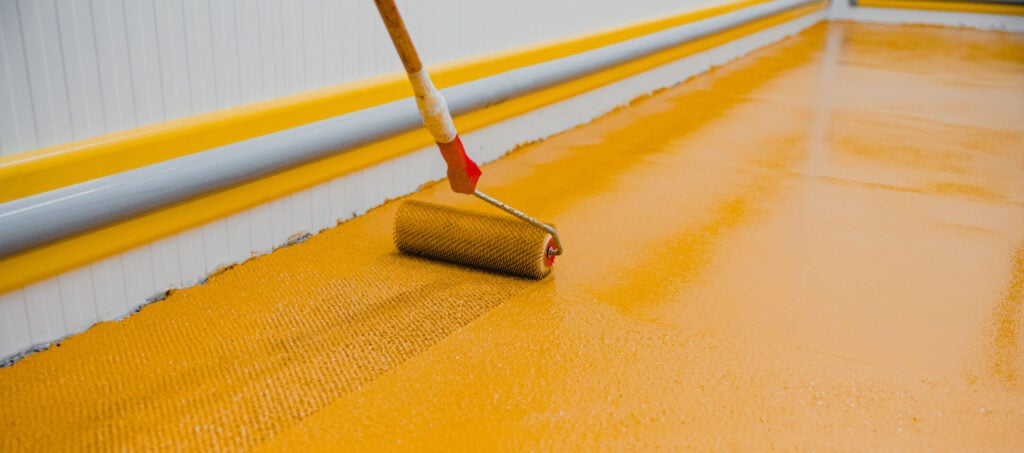
A topcoat of polyurethane or polyaspartic over an epoxy base adds chemical resistance, abrasion resistance, and color stability. These topcoats can also improve cleanability by providing a harder, more stain-resistant surface that holds up to repeated disinfection. In spaces with lighting or sunlight exposure, UV-stable topcoats prevent yellowing.
Polyaspartic topcoats cure quickly, which can shorten downtime and make them attractive for facilities that need to return controlled spaces to service fast. Fast-curing products require skilled installers because the working time is short.
- Improves abrasion and stain resistance over the base coat
- UV-stable options maintain color in spaces with natural or strong artificial light
- Fast-curing options reduce downtime in active facilities
5. Fast-Cure Methyl Methacrylate Systems
Methyl methacrylate, or MMA, systems cure in a fraction of the time of conventional coatings, often returning to service within hours, even at low temperatures. That makes them useful when a controlled space has very limited downtime, or when work has to proceed in cold conditions. They are durable and chemical resistant.
MMA has a strong odor during installation and requires careful ventilation, containment, and planning in occupied facilities. It is typically reserved for situations where the speed of return to service is the deciding factor.
- Cures in hours rather than days, which minimizes production disruption
- Performs in low-temperature conditions where other systems cannot cure
- Requires odor control and ventilation planning during installation
Design Details That Make a Floor Truly Cleanable
The coating is only part of the picture. A floor can be made of the best material available and still be difficult to clean if the design details are poor. Several features have an outsized effect on cleanability and contamination control, and they should be part of the specification from the start.
- Integral Cove Base: A coved transition where the floor curves up the wall eliminates the sharp corner where dirt and microbes collect, and it creates a continuous, cleanable surface from floor to wall.
- Seamless Joints and Terminations: Joints, transitions, and terminations should be detailed to avoid gaps, and flexible joint fillers must be compatible with the cleaning chemicals used in the space.
- Properly Detailed Drains: Where drains are required, the floor should slope toward them and the coating should be integrated tightly with the drain surround, since drains are common points for contamination and leaks.
- Appropriate Surface Texture: Cleanrooms favor smooth, easily cleaned surfaces, while wet or heavy-traffic areas may need light texture for slip resistance. The texture should match the area’s requirements rather than being uniform across the facility.
- Penetration and Equipment Interfaces: Floor penetrations, equipment bases, and column interfaces should be sealed and coved so that they do not become cracks or crevices.
Installation, Validation, and Maintenance
A pharmaceutical floor is a regulated element of the facility, and how it is installed and documented matters as much as what it is made of. A well-run project follows a planned sequence, produces records, and ends with a floor that can be maintained to standard.
Substrate Preparation and Moisture Control
Concrete moisture is one of the most common causes of coating failure. Testing the slab for moisture vapor emission before specifying a system tells you whether a moisture-tolerant product or a vapor barrier is needed. Surface preparation, typically shot blasting or diamond grinding, then creates the profile the coating needs for adhesion, and cracks and joints are repaired before coating begins.
Containment, Scheduling, and Phasing
Flooring work in an operating pharmaceutical facility requires containment to control dust and odor, and careful sequencing so that production and classified spaces are not compromised. For facilities in Lowell, MA and surrounding areas, phased installation by suite or zone, planned around production schedules and shutdowns, is the most common approach. Cure time, ventilation, and any required odor clearance should be built into the schedule before work begins.
Documentation and Validation Support
Installation records, product data, batch numbers, and test results for moisture, thickness, and electrical resistance where applicable all support the facility’s quality system. A contractor experienced in regulated environments will provide this documentation as a matter of course, and it makes qualification and audits much easier.
| System | Typical Area | Chemical Resistance | Thermal Shock | Downtime |
| Self-leveling epoxy | Production suites, labs, corridors | Very good | Moderate | Moderate |
| Conductive epoxy | Powder, solvent, and sensitive equipment areas | Very good | Moderate | Moderate |
| Urethane cement | Wash-down and heavy-duty areas | Excellent | Excellent | Moderate |
| Polyurethane or polyaspartic topcoat | Over epoxy for added durability | Excellent | Good | Short to moderate |
| MMA | Areas needing minimal downtime | Very good | Good | Very short |
Ongoing Maintenance
Even the best floor needs a cleaning program that suits it. Using compatible disinfectants, avoiding abrasive tools, and inspecting for cracks, coating damage, and seam failures on a regular basis keep the floor in compliance and extend its life. Small repairs made promptly prevent contamination issues and avoid larger projects later.
- Use cleaners and disinfectants that are compatible with the coating
- Inspect coves, drains, and joints on a routine schedule
- Repair damage quickly, and document corrective actions
Build Flooring Solutions That Support Your Quality System
Pharmaceutical facility flooring is a long-term investment in compliance, cleanliness, and operational reliability. The right system for each area, designed with cleanable details and installed over a properly prepared substrate, becomes a quiet part of the quality system. A poorly chosen or poorly installed floor becomes a recurring source of risk and cost.
McLean Company works with pharmaceutical, biotech, and regulated manufacturing facilities across New England to assess existing floors, recommend the right coating systems for each space, and install them with the preparation, containment, and documentation these environments require. If your facility is planning a new floor, repairing a damaged one, or preparing for an audit, we can walk the space with you and give you a clear recommendation.
Contact us today to schedule a facility assessment and get a flooring recommendation built around the cleanliness, chemical, and compliance requirements of your space.