(978) 774-4330


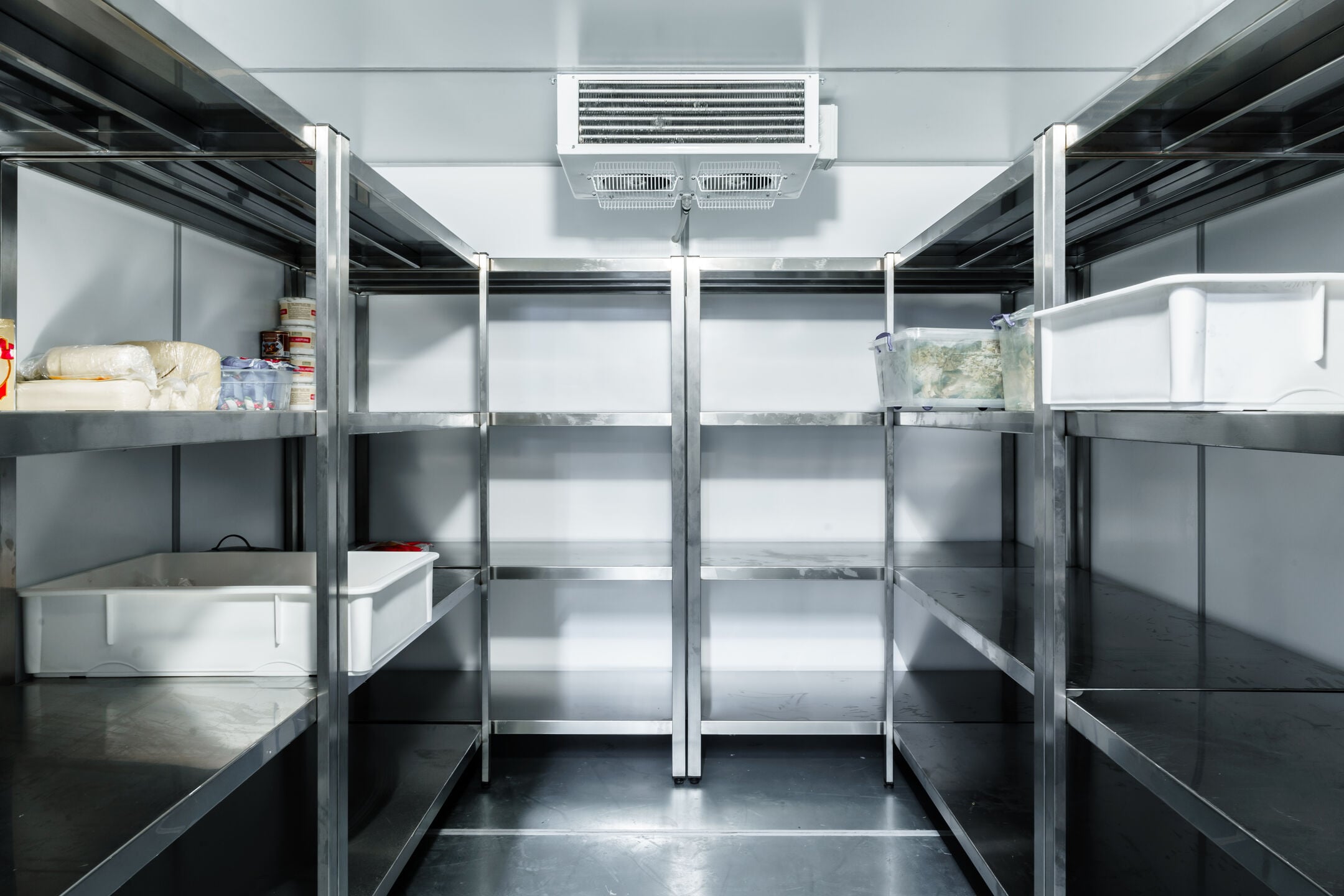
Freezers and coolers put concrete through punishment that ordinary floors never face. Temperatures swing from deep freeze to ambient every time a dock door opens, moisture condenses and freezes in every pore, and forklifts run constantly over the surface. Cold storage flooring has to survive all of it without cracking or delaminating. For operators in Framingham, MA and surrounding areas, choosing the right system is a major operational decision. The same discipline behind industrial floor systems built for extreme conditions applies here.
Here is what you will learn in this guide:
- Why thermal cycling destroys standard floor coatings and what that means for cold storage facilities
- The coating and flooring systems that perform in freezers, coolers, and blast chill rooms
- How slab condition, moisture, and joints affect the long-term performance of a cold storage floor
- What installation in a cold environment actually requires and how to plan around it
- What Framingham, MA and surrounding areas facility managers should know before specifying a cold storage floor
Why Cold Storage Floors Fail So Much Faster Than Standard Floors
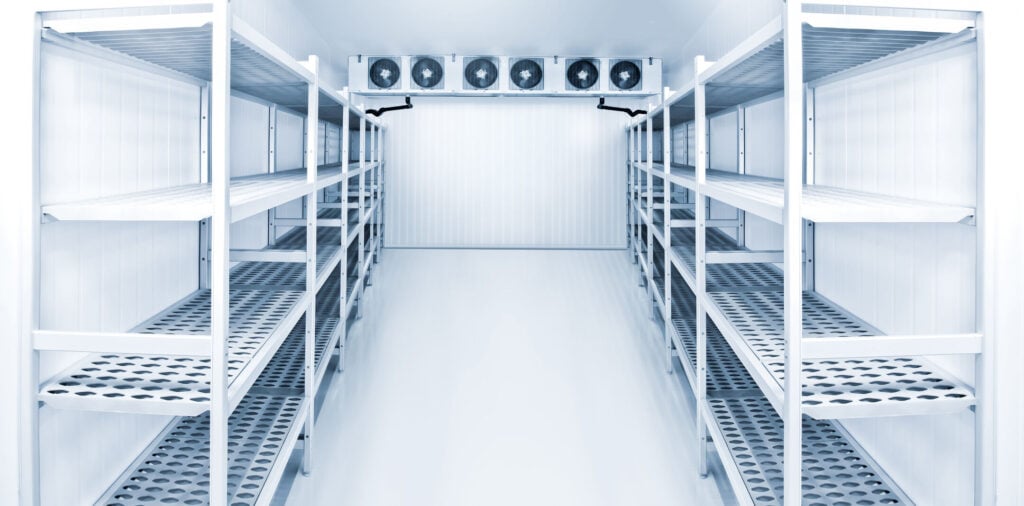
A cold storage floor is under attack from several directions at once, and each stress makes the others worse. The slab contracts as temperatures drop, then expands when a loading dock door opens or a defrost cycle runs. Moisture that has migrated into the concrete freezes, expands, and fractures the pore structure from within. Wheel loads from forklifts and pallet jacks concentrate stress on a surface that has become more brittle at low temperatures. A coating that performs well at 70 degrees Fahrenheit can crack and delaminate within a season when it is exposed to this combination.
The consequences go beyond appearance. A cracked or delaminated floor in a food storage facility becomes a contamination risk, a slip hazard, and a sanitation problem that auditors will cite. Repairing a freezer floor means emptying product, bringing the space up to temperature, and accepting days of downtime that cost far more than the coating itself. For operators in Framingham, MA and surrounding areas running distribution and food storage facilities, getting the specification right the first time is the most cost-effective decision available. Here is what a correctly specified cold storage floor protects:
- Thermal Shock Resistance: A system formulated to handle rapid temperature changes stays bonded and intact through door openings, defrost cycles, and wash-down events that fracture standard coatings.
- Food Safety Compliance: A seamless, nonporous surface supports the sanitation standards that USDA, FDA, and third-party food safety audits require and eliminates the cracks where contamination collects.
- Worker Safety: Frozen condensation and wet wash-down water create slip conditions that only a properly textured, durable surface can manage over the full life of the floor.
- Operational Continuity: A floor that holds up through its intended service life avoids the emergency repairs and product relocation that make freezer floor failures so expensive.
- Slab Protection: A sealed floor system keeps moisture out of the concrete, which reduces the freeze-thaw damage that eventually destroys the slab itself.
6 Flooring Considerations That Determine Cold Storage Performance
Specifying cold storage flooring is not a matter of choosing a product from a catalog. The system has to be matched to the operating temperature, the moisture conditions, the traffic, and the sanitation program of the specific space. The six considerations below are the ones that most often separate floors that last from floors that fail early.
1. Operating Temperature Range
The first question for any cold storage floor is how cold the space actually runs and how often it cycles. A cooler holding produce at 35 degrees Fahrenheit has very different requirements than a freezer holding product at minus 20 or a blast chill room dropping to minus 40. The colder the space and the more frequent the cycling, the narrower the list of coating chemistries that will survive.
Most standard epoxy systems become brittle at freezer temperatures and cannot accommodate the contraction and expansion of the slab. Urethane cement, which has a thermal expansion rate close to that of concrete, moves with the slab rather than against it, which is why it is the dominant specification for freezers and blast chill rooms.
- Coolers operating above freezing can often use modified epoxy or polyaspartic systems, provided the thermal cycling from dock activity is moderate
- Freezers operating at minus 10 to minus 20 degrees Fahrenheit and below generally require urethane cement or a comparable flexible system
- Spaces that cycle between freezer temperatures and ambient wash-down temperatures need a system rated for the full range, not just the operating temperature
2. Thermal Cycling and Thermal Shock Tolerance
Thermal cycling is the repeated movement between temperature extremes, and thermal shock is the sudden version of it, such as hot water wash-down on a frozen floor or a dock door opening onto summer air. These events create differential expansion between the coating and the slab, and a coating that cannot flex through them will crack or release from the concrete.
Urethane cement systems tolerate very rapid temperature changes without losing adhesion, which is the reason they are specified in food processing and cold storage facilities that steam clean or hot-water wash on a regular schedule. When a facility’s sanitation program includes hot wash-down, the floor specification has to account for it explicitly.
- Ask the manufacturer for documented thermal shock performance, not general statements about temperature range
- Confirm that the system is rated for the wash-down temperature used in the facility’s sanitation program
- Verify that the coating and any cove or base materials share compatible thermal expansion characteristics
3. Moisture Vapor and Subslab Conditions
Moisture is the most common hidden cause of cold storage floor failure. In a freezer, water vapor migrating through the slab can freeze beneath or within the coating, and the expansion of that ice pushes the coating off the concrete. Insulated freezer slabs also require careful attention to subslab heating or ventilation systems that prevent frost heave, which can lift and crack a floor from below regardless of the quality of the coating.
Moisture testing and a clear understanding of the slab construction are essential before any system is specified. Systems that bond through residual moisture, including urethane cement, give cold storage floors a significant margin of safety compared to systems that require a bone-dry substrate.
- Test the slab for moisture vapor emission before specifying any system, using ASTM F1869 or ASTM F2170 methods
- Confirm that subslab heating or glycol systems are functioning correctly in freezer slabs, since frost heave is a structural problem a coating cannot solve
- Select systems that tolerate residual moisture where the slab condition is uncertain
4. Surface Texture and Slip Resistance
Freezer floors collect frost, condensation, and ice from forklift tires, and wash-down water adds another slip hazard. A smooth coating that performs adequately in a dry warehouse can be dangerous in a cold storage environment. The surface texture has to provide traction when the floor is wet, frosted, or both, without becoming so aggressive that it cannot be cleaned.
Aggregate broadcast into the wet coating during installation sets the texture of the finished floor. The aggregate type and density should be matched to the contamination conditions in each area, with more aggressive texture in wet processing zones and moderate texture in dry storage aisles.
- Specify slip resistance by area rather than applying a single texture across the entire facility
- Choose aggregate sizes that provide traction without trapping product residue and frost in the surface profile
- Plan for periodic assessment, since heavy forklift traffic gradually polishes the surface in travel lanes
5. Joints, Cracks, and Cove Details
Cold storage slabs contain control joints, construction joints, and often expansion joints that move significantly with temperature. A coating applied over a moving joint without proper treatment will crack along that line within the first thermal cycle. Joint treatment has to be built into the scope, using flexible sealants or cover systems rated for the temperature range and the expected movement.
The transition between floor and wall is just as important. A coved base that extends the floor system several inches up the wall eliminates the sharp corner where contamination and moisture collect and creates a continuous, cleanable surface that supports food safety requirements.
- Treat every active joint with a flexible material rated for freezer temperatures, not a standard sealant
- Install integral cove bases with materials compatible with the field coating and rated for the same thermal range
- Pay particular attention to drain transitions, door thresholds, and column bases, which are common failure points
6. Traffic Loads and Abrasion Resistance
Cold storage facilities run forklifts, pallet jacks, and automated equipment nearly around the clock, and the wheel loads concentrate on the same travel lanes day after day. At freezer temperatures, coatings are less able to absorb impact, so the system build and the hardness of the surface need to match the duty. Hard polyurethane or steel wheels are significantly more abrasive than soft wheels, and the floor specification should reflect what the facility actually runs.
A heavier system build, typically 3/16 to 1/4 inch for urethane cement, provides the mass and impact resistance that heavy traffic demands. Lighter systems may be adequate for pedestrian zones and low-traffic storage aisles.
- Match the system thickness to the heaviest equipment operating in each zone
- Reinforce high-stress areas such as dock approaches, turning zones, and rack aisles with heavier build or harder aggregate
- Document equipment wheel types and loads during the specification process
Comparing Cold Storage Flooring Systems at a Glance
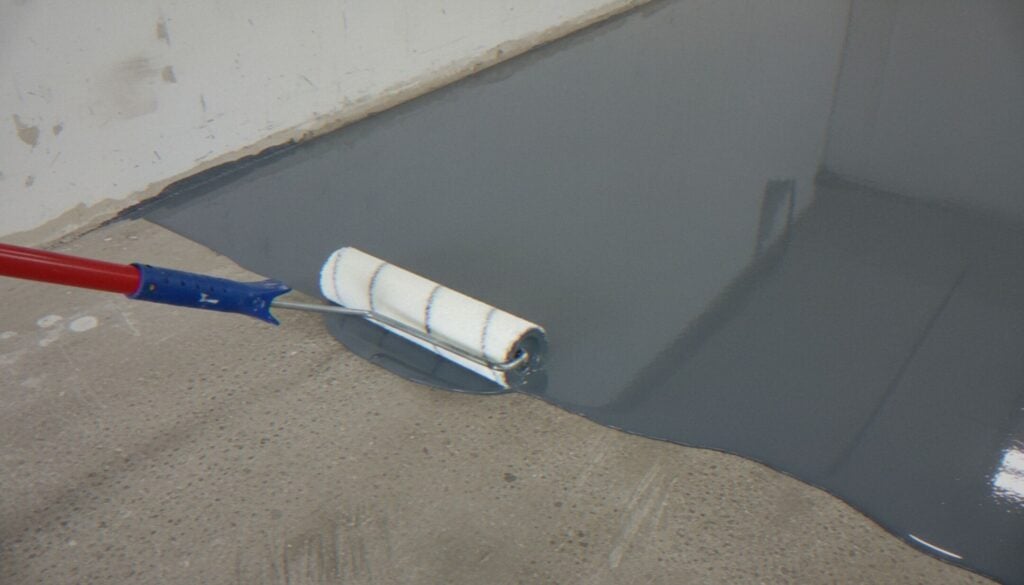
Different systems perform differently across the temperature ranges and conditions that cold storage facilities create. The table below summarizes how the most common options compare, and it is a starting point for discussion rather than a substitute for a facility-specific assessment.
| System | Typical Best Fit | Thermal Shock Tolerance | Moisture Tolerance | Relative Cost |
| Urethane cement | Freezers, blast chill rooms, wash-down areas | Excellent | Excellent | Higher |
| Modified epoxy | Coolers above freezing, dry storage | Moderate | Moderate | Moderate |
| Polyaspartic | Coolers, dock areas, fast return to service | Good | Moderate | Moderate to higher |
| Standard epoxy | Ambient dry areas only | Poor | Poor to moderate | Lower |
| Methyl methacrylate | Fast-cure freezer repairs and retrofits | Very good | Good | Higher |
What Installing Cold Storage Flooring Actually Requires
Installing a coating in a freezer or cooler is a logistical project as much as a technical one. Most coating systems cure properly only within a specific temperature window, and a freezer sitting at minus 10 degrees will not cure a standard coating at all. That reality shapes the entire project plan, from product selection to scheduling to the decision about how long the space can be out of service.
Temperature Conditioning Before and During Application
For most systems, the space has to be warmed to a temperature the product can cure at, which means shutting down refrigeration, removing product, and bringing the room and the slab up to a workable range. Slabs hold cold for a long time, so the warm-up period is often measured in days rather than hours. Certain fast-curing chemistries, including methyl methacrylate, can cure at much lower temperatures and are used when warming the space is impractical.
Surface Preparation in a Cold Environment
Preparation is the same discipline as in any commercial floor: mechanical profiling, moisture testing, crack and joint treatment, and complete removal of contamination and any failed existing coating. The challenge in cold storage is that the slab may be damp, frosted, or contaminated by decades of ice and product residue, and all of it has to be removed or addressed before coating begins. Facilities in Framingham, MA and surrounding areas with older cold storage slabs often find that preparation is the largest single portion of the project.
Phasing and Downtime Planning
Few cold storage operators can empty an entire facility at once. A phased plan that takes one room or zone out of service at a time, with temporary product relocation and clear return-to-service timelines, keeps the rest of the operation running. The plan should specify the warm-up period, the application and cure window, and the time required to pull the room back down to operating temperature before product is returned.
- Build the full cycle into the schedule, including warm-up, preparation, application, cure, and pull-down
- Coordinate with refrigeration contractors so that temperature changes are managed safely and efficiently
- Confirm food-safe cure and odor clearance protocols before product returns to the room
Choose a Cold Storage Floor Built for Every Cycle

Cold storage flooring is one of the most demanding specifications in commercial construction, and it rewards the facility that gets it right the first time. The right system, matched to the temperature range, the moisture conditions, the traffic, and the sanitation program, delivers a floor that stays intact through years of thermal cycling. The wrong system produces cracking, delamination, and the kind of downtime that makes a freezer floor failure so expensive.
McLean Company works with food storage, distribution, and processing facilities across New England to assess slab conditions, specify the right coating system, and execute installations with the preparation and scheduling discipline that cold storage projects require. If your facility has a failing floor, a planned expansion, or a new space that needs a system built for thermal cycling, we can walk it with you and give you a straight recommendation.
Contact us today to schedule a floor assessment and get a cold storage flooring recommendation built around the actual temperatures, traffic, and sanitation requirements of your facility.