(978) 774-4330

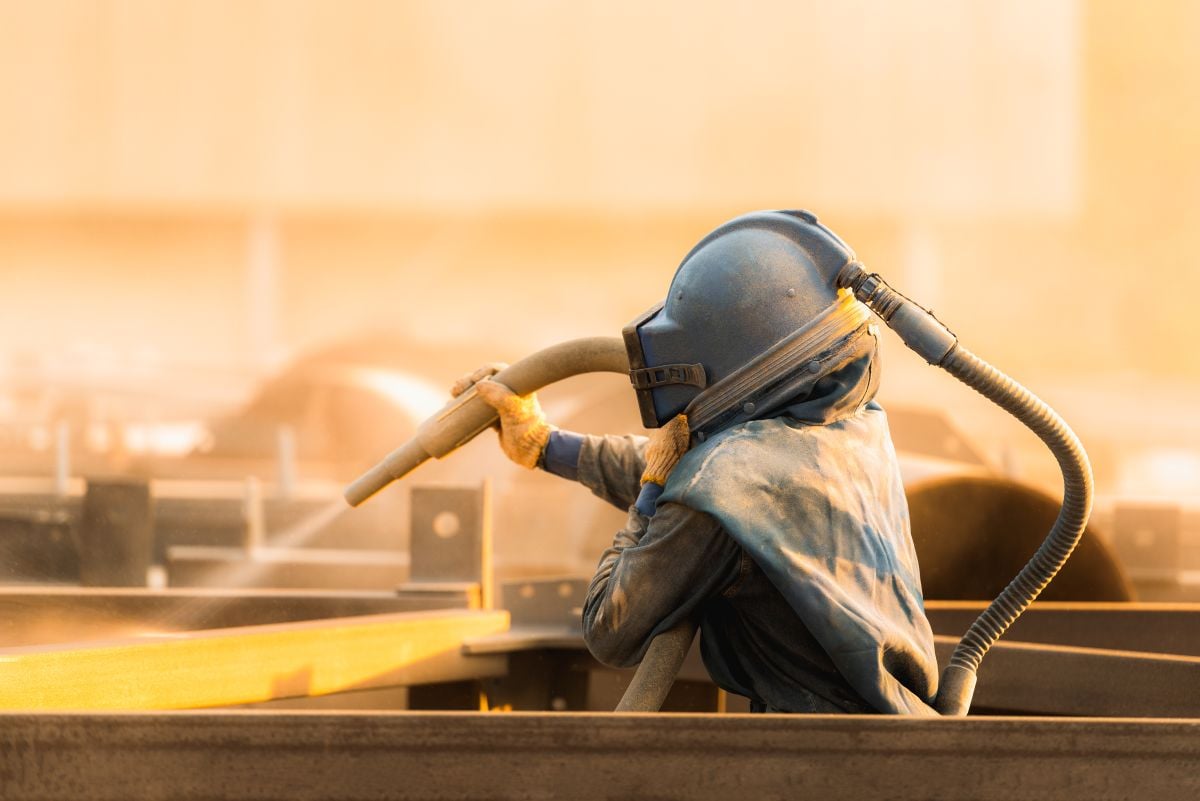
Choosing the right abrasive can make or break a sandblasting job. Whether you’re prepping a rusted surface or cleaning architectural steel, knowing what type of sand is used for sandblasting helps ensure safe, consistent, and efficient results. In many commercial or industrial projects across Rochester, NH and surrounding areas, this decision also affects equipment wear, environmental impact, and finish quality. Understanding abrasive options is a key part of successful surface prep—especially when paired with other protective coatings and treatments during facility upgrades.
In this blog, you’ll learn:
- Why sand selection matters in sandblasting
- Which types of sand and alternatives are best for different uses
- How the sandblasting process works from start to finish
- Factors that impact performance, cost, and safety
- When to hire professionals to handle your next project
Why Abrasive Choice Matters in Sandblasting
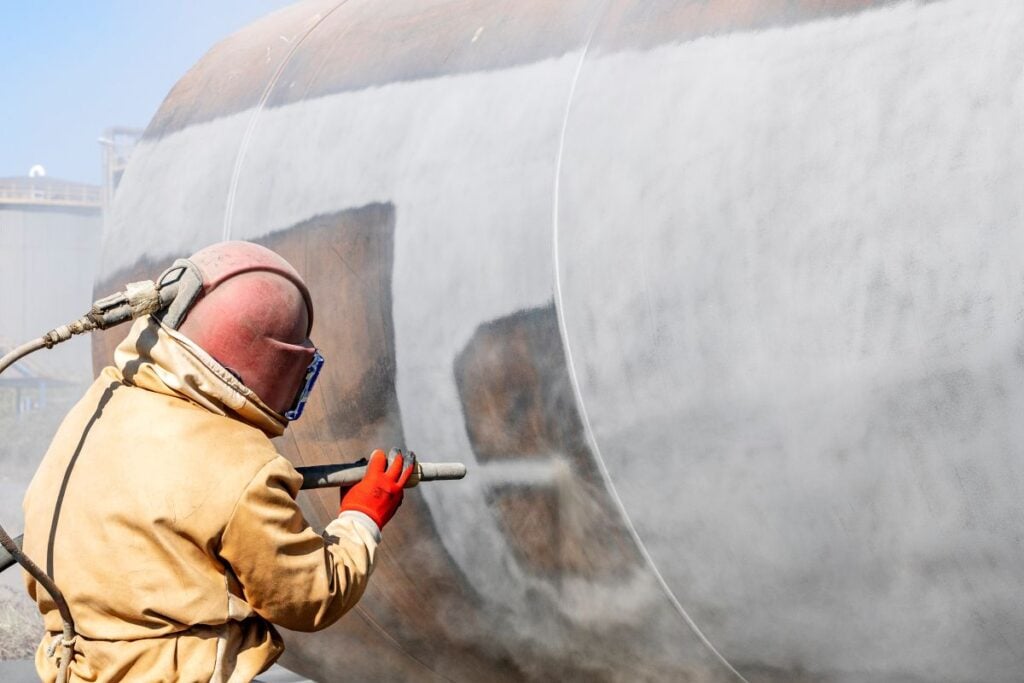
Sandblasting is more than just blasting a surface with grit. The type of abrasive media you use plays a critical role in how effective the process is—and how well your surface turns out. Selecting the wrong sand or substitute can cause surface damage, fail to remove coatings, or even present health hazards.
- Surface Compatibility: Softer materials like wood or aluminum require gentler abrasives, while steel and concrete can handle tougher grit.
- Blasting Efficiency: The right media cuts faster, uses less product, and reduces project time.
- Health & Safety: Certain sands can produce dangerous silica dust. Safer alternatives are now standard in many regions, including Rochester, NH and surrounding areas.
- Finish Quality: From smooth profiles to deep etching, the media affects how coatings and paint adhere afterward.
- Equipment Longevity: Coarse or inconsistent materials can wear out hoses, nozzles, and tanks more quickly.
6 Popular Abrasive Options Used in Sandblasting
While “sand” is often used as a catchall term, most modern sandblasting jobs rely on specialized abrasives. Here’s a breakdown of the most commonly used materials.
1. Silica Sand (Quartz-Based)
This was the original material used in traditional sandblasting, but it’s largely phased out in many areas due to health risks.
- Sharp, angular grains for fast cutting
- Inexpensive and widely available
- Generates fine dust with high silica content
Best For: Very hard surfaces if proper ventilation and PPE are in place
Downside: Can cause silicosis if inhaled; OSHA has strict guidelines on its use
2. Crushed Glass
Made from recycled glass, this environmentally friendly media is now a popular choice for general-purpose blasting.
- Contains no free silica
- Aggressive but safe for many surfaces
- Leaves a clean, bright finish
Best For: Removing paint, rust, or scale from steel and masonry
Downside: More brittle than other options, not reusable
3. Garnet
A naturally occurring mineral, garnet is extremely hard and reusable, making it cost-effective over time.
- Low dust, low health risk
- Produces minimal embedment in the surface
- Recyclable for multiple passes
Best For: Industrial surfaces needing high precision or low contamination
Downside: Higher upfront cost than expendable abrasives
4. Aluminum Oxide
A synthetic, reusable media that’s highly aggressive, ideal for deep surface prep.
- Very hard and long-lasting
- Suitable for blasting glass, stone, and tough metals
- Used in both dry and wet blasting setups
Best For: Etching surfaces before coating or removing tough epoxy layers
Downside: Can damage softer materials if not properly regulated
5. Coal Slag (Black Beauty)
A byproduct of coal combustion, this abrasive is dark, sharp, and commonly used in heavy-duty applications.
- Fast-cutting and aggressive
- Relatively inexpensive
- Leaves a rough surface profile
Best For: Large steel surfaces, tanks, and bridges
Downside: Not eco-friendly, and creates more waste
6. Steel Grit or Shot
Often used in wheel blast systems or closed-loop setups, these abrasives are designed for multiple reuses.
- High durability, very fast cleaning rate
- Produces consistent surface profile
- Can be tailored in size and hardness
Best For: Manufacturing environments, rebar cleaning, automotive parts
Downside: Requires special containment and reclamation systems
How the Sandblasting Process Works
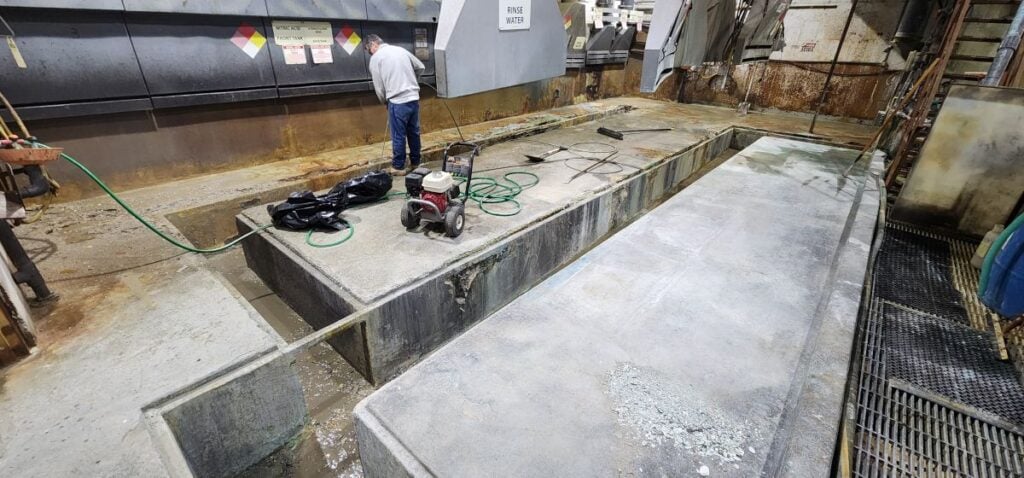
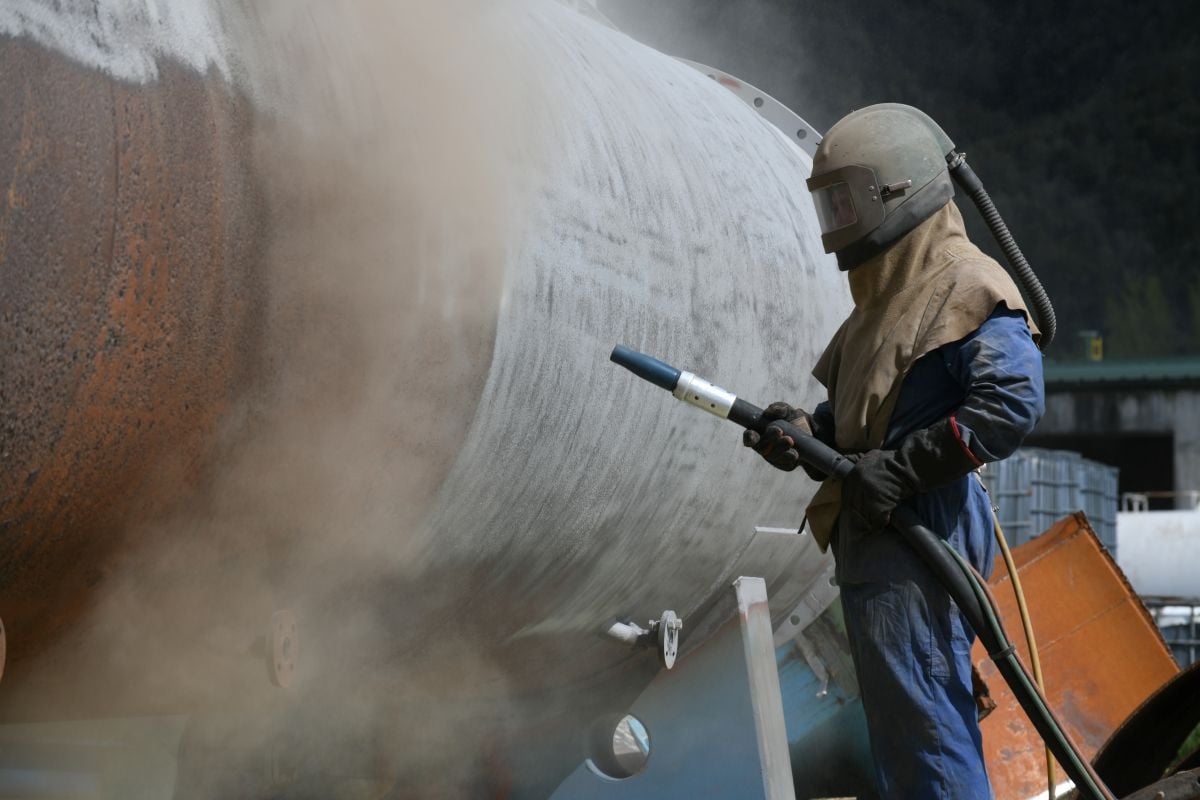
Sandblasting involves much more than pointing a nozzle and blasting away. It’s a carefully planned process that changes depending on surface type, abrasive media, and project scope. Here’s a look at the typical workflow.
1. Surface Inspection & Prep
Before any blasting begins, the surface must be assessed for rust, coatings, contamination, or structural damage.
- Note cracks, welds, or loose coatings
- Tape or cover areas not to be blasted
- Choose the appropriate media and equipment setup
2. Equipment Setup
The system must match the abrasive type and project requirements.
- Choose between a siphon system, pressure system, or wheel blaster
- Select nozzle size and compressor capacity
- Verify safety gear, containment, and ventilation are in place
3. Media Loading & Calibration
Fill the hopper or pot with the selected abrasive and test the pressure and flow rate.
- Adjust for speed and coverage
- Calibrate angle and distance from the surface
- Perform a test pass to check effectiveness
4. Blasting in Sections
Operators move in consistent, overlapping passes to avoid striping or uneven coverage.
- Start with a sweeping motion
- Maintain consistent speed and nozzle distance
- Pause between sections to inspect results
5. Surface Clean-Up
After blasting, residual media and dust must be removed before coatings or sealants are applied.
- Vacuum or blow off remaining grit
- Wipe down with solvent if needed
- Check surface profile for proper roughness
In areas like Rochester, NH and surrounding areas, this process is often adjusted for seasonal temperatures or moisture levels to prevent flash rusting or media clumping.
Other Factors That Influence Sandblasting Results
Beyond the abrasive itself, there are several key variables that can affect your final outcome. Here’s what you need to keep in mind.
Surface Hardness & Geometry
- Soft Materials (e.g. wood, aluminum): Require gentler abrasives like walnut shells or glass beads
- Hard Materials (e.g. steel, stone): Can handle aggressive grit like garnet or steel shot
- Irregular Shapes: May need a smaller nozzle and fine grit to reach tight areas
Indoor vs Outdoor Conditions
- Indoor Sandblasting: Allows for better dust control and media recovery
- Outdoor Blasting: Requires wind and containment precautions, especially in populated areas
Health and Environmental Compliance
- Many states and municipalities restrict certain abrasives
- OSHA and EPA guidelines affect which media types are allowed
- Waste disposal and dust collection must be managed properly
Media Reusability
| Media Type | Reusability | Typical Applications |
| Crushed Glass | Single Use | Paint and rust removal |
| Garnet | 5–10 cycles | Structural steel prep |
| Steel Shot | 100+ cycles | Fabrication lines |
| Coal Slag | One-time use | Heavy industrial |
| Aluminum Oxide | 20+ cycles | Precision cleaning |
When to Hire a Professional Sandblasting Team
For large, regulated, or delicate projects, DIY blasting isn’t always the safest or most effective route. Here’s when you should bring in a professional team.
Situations That Call for a Pro
- Coatings Must Meet a Specific Surface Profile: Paints, epoxies, and fireproofing materials require different levels of anchor patterns
- High-Risk Materials: Blasting lead paint, asbestos-containing materials, or delicate historic surfaces
- Access or Height Constraints: Tall tanks, ceilings, or exterior walls often require lift equipment and trained crews
- Indoor Work in Occupied Buildings: Professionals can set up containment and filtration systems to protect air quality
In Rochester, NH and surrounding areas, McLean Company uses tested media options and OSHA-compliant practices for sandblasting in commercial, industrial, and municipal settings.
Clean Surfaces Start with the Right Abrasive
The right blasting media is a foundation for every successful surface preparation project. Whether you’re restoring a building facade, prepping metal for painting, or cleaning equipment in Rochester, NH and surrounding areas, knowing what type of sand is used for sandblasting helps you get it done right the first time.
If you’re unsure about which abrasive or method is right for your facility, contact us today to schedule a project assessment. McLean Company provides expert sandblasting services that ensure clean, compliant, and coating-ready surfaces every time.