(978) 774-4330

Metal surfaces in commercial and industrial environments are constantly exposed to moisture, abrasion, chemicals, and changing temperatures that can lead to early deterioration. Understanding what is powder coating and how it compares to traditional paint helps facility managers and property owners make better long term maintenance decisions. From protecting structural steel to improving the lifespan of railings and equipment, businesses throughout Warwick, RI and surrounding areas often invest in high performance finishing systems designed for demanding environments to improve durability and corrosion resistance.
In this guide, you’ll learn:
- How powder coating works compared to traditional paint
- The biggest advantages of powder coated finishes
- Where powder coating is commonly used in commercial settings
- How powder coating helps extend metal lifespan
- What factors to consider before choosing a coating system
Why Powder Coating Is Important for Long Term Surface Protection

Powder coating has become one of the most trusted methods for protecting metal surfaces in industrial and commercial environments. Unlike traditional liquid paint, powder coating creates a thicker and more durable finish that stands up well against moisture, impact, and wear.
For businesses trying to reduce maintenance costs and improve long term durability, powder coating often provides significant advantages over conventional paint systems.
- Enhanced Durability: Powder coated surfaces resist scratching, chipping, and abrasion better than many standard paint finishes.
- Improved Corrosion Resistance: Properly applied powder coatings help block moisture and reduce rust formation.
- Lower Maintenance Requirements: Durable finishes require fewer touch ups and less frequent recoating.
- Consistent Appearance: Powder coating creates a smooth and even finish that holds its appearance over time.
- Long Term Value: Longer coating lifespan often leads to reduced repair and replacement costs.
Facilities throughout Warwick, RI and surrounding areas often choose powder coating systems because of the region’s changing weather conditions, humidity, and seasonal moisture exposure.
8 Key Benefits of Powder Coating Compared to Traditional Paint
Choosing between powder coating and traditional paint depends on the environment, surface type, and long term performance expectations. While both methods offer protection and visual improvement, powder coating provides several unique advantages in industrial and commercial applications.
1. Increased Resistance to Wear and Damage
One of the biggest reasons businesses choose powder coating is its durability. Powder coated finishes create a hard protective shell that resists physical damage better than many liquid paint systems.
This added durability helps protect surfaces from:
- Scratches
- Chipping
- Abrasion
- Impact damage
- Surface wear from daily use
This makes powder coating a popular solution for high traffic industrial environments where surfaces experience constant activity.
2. Better Protection Against Corrosion
Metal surfaces exposed to moisture and oxygen eventually begin to corrode if they are not properly protected.
Powder coating helps create a protective barrier that seals the surface against:
- Humidity
- Rain and snow
- Chemical exposure
- Salt and contaminants
- Environmental moisture
Businesses in Warwick, RI and surrounding areas often use powder coating to help protect exterior metal surfaces from harsh seasonal weather.
3. More Consistent and Professional Appearance
Traditional paint can sometimes leave visible brush marks, drips, or uneven coverage depending on the application process.
Powder coating creates a cleaner and more uniform finish because the powder is electrostatically applied and heat cured.
Benefits of the finish include:
- Smooth surface texture
- Uniform color consistency
- Reduced sagging or dripping
- Stronger visual appearance
This makes powder coating ideal for projects where appearance and professionalism matter.
4. Longer Lifespan With Less Maintenance
Powder coating is designed for long term durability.
Many powder coated surfaces maintain their finish and performance for years with minimal maintenance compared to traditional paint systems.
Powder coating helps resist:
- UV fading
- Moisture damage
- Surface cracking
- Peeling and flaking
- Abrasion from heavy use
Longer lasting performance often translates into lower maintenance expenses over time.
5. Cleaner and More Efficient Application Process
Powder coating is often considered a cleaner coating process because it typically produces fewer volatile organic compounds than many solvent based paints.
Additional advantages include:
- Reduced overspray waste
- Reusable powder materials
- Cleaner application environment
- Efficient coating coverage
Many industrial facilities appreciate powder coating because it supports efficient and environmentally conscious operations.
6. Wider Range of Colors and Finishes
Powder coating is available in a broad selection of colors, textures, and finishes that can be difficult to achieve with traditional paint.
Finish options include:
- Matte and flat
- Gloss and semi-gloss
- Metallic and chrome effects
- Textured and wrinkle finishes
- Custom color matching
This flexibility makes powder coating a practical choice for businesses that need both protection and a specific visual result.
7. Strong Adhesion to a Variety of Surfaces
When properly prepared, powder coating bonds tightly to the substrate and resists lifting, peeling, or separating over time.
Powder coating adheres well to:
- Steel and iron
- Aluminum
- Galvanized metal
- Some plastics and composites
- Previously coated surfaces after proper prep
Strong adhesion reduces the likelihood of moisture getting underneath the coating, which is one of the leading causes of early finish failure.
8. Cost Effective Over the Long Term
While the upfront cost of powder coating can be higher than traditional paint in some cases, the total cost of ownership is often lower.
Factors that contribute to long term savings include:
- Fewer recoating cycles
- Lower maintenance labor
- Reduced material waste during application
- Longer intervals between touch-ups
- Less downtime for surface repairs
For businesses managing large equipment, structural steel, or high-use surfaces, the reduced frequency of recoating often offsets the initial investment quickly.
Understanding Powder Coating Methods
Different coating methods affect how well metal surfaces resist corrosion, wear, and environmental exposure over time. Powder coating stands out because of its specialized application and curing process, which creates a stronger and more durable finish than many traditional paint systems.
Understanding these coating methods helps facility managers and property owners choose the right protective solution for long term performance.
How Powder Coating Works

The powder coating process involves several important steps that work together to create a durable and long lasting finish.
Proper preparation and application are critical for achieving maximum coating performance.
Surface Preparation
Preparation is one of the most important parts of the coating process.
Before powder coating begins, surfaces must be thoroughly cleaned to remove:
- Dirt and grease
- Existing coatings
- Rust and corrosion
- Surface contaminants
Preparation methods may include sandblasting, chemical cleaning, or abrasive blasting depending on the surface condition.
Electrostatic Powder Application
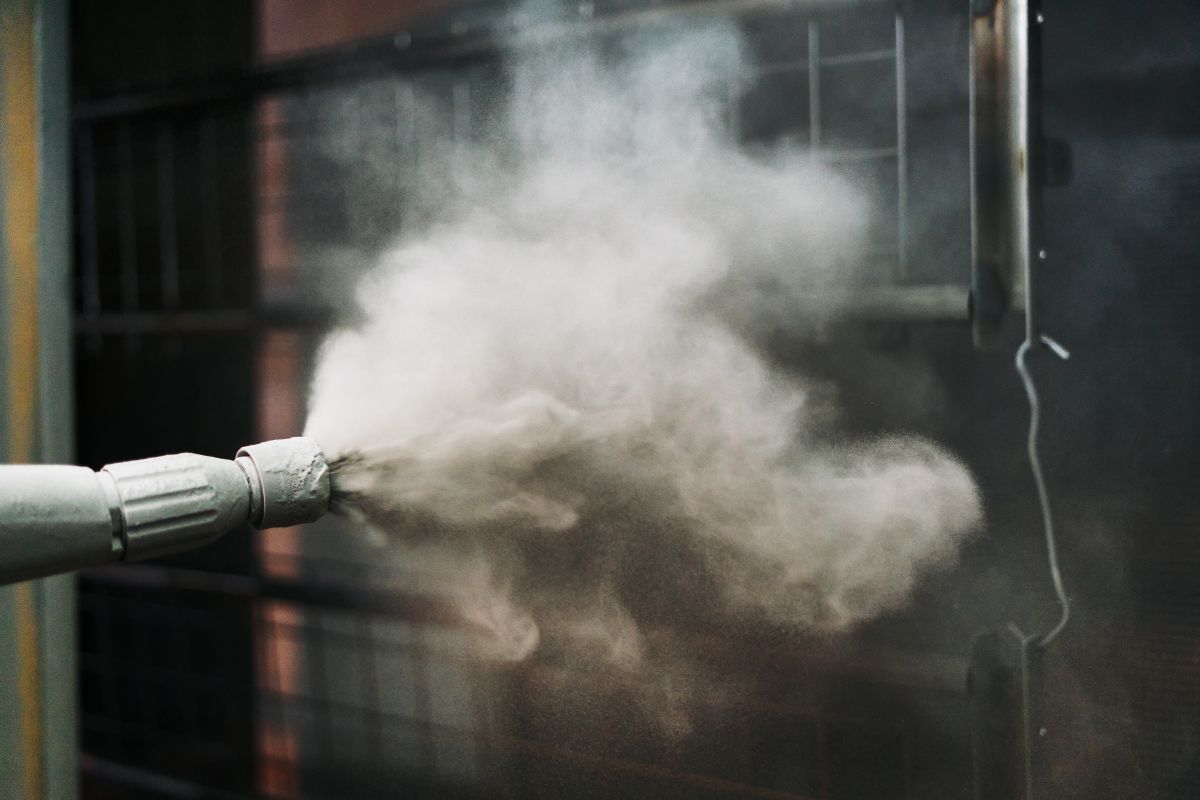
Once the surface is prepared, dry powder particles are sprayed onto the metal using an electrostatic application process.
The electrical charge helps the powder adhere evenly across the surface.
This process allows for:
- Uniform coating thickness
- Efficient material use
- Strong surface adhesion
- Consistent coverage
Heat Curing
After application, the coated surface is heated inside a curing oven.
The heat melts the powder into a smooth and hardened finish that bonds tightly to the metal surface.
This curing process creates the durability and impact resistance powder coating is known for.
Final Inspection
After curing, the surface is inspected to ensure proper coating thickness, finish quality, and consistency.
A properly applied powder coating system provides long term protection against wear, corrosion, and environmental exposure.
Powder Colors and Finish Options for Outdoor Furniture and Commercial Surfaces
Powder coating is commonly used on outdoor furniture because the finish provides strong resistance against moisture, fading, and surface wear caused by changing weather conditions. Commercial properties often choose powder coated outdoor furniture to improve durability while maintaining a clean and professional appearance in exterior spaces.
The availability of Powder Colors and finish options also allows businesses to match branding, improve aesthetics, and create a more cohesive appearance across outdoor seating areas and commercial environments.
Powder Colors and Finish Options for Commercial Surfaces
One of the major advantages of powder coating is the wide range of Powder Colors and finish options available for commercial and industrial applications. Property owners can choose coatings that match branding, improve visibility, or create a cleaner and more professional appearance throughout the facility.
Different Powder Colors can also help identify equipment zones, improve workplace organization, and enhance the overall visual consistency of industrial environments.
Common Uses for Powder Coating in Commercial and Industrial Environments
Powder coating is widely used because it performs well in demanding environments where durability and appearance both matter.
Many businesses rely on powder coated finishes to protect equipment and metal surfaces from constant use and weather exposure.
Structural Steel and Support Systems
Structural steel components benefit from powder coating because the finish helps protect against corrosion and environmental deterioration.
Common applications include:
- Steel framing
- Stair systems
- Railings
- Exterior supports
- Loading dock structures
Industrial Equipment
Manufacturing equipment and warehouse machinery often experience heavy use, abrasion, and chemical exposure.
Powder coating helps improve surface durability while maintaining a cleaner and more professional appearance.
Exterior Metal Surfaces
Outdoor metal fixtures are constantly exposed to weather conditions.
Powder coating is commonly used on:
- Fencing systems
- Gates
- Exterior railings
- Light poles
- Outdoor enclosures
The finish helps resist fading, peeling, and rust formation.
Commercial Fixtures and Furniture
Many commercial properties use powder coating on:
- Metal shelving
- Storage racks
- Outdoor seating
- Decorative metalwork
- Commercial furniture
Powder coating helps these surfaces maintain their appearance while standing up to regular use.
Powder Coating vs Traditional Paint
Both powder coating and traditional paint provide protection and visual enhancement, but each option performs differently depending on the environment and application.
The table below compares several important factors between powder coating and traditional paint systems.
| Feature | Powder Coating | Traditional Paint |
| Durability | Excellent resistance to wear and impact | Moderate durability depending on product |
| Corrosion Resistance | Strong moisture protection | Varies based on coating system |
| Finish Quality | Smooth and uniform appearance | Can vary based on application method |
| Maintenance Needs | Lower long term maintenance | More frequent touch ups may be needed |
| Environmental Impact | Lower VOC emissions | Higher VOC levels in some paints |
| Application Process | Heat cured finish | Air dried or chemically cured |
Situations Where Traditional Paint May Be Preferred
Although powder coating offers many advantages, traditional paint still works well in certain situations.
Traditional paint may be better for:
- Very large structures
- Surfaces that cannot be heat cured
- On site touch up work
- Complex repair projects
- Areas requiring future repaint flexibility
An experienced contractor can help determine which coating system makes the most sense based on the project conditions.
Why Surface Preparation Matters for Any Coating System
Even the best coating products can fail if the surface is not properly prepared beforehand.
Preparation directly affects:
- Coating adhesion
- Surface durability
- Corrosion resistance
- Overall finish lifespan
Professional preparation methods help ensure coatings bond correctly and perform as intended.
Businesses throughout Warwick, RI and surrounding areas often rely on experienced coating professionals to achieve long lasting results.
What to Consider Before Choosing Powder Coating

Before selecting a coating system, property owners and facility managers should evaluate the environment, surface type, and maintenance expectations.
Choosing the right finish helps improve long term durability while reducing future repair costs.
Environmental Exposure
Facilities exposed to moisture, chemicals, or outdoor weather conditions often benefit from powder coated finishes.
Environmental conditions play a major role in coating performance and lifespan.
Surface Size and Accessibility
Powder coating requires heat curing, which means the coated item typically needs to fit inside specialized curing equipment.
Large fixed structures may be more practical for traditional paint systems.
Long Term Maintenance Goals
Property owners should consider:
- Expected coating lifespan
- Future repair needs
- Cleaning requirements
- Ongoing maintenance costs
Powder coating often provides lower long term maintenance requirements compared to standard paint systems.
Desired Appearance
Powder coating offers a smooth and highly consistent appearance that holds up well over time.
For projects where visual quality and durability are equally important, powder coating can provide a significant advantage.
Protect Metal Surfaces With Durable Coating Solutions
Powder coating provides long lasting protection for metal surfaces exposed to moisture, wear, and demanding industrial conditions. From structural steel and industrial equipment to railings and commercial fixtures, powder coated finishes help businesses reduce maintenance costs while improving corrosion resistance and surface durability.
McLean Company has been helping commercial and industrial clients throughout New England protect their facilities since 1979 with dependable workmanship, responsive service, and durable coating solutions designed for demanding environments. If your facility is evaluating powder coating or traditional paint systems for metal surfaces, contact us today to discuss your project and learn how McLean Company can help protect your investment.