(978) 774-4330


A parking deck takes a beating from tires, salt, and weather every single day, and the concrete beneath is far more vulnerable than it looks. A parking deck traffic coating protects that slab by combining a waterproof membrane with a wear surface built for vehicle traffic. For owners in Worcester, MA and surrounding areas, where winter deicing salts drive corrosion, understanding how the system works helps you spend wisely. The same principles behind protective floor systems engineered for heavy industrial traffic apply to every layer of a deck coating.
Here is what you will learn in this guide:
- Why exposed parking decks need both waterproofing and a traffic-rated wear surface
- The layers that make up a complete traffic coating system and what each one does
- How the common system types compare for different deck conditions and budgets
- How to inspect, maintain, and recoat a deck so the system lasts
- What Worcester, MA and surrounding areas deck owners should know before choosing a system
Why Exposed Parking Decks Need a Coating System, Not Just Sealer
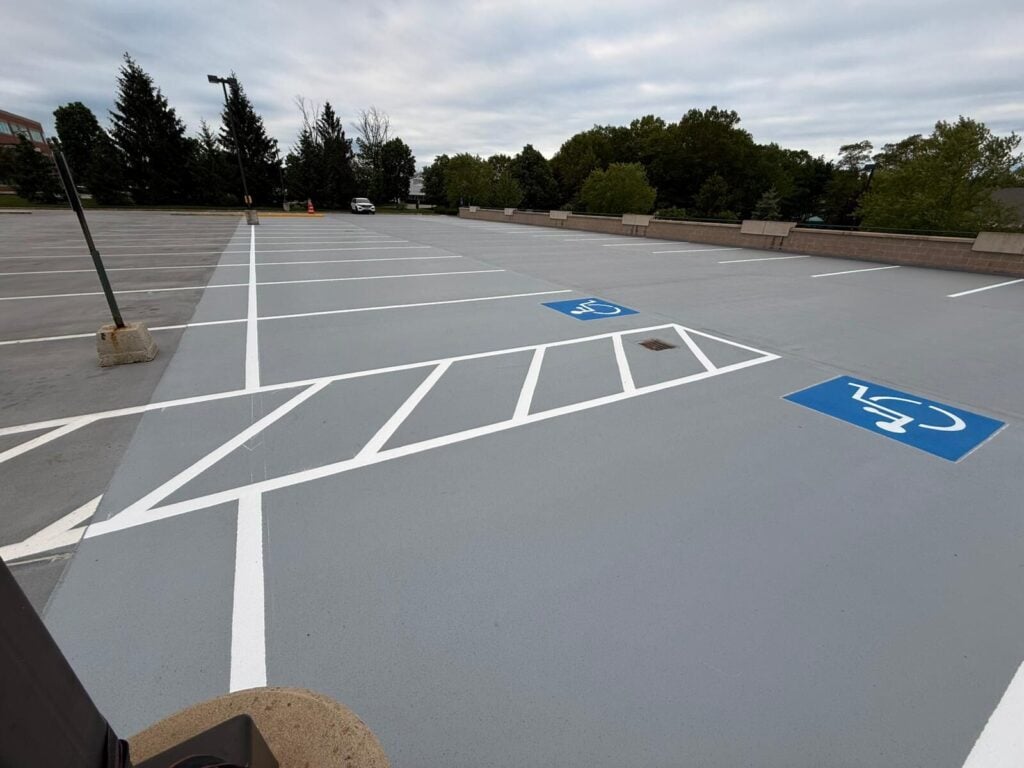
Concrete is strong in compression but porous and prone to cracking. On an exposed parking deck, every rain event, snow melt, and vehicle drip delivers water across the surface, and water carries chlorides from deicing salts into the slab. Once chlorides reach the reinforcing steel, corrosion begins, and rusting steel expands with enough force to crack and spall the concrete around it. A sealer alone cannot bridge cracks or withstand the abrasion of constant tire traffic, which is why decks need a true membrane and wear surface rather than a thin penetrating treatment.
Freeze-thaw cycling makes the problem worse. Water that enters hairline cracks freezes, expands, and widens them, and the cycle repeats all winter. A properly designed traffic coating system spans those cracks, sheds water toward the drains, and gives tires a durable surface to grip. For deck owners in Worcester, MA and surrounding areas, the difference between a coated and uncoated deck often shows up within a few winters as clear differences in leaks, staining, and concrete condition. Here is what a well-designed system delivers:
- Waterproofing: A continuous, seamless membrane keeps water and chlorides out of the slab, which slows reinforcing steel corrosion and protects the structure underneath.
- Crack Bridging: Flexible membrane layers span hairline cracks and accommodate seasonal movement without tearing, keeping the waterproofing intact as the deck expands and contracts.
- Traction and Safety: Aggregate embedded in the wear surface gives tires and pedestrians grip in wet and icy conditions, which reduces slip incidents and liability exposure.
- Abrasion Resistance: A purpose-built wearing course withstands turning tires, braking, and snow removal equipment that would quickly strip a conventional coating.
- Appearance and Wayfinding: A clean, uniform surface with clear striping presents the structure well and helps drivers and pedestrians move through the deck safely.
5 Layers of a Parking Deck Traffic Coating System and What Each Does
A traffic coating system is not a single product. It is a stack of layers, and each one has a specific job. When any layer is skipped, undersized, or applied to a poorly prepared surface, the system loses performance and the deck loses protection. Understanding the five layers helps owners read proposals and recognize what a complete system should include.
1. Substrate Repair and Surface Preparation
Every system begins with the concrete. Delaminated areas, spalls, and active cracks are located by sounding and visual survey, and unsound concrete is removed and replaced with compatible repair material. The surface is then mechanically prepared, most often by shot blasting, to remove contaminants, laitance, old coatings, and tire residue, and to create the profile the primer needs for adhesion.
This step determines the life of everything above it. A membrane applied over contaminated or deteriorated concrete will bubble, peel, or delaminate regardless of how good the product is. Moisture testing is also part of preparation, because moisture trapped in the slab can push on the coating from below.
- Sounding the deck identifies hollow, delaminated areas that must be repaired before coating
- Shot blasting provides a consistent profile across large open areas
- Drains, joints, and penetrations need individual attention during preparation
2. Primer
The primer penetrates the prepared concrete and creates a bond between the slab and the membrane. It also seals pores to reduce outgassing, which is the release of air from the concrete that can cause pinholes and blisters in the coating above. Primer selection depends on the membrane chemistry and the condition of the slab, and manufacturers specify compatible primers for each system.
Skipping or thinning the primer is a common shortcut that shows up later as peeling at the bond line. A good primer application is uniform, fully wets the surface, and is allowed to cure to the manufacturer’s window before the membrane goes on.
- Primer must be compatible with the membrane the manufacturer specifies
- Application conditions, including temperature and humidity, affect cure and adhesion
- Overcoat windows matter, since missing them can require additional preparation
3. Waterproofing Membrane
The membrane is the heart of the system. Typically urethane or polyurea based, it is applied as a flexible layer that bridges cracks and forms a continuous barrier against water. Thickness matters, because a thin membrane cannot accommodate crack movement and is more likely to have weak spots.
Membranes must be detailed carefully at joints, drains, curbs, columns, and wall transitions, which are the places where water most often finds a way in. Reinforcing fabric or additional membrane buildup is often added at these locations to handle movement and stress.
- Membrane thickness should match the specification, and it is verified with wet and dry film measurements
- Details at joints and penetrations receive extra reinforcement
- The membrane must fully cure before the wearing course is applied
4. Wearing Course With Aggregate
The wearing course sits on top of the membrane and takes the abuse of traffic. It is usually a tough urethane or epoxy layer with aggregate broadcast into it. The aggregate provides traction and protects the membrane from direct tire wear and from snow plows and shovels.
Aggregate size and density are chosen for the deck’s traffic and conditions. Ramps and turning areas often need more aggressive texture than flat parking stalls, and heavy traffic lanes may need a thicker wear layer than low-use areas.
- Heavier aggregate loading is common on ramps, turning areas, and drive lanes
- The wearing course protects the membrane from abrasion and impact
- Texture should balance traction with ease of cleaning and snow removal
5. UV-Stable Topcoat
The topcoat seals the aggregate in place and protects the layers below from UV exposure, chemicals, and wear. Aliphatic urethane topcoats resist yellowing and chalking in sunlight, which keeps the surface looking good and prevents UV from degrading the system underneath. The topcoat is also where color is introduced, making it the visible face of the system and the surface that striping is applied over.
Because it is the exposed surface, the topcoat is typically the first layer to show wear. Planned topcoat renewal, rather than full system replacement, is how well-maintained decks achieve long service lives.
- Aliphatic topcoats hold color and gloss better than aromatic products outdoors
- Topcoat renewal is the standard maintenance action on a healthy system
- Striping and stall marking are applied over the cured topcoat
Comparing Common Parking Deck Coating Systems
Not every deck needs the same system. Exposure, traffic, budget, and the condition of the existing slab all influence the right choice. A knowledgeable contractor will recommend a system based on these conditions rather than defaulting to a single product.
Urethane Traffic Membrane Systems
Urethane systems are the workhorse of the industry for exposed decks. They offer excellent flexibility and crack bridging, strong waterproofing, and good wear resistance when paired with an appropriate wearing course and topcoat. They are widely used on elevated decks, ramps, and plazas, and they perform well in freeze-thaw climates like New England.
Polyurea Systems
Polyurea systems cure very quickly, which can shorten project timelines and reduce the number of days sections of a deck are closed. They are flexible, durable, and well suited to projects where downtime is expensive. Their fast cure also demands skilled application, since the working time is short.
Epoxy and Polyaspartic Wear Systems
Epoxy and polyaspartic coatings are common on interior levels and covered decks where UV exposure is limited and crack movement is lower. They provide excellent abrasion resistance and cleanability but lack the crack-bridging flexibility of a full membrane system, so they are chosen for specific conditions rather than as a replacement for membranes on exposed decks.
| System | Best Fit | Crack Bridging | Cure Speed | Typical Use |
| Urethane traffic membrane | Exposed decks, ramps, plazas | Excellent | Moderate | Primary waterproofing and wear system |
| Polyurea | Projects with tight schedules | Excellent | Very fast | Exposed and covered decks needing fast turnaround |
| Epoxy | Covered levels, interior decks | Limited | Moderate | Wear protection and cleanability |
| Polyaspartic | Covered levels, fast return to service | Limited to moderate | Fast | Topcoats and interior wear surfaces |
Inspecting, Maintaining, and Recoating a Deck
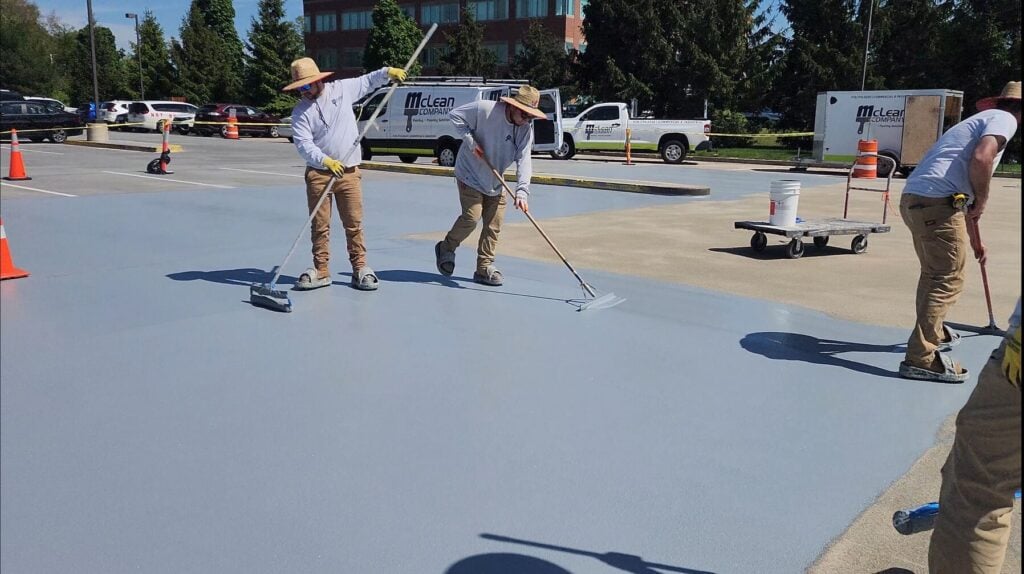
A traffic coating system does not last forever, but a good maintenance program extends its life dramatically. The goal is to catch small problems before they become expensive ones, and to renew the topcoat before wear exposes the membrane.
An annual spring inspection after the winter salt season is a practical routine. That inspection looks for worn aggregate, cracked or blistered areas, drain problems, and any place where the coating has lost bond.
What to Look for During Inspection
- Worn traffic lanes where the aggregate and topcoat have thinned
- Cracks that have reopened or new cracks that have formed since the last inspection
- Blistering, peeling, or delamination, especially near drains and joints
- Ponding water, which indicates drainage problems and accelerates coating wear
- Staining or efflorescence on the underside of the deck, which signals leaks
Topcoat Renewal and Spot Repairs
Spot repairs fix isolated failures before they spread. Renewing the topcoat every several years restores wear protection and appearance without replacing the full system. Owners who wait until the membrane is exposed or the concrete is damaged face a far more expensive project than those who maintain on schedule.
Planning Around Deck Operations
Coating a parking deck while it remains in service requires phasing by zone or level, clear signage, and cure time for each section before vehicles return. Projects in Worcester, MA and surrounding areas are often scheduled during warmer months, when the materials cure reliably and weather delays are less likely. A phasing plan agreed in advance keeps parkers informed and protects revenue.
Protect Your Deck Before the Next Salt Season
A parking deck traffic coating is one of the most cost-effective ways to protect a structure that is expensive to repair and impossible to replace casually. The right system, applied over properly prepared concrete and maintained on a schedule, keeps water and chlorides out of the slab, gives drivers a safe surface, and extends the service life of the entire structure.
McLean Company works with parking deck owners and property managers across New England to assess deck conditions, specify the right system for each area of the structure, and install it with the preparation and quality control these projects demand. If your deck is showing leaks, worn traffic lanes, or cracks that keep returning, we can walk it with you and give you a straight recommendation.
Contact us today to schedule a deck assessment and get a coating recommendation built around the actual condition and traffic demands of your structure.