(978) 774-4330


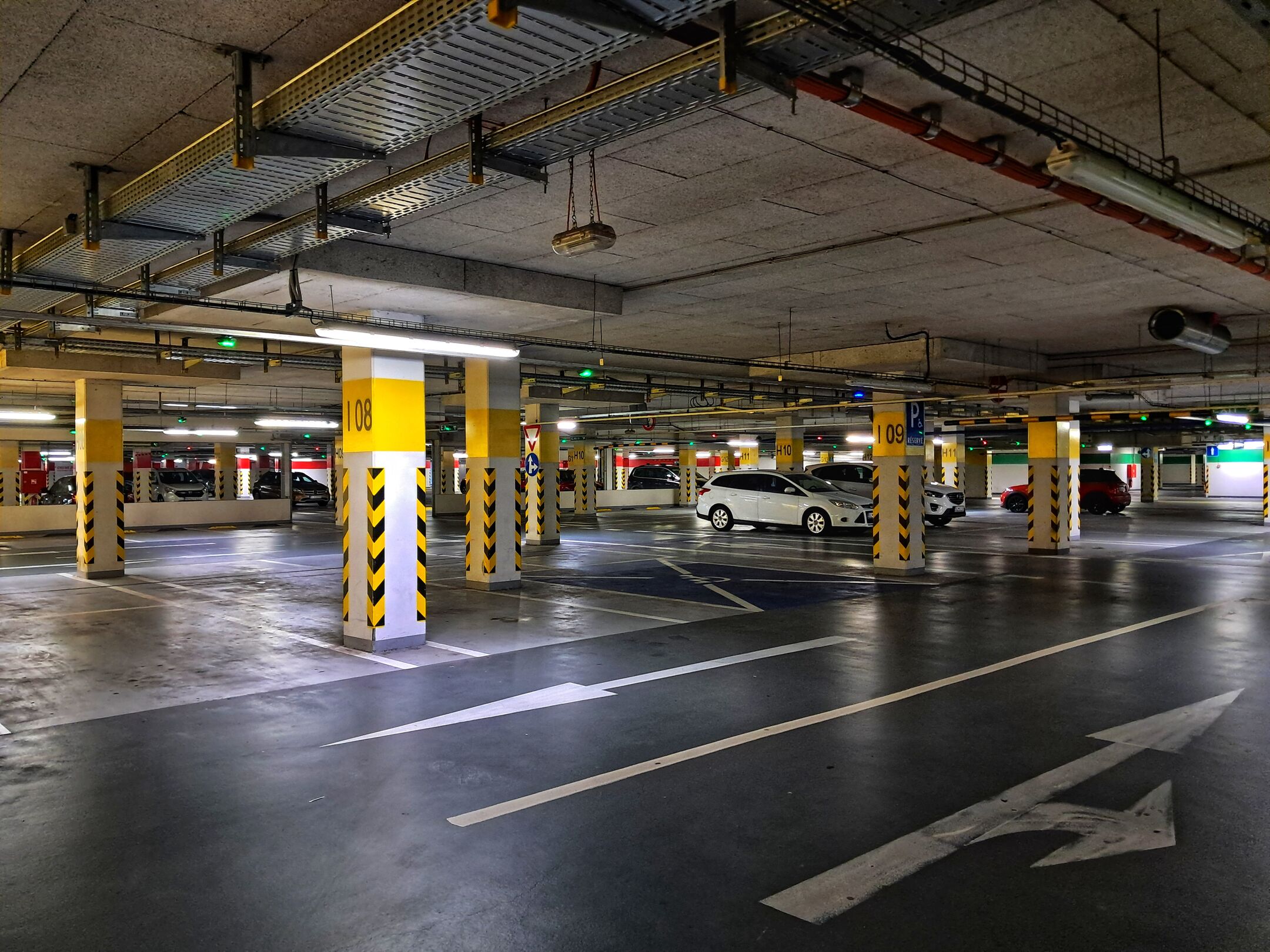
Expansion joints are the most vulnerable points in any parking structure. When they fail, water and road salt flow straight through the deck, attacking the steel below and staining everything underneath. Parking garage expansion joint repair stops that damage before it spreads and costs multiply. For owners and managers in Boston, MA and surrounding areas, where freeze-thaw cycles and deicing salt punish decks every winter, timing matters. The same standards behind durable concrete protection for demanding industrial structures guide how these repairs should be planned and executed.
Here is what you will learn in this guide:
- Why failed expansion joints cause some of the most expensive damage in a parking structure
- The main joint types found in parking garages and how each one is repaired
- The warning signs that tell you a joint needs attention before the damage compounds
- How scheduling, sequencing, and traffic management shape a repair project
- What Boston, MA and surrounding areas garage owners should know before requesting proposals
Why Failed Expansion Joints Cost Parking Structures So Much
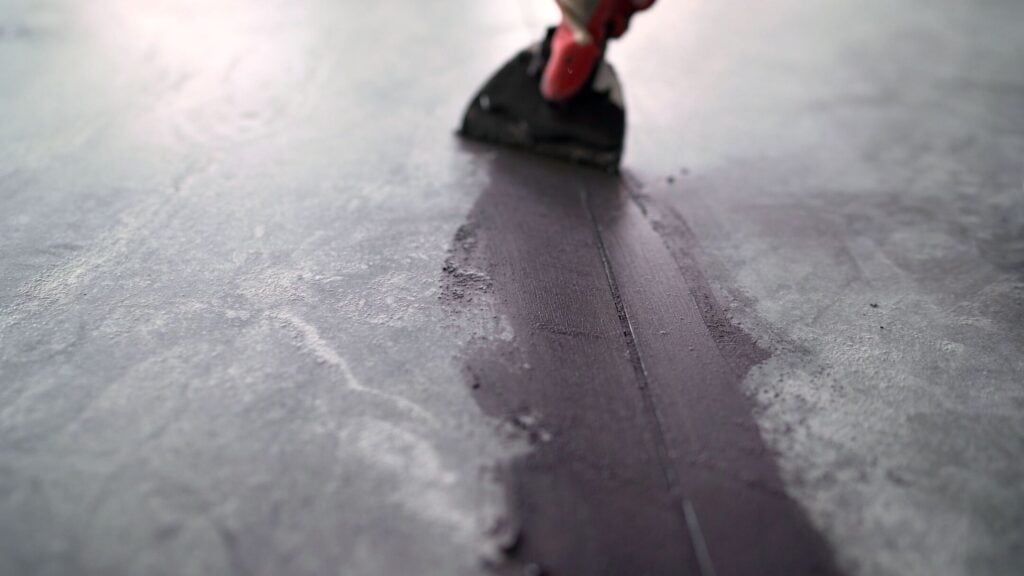
A parking structure is a large concrete assembly that never stops moving. It expands in summer heat, contracts in winter cold, and flexes under the weight of vehicles crossing it all day. Expansion joints are the engineered gaps that let that movement happen without cracking the deck. The sealants, seals, and metal assemblies inside those joints keep water out while the structure moves, and when they stop working, the deck is exposed at its most vulnerable location.
Water entering a failed joint carries dissolved deicing salts, and those chlorides travel straight to the reinforcing steel and the supporting beams and columns below. Corrosion expands the steel, cracks the concrete, and eventually reduces the load capacity of structural members. Leaks also stain ceilings, drip on parked vehicles, and corrode lighting and electrical components. For garage owners in Boston, MA and surrounding areas, the cost of joint repair is small compared to the structural repair that deferred joint maintenance eventually forces. Here is what addressing joint failure early protects:
- Structural Integrity: Keeping chloride-laden water out of the deck and supporting members slows reinforcing steel corrosion, which is the primary driver of structural deterioration in parking structures.
- Vehicle and Property Protection: Dry, sealed joints prevent the dripping and staining that generate damage claims from parkers and complaints from tenants of adjoining spaces.
- Safety: Open, raised, or damaged joints create trip hazards for pedestrians and impact hazards for tires and wheels, which are liability exposures for the owner.
- Lower Lifetime Cost: A planned joint repair program costs a fraction of the concrete restoration that results when leaks run unchecked for years.
- Asset Value: A dry, well-maintained structure supports tenant retention, parking revenue, and the overall valuation of the property it serves.
5 Parking Garage Expansion Joint Types and How Each Is Repaired
Parking structures contain several different joint types, and the correct repair depends on the joint’s design movement, its width, its location, and the traffic it carries. Understanding the five most common types helps owners evaluate proposals and recognize when a contractor is proposing the wrong solution for the joint in front of them.
1. Sealant-Filled Joints
Sealant-filled joints are the most common type in older garages and for smaller movement ranges. A backer rod sits in the gap and a flexible sealant, typically polyurethane or polyurea, is tooled over it to create a watertight seal. When properly installed, the sealant stretches and compresses with the joint through seasonal movement.
Failure usually comes from age, UV exposure, wear from tires, or poor original installation. Repair means complete removal of the old sealant, cleaning and priming the concrete faces, installing a new backer rod sized to the joint, and applying fresh sealant to the correct depth. Sealant applied over old material rather than the clean concrete will not hold.
- Joint width and expected movement determine which sealant products are suitable
- Concrete edges must be sound, because sealant bonded to crumbling concrete will release quickly
- Traffic-rated sealants are required in vehicle lanes where standard sealants would be cut by tire wear
2. Compression Seals
Compression seals are preformed elastomeric profiles that are installed in the joint under compression and held in place by the pressure against the joint faces. They are used for moderate movement ranges and are common in garages built from the 1970s onward. A lubricant adhesive is used during installation, and the seal remains compressed throughout its service life.
When compression seals fail, they typically lose their compression set, tear, or pull out of the joint. Replacement requires removal of the old seal, cleaning the joint faces, and installing a new seal sized for the actual joint width, which may have changed over decades of movement and edge deterioration.
- Seal size must be matched to the measured joint width at the temperature of installation
- Joint faces must be clean and smooth, since spalled edges prevent the seal from bearing evenly
- Installation temperature affects the compressed width, so work is scheduled within the manufacturer’s specified range
3. Strip Seal Systems
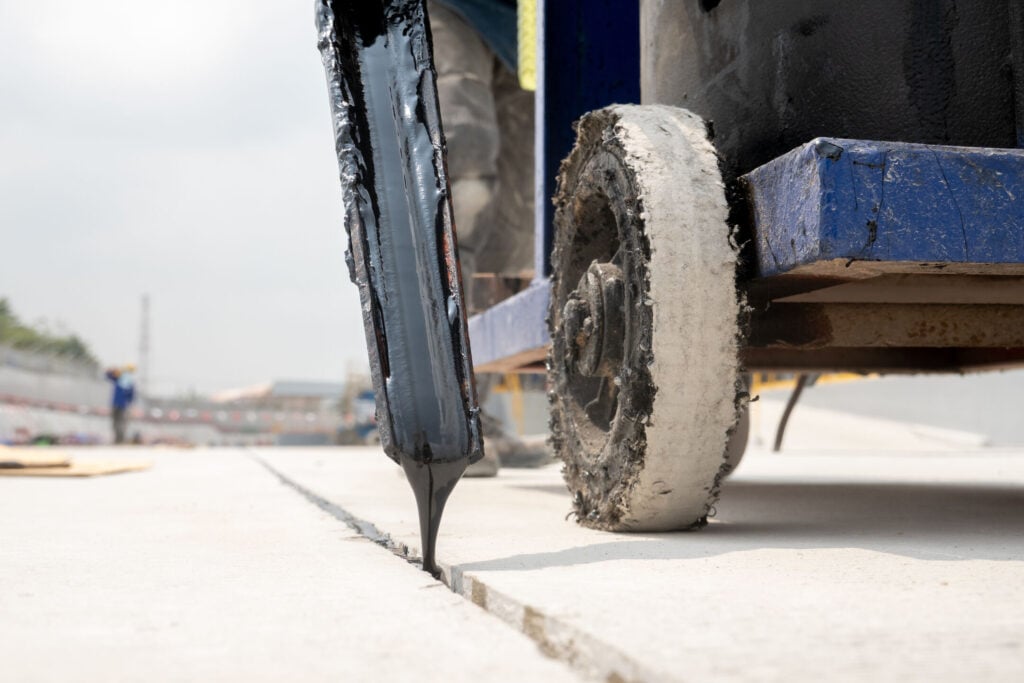
Strip seal systems use a flexible gland that locks into steel extrusions anchored in the concrete on each side of the joint. They handle larger movement ranges than sealant or compression seals and are widely used in modern garages and at major structural joints.
Repair of a strip seal system often means replacing only the gland when the extrusions are sound. If the steel extrusions are corroded or loosened from the concrete, the repair expands to include the extrusions and the anchorage, which is a more involved project that may require concrete removal and replacement at the joint edges.
- Glands can be replaced without removing the steel if the extrusions are intact and properly anchored
- Corroded or loose extrusions need replacement and often concrete repair around the anchors
- The drainage path beneath the joint should be checked, since clogged troughs defeat the system’s purpose
4. Cover Plate and Bridging Assemblies
Cover plate assemblies span the joint with a metal plate or bridging system and are used where very large movement is expected or where a robust, traffic-bearing surface is required. They are common at structural separations between buildings and at transitions between structure sections.
These assemblies require periodic inspection for loose anchors, fatigue cracking, noise, and wear. Repair may involve re-anchoring, replacing plates, installing new sealing elements beneath the cover, and restoring the concrete edges that support the assembly.
- Loose or rattling plates are both a noise complaint and a sign of failing anchorage
- A cover plate alone does not make the joint watertight, so the sealing element beneath it must be checked
- Anchor and edge condition govern how long the assembly will stay secure after repair
5. Header and Nosing Repair at the Joint Edge
Many joint failures are really failures of the concrete edge. Years of impact, freeze-thaw, and water infiltration spall the headers and nosing that define the joint, leaving a ragged, widened gap that no seal can bridge properly. Edge restoration is often the work that determines whether the new seal will perform.
Repair involves saw cutting back to sound concrete, installing repair material rated for traffic and for the freeze-thaw exposure of New England garages, and re-establishing a clean, square joint geometry before any seal or sealant is installed. Skipping edge repair to save cost is one of the most common reasons a joint repair fails in the first year.
- Use repair materials with proven bond strength and freeze-thaw durability
- Restore the joint to its design width and depth so the seal functions as intended
- Allow the repair material to cure fully before sealant or seal installation begins
Warning Signs Your Garage Joints Need Attention
Most garage owners do not inspect joints until a leak appears, but several earlier indicators show that a joint is losing its seal. Catching these signs during routine walkthroughs allows repair on a planned schedule instead of an emergency one.
- Efflorescence and Staining Below the Joint: White mineral deposits and rust-colored streaks on the underside of the deck, columns, or beams show that water and salts are passing through the joint.
- Visible Gaps and Torn Material: Sealant that has pulled away from the concrete, split along its length, or fallen out of the joint no longer protects anything.
- Standing Water or Ice at the Joint: Water pooling near a joint or refreezing along it means drainage and sealing are not working as designed.
- Spalled or Cracked Joint Edges: Chipped concrete along the joint is both a symptom of earlier leakage and a reason new material will not bond until the edge is repaired.
- Tire Noise, Bumps, or Raised Plates: Vehicles hitting the joint hard indicate that a seal has dropped, a plate has loosened, or an edge has deteriorated.
- Dripping During or After Rain: Active leaks onto vehicles or into lower levels require prompt attention and often point to failure of the entire joint assembly.
Planning the Repair: Scheduling, Sequencing, and Cost Drivers
A parking structure has to keep operating during most repairs, so the plan matters as much as the materials. Good planning protects revenue, keeps parkers moving safely, and reduces the chance of the weather or a schedule slip leaving joints open when the next storm arrives.
Joint repair is also seasonal. Most sealants and repair materials need specific temperature ranges to cure, which makes late spring through early fall the preferred window in New England. Planning in winter and scheduling for spring lets owners avoid emergency work during the worst conditions.
Traffic Management and Phasing
Repairs are usually done in phases by level, bay, or lane so that the rest of the structure stays open. Clear signage, barricades, and communication with tenants and parkers reduce complaints and prevent accidents. For garages in Boston, MA and surrounding areas serving offices, hospitals, or retail, work is often scheduled for nights and weekends to keep peak-demand hours clear.
- Define which levels and zones will be closed at each stage and for how long
- Protect pedestrian routes and maintain access for emergency vehicles
- Plan cure time for each joint before vehicles are allowed back on it
What Drives Repair Cost
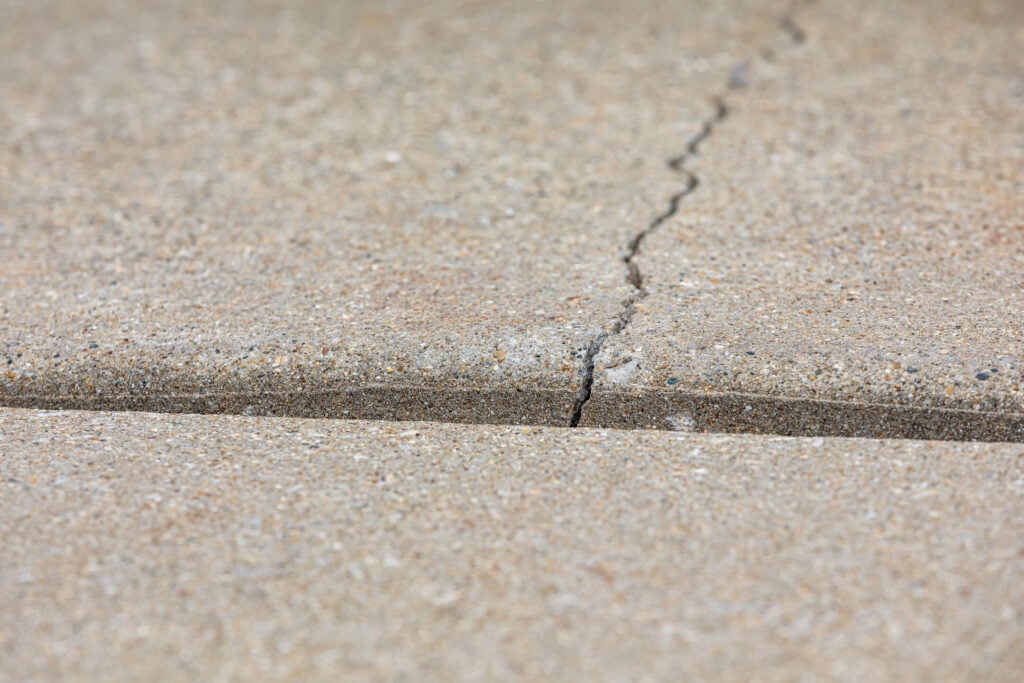
Repair cost depends on joint type, total linear footage, joint width, access, and the extent of concrete edge repair required. Sealant replacement is generally the most economical option, while strip seal replacement with extrusion repair, or full cover plate restoration, costs significantly more. Concrete edge restoration is often the most variable item, because the true extent of damage is only visible once the old material is removed.
| Repair Approach | Typical Scope | Relative Cost | Typical Service Life |
| Sealant replacement | Remove old sealant, new backer rod and sealant | Lower | Several years, depending on traffic and exposure |
| Compression seal replacement | New seal, joint face cleaning | Moderate | Longer than sealant when edges are sound |
| Strip seal gland replacement | New gland in existing extrusions | Moderate to higher | Long when extrusions are intact |
| Full strip seal or cover plate rebuild | New extrusions, anchors, edge repair | Higher | Longest, with proper maintenance |
| Edge and nosing restoration | Concrete repair at joint headers | Varies with extent | Determines performance of the seal above it |
Documentation and Warranty
A professional repair is documented with a joint survey, photographs, product data, and a written warranty for materials and workmanship. This record helps owners budget for future cycles and gives engineers and insurers a clear history of the structure’s maintenance. Owners should request this documentation as part of any proposal.
Get Ahead of Joint Failure Before the Next Winter
Parking garage expansion joint repair is one of the highest-value maintenance investments available to a structure owner. The joints are small compared to the deck, but they control whether water and salt reach the steel that holds the structure up. Repairing them correctly, with the right seal for each joint, sound concrete edges, and a plan that keeps the garage operating, preserves the asset and avoids far larger costs.
McLean Company works with parking structure owners and property managers across New England to assess joint conditions, identify the right repair approach for each joint type, and execute the work with the preparation and scheduling discipline that active garages require. If your structure has leaking joints, damaged edges, or seals that have reached the end of their life, we can walk the deck with you and give you a clear recommendation.
Contact us today to schedule a garage joint assessment and get a repair plan built around the actual condition and operating needs of your structure.